
Traditional Vanilla Cake
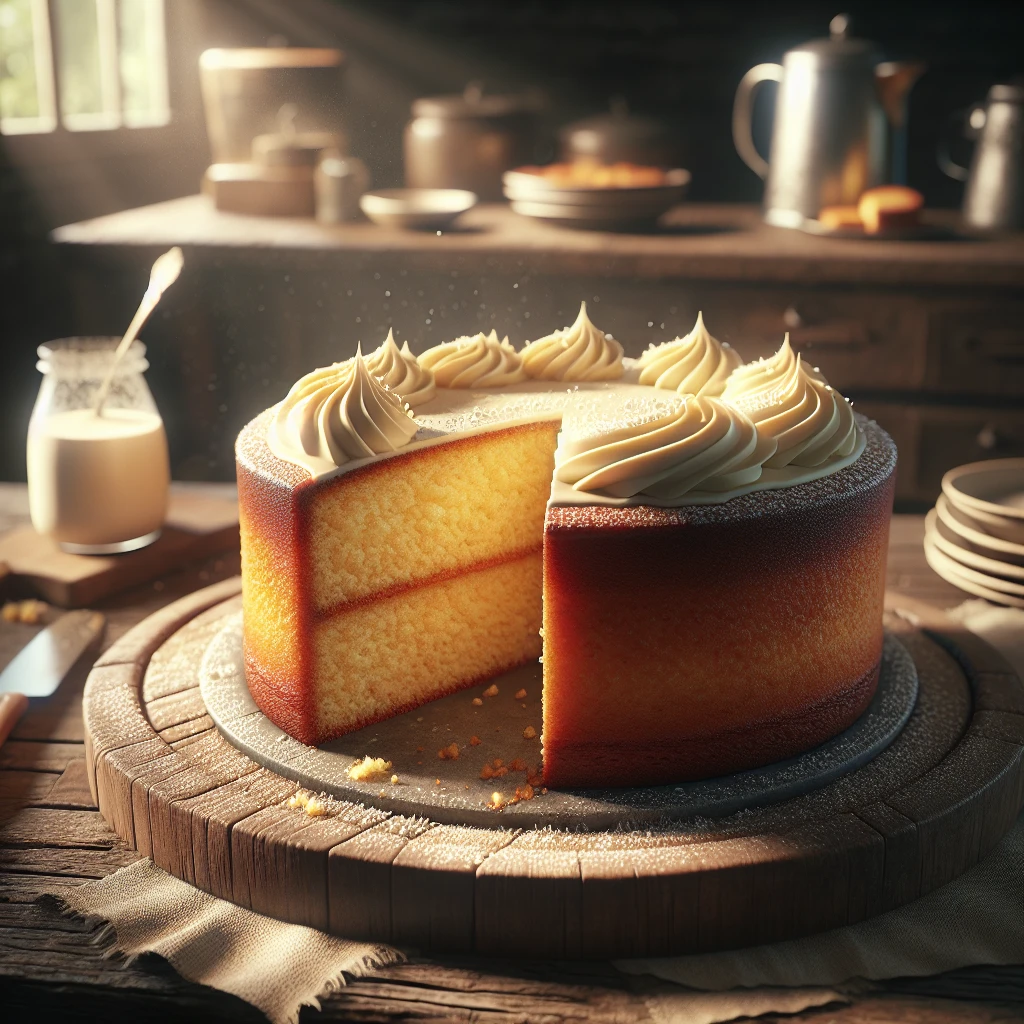
This Traditional Vanilla Cake is a classic that never goes out of style. It's perfect for birthdays, celebrations, or simply as a sweet treat. With a tender crumb and rich vanilla flavor, it's sure to become a family favorite.
 Share
Share
This post may contain affiliate links. As an Amazon Associate, we earn from qualifying purchases.
Ingredients for Traditional Vanilla Cake
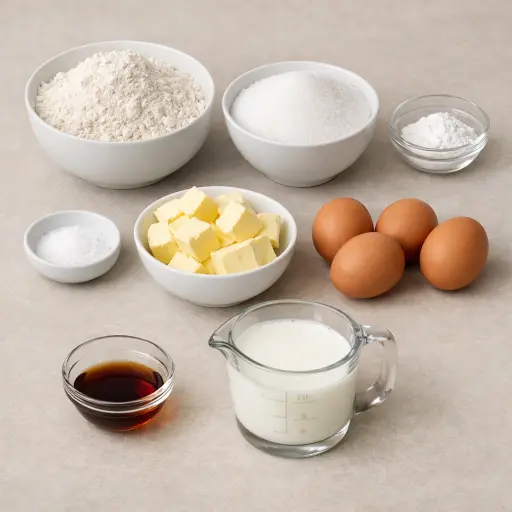
The foundation of this cake starts with all-purpose flour, which gives the cake its structure. Granulated sugar sweetens the cake while also contributing to its moisture. Baking powder is our leavening agent, ensuring the cake rises beautifully. A pinch of salt enhances all the flavors. Unsalted butter adds richness and helps create a tender crumb. Eggs bind the ingredients together, adding moisture and stability. Pure vanilla extract is the star of the show, providing that iconic vanilla flavor. Finally, whole milk adds moisture and creates a smooth batter.
Why This Traditional Vanilla Cake Works
During mixing, the butter and sugar trap a lot of tiny air pockets as they are beaten together. Those little pockets stay in the batter when the eggs go in, so the cake starts out already a bit fluffy before it even hits the oven. The eggs also give the batter strength, so it doesn’t collapse when it rises.
As the dry ingredients go in with the milk, the flour soaks up the liquid and forms a soft structure. Alternating the flour mix with the milk keeps the batter smooth instead of heavy or lumpy. Baking powder then starts to push out gas in the heat, and that gas spreads through all those air pockets from the creamed butter and sugar.
In the oven, the batter slowly firms up around the bubbles. The butter melts and keeps everything tender, while the eggs and flour set and hold the shape. By the time a toothpick comes out clean, the cake has risen, set, and cooled into soft, even layers that slice without crumbling.
Traditional Vanilla Cake Tips & Tricks
- Room temperature ingredients blend more easily, giving a smoother batter.
- Use a serrated knife to level the cakes before layering for a professional look.
- If you're using a stand mixer, stop occasionally to scrape down the sides to ensure even mixing.
Mistakes To Avoid
Overbaking the layers easily turns this cake dry and crumbly. Once it stays in the oven past the point where a toothpick comes out clean, the moisture cooks off, the edges harden, and the inside loses its soft, tender texture.
Starting with cold butter instead of softened butter keeps the sugar from creaming properly. The mixture stays dense and grainy instead of fluffy, so less air gets into the batter and the baked cake comes out heavy and compact instead of light.
Skipping the step of alternating dry ingredients with the milk often leads to a lumpy or overmixed batter. Dumping everything in at once makes the flour clump or forces extra mixing to smooth it out, which tightens the crumb and gives a tougher bite.
Cutting the cooling time short and frosting while the cake is still warm causes trouble. The warmth melts frosting, makes it slide off or soak in, and the layers can break or tear because the cake is still soft and fragile.
Equipment Used:
Ingredients
- 2 1/2 cups all-purpose flour
- 1 1/2 cups granulated sugar
- 3 1/2 tsp baking powder
- 1/2 tsp salt
- 1 cup unsalted butter, softened
- 4 large eggs
- 1 tbsp pure vanilla extract
- 1 cup whole milk
Step-by-step Instructions
- 1. Preheat the oven to 350°F (175°C). Grease and flour two 9-inch round cake pans.
- 2. In a medium bowl, whisk together the flour, baking powder, and salt. Set aside.
- 3. In a large bowl, cream the butter and sugar together until light and fluffy.
- 4. Add the eggs one at a time, beating well after each addition. Stir in the vanilla extract.
- 5. Gradually add the dry ingredients to the wet mixture, alternating with the milk, beginning and ending with the flour mixture. Mix until just combined.
- 6. Divide the batter evenly between the prepared pans.
- 7. Bake for 25-30 minutes, or until a toothpick inserted into the center comes out clean.
- 8. Allow cakes to cool in the pans for 10 minutes, then turn out onto a wire rack to cool completely.
Trending Now
Traditional Cucumber and Tomato Salad
A refreshing and simple salad combining crisp cucumbers and juicy tomatoes, season...
View Recipe
Oven-Baked Pork Chops
Enjoy a delightful dinner with these tender and juicy oven-baked pork chops, seaso...
View Recipe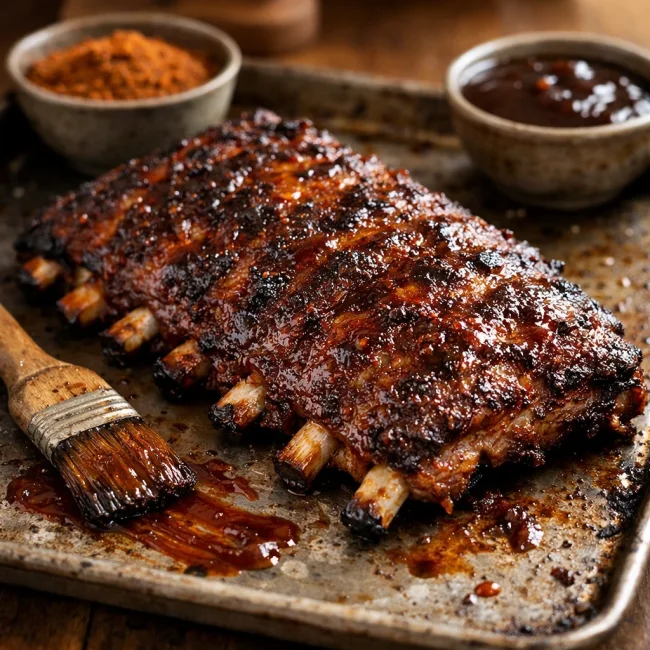
Oven-Roasted Baby Back Ribs
Savor the classic, finger-licking deliciousness of perfectly oven-roasted baby bac...
View Recipe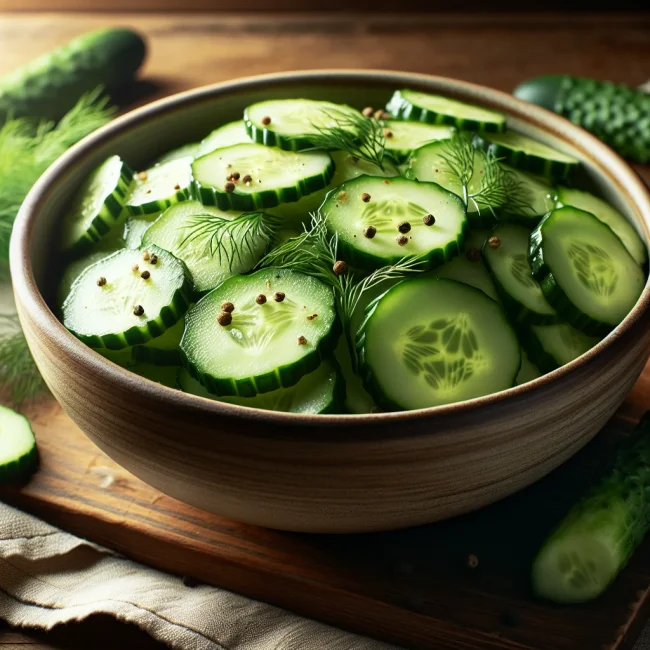
Classic Cucumber Salad
A refreshing and light cucumber salad featuring crisp cucumbers and a tangy vinaig...
View RecipeFrequently Asked Questions
- Can I use salted butter?
- Yes, but reduce the added salt to balance the flavors.
- Can I make this cake in advance?
- Absolutely! It keeps well for a couple of days covered at room temperature or can be frozen for up to a month.
Serving Ideas for Traditional Vanilla Cake
This cake pairs beautifully with fresh fruit like strawberries or raspberries. A dollop of whipped cream or a scoop of vanilla ice cream on the side can elevate it even more. For a special touch, drizzle with a simple glaze or a rich chocolate ganache.
More Desserts Recipes
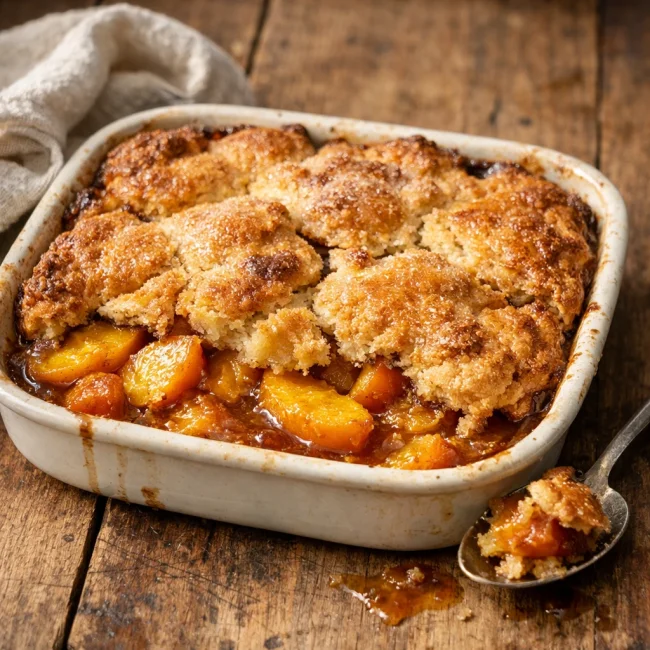
Rustic Vanilla Peach Cobbler
This rustic vanilla peach cobbler combines a rich, buttery crust with the sweet, v...
View Recipe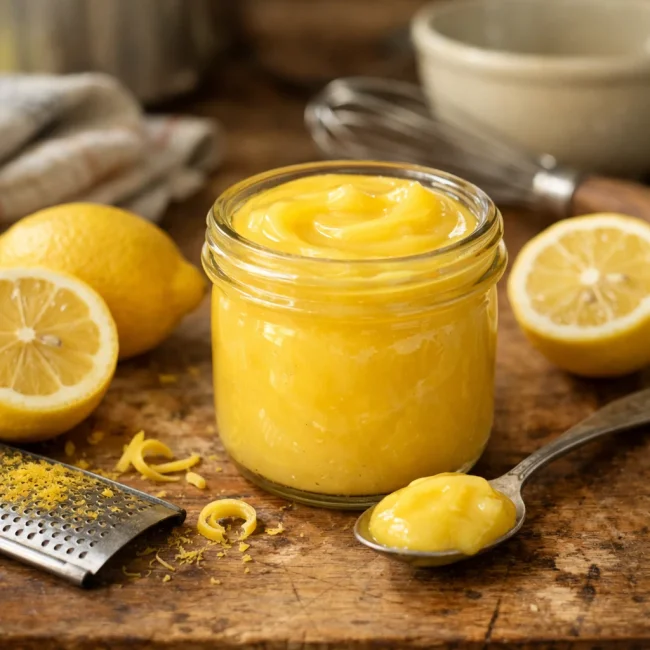
Traditional Lemon Curd
A classic, tangy lemon curd that is perfect for enhancing desserts, breakfast dish...
View Recipe
Traditional Cream Cheese Pie
A delightful and timeless dessert, Traditional Cream Cheese Pie offers a rich and ...
View Recipe
Timeless Cream Puff Delight
Indulge in a delectable Timeless Cream Puff Delight, a classic dessert featuring a...
View Recipe