
Traditional Miso Soup
Miso soup is a comforting, nourishing staple in Japanese cuisine, beloved for its simplicity and depth of flavor. This traditional recipe is perfect for a cozy evening or a quick nutritious meal. Let’s dive into making this delightful soup!
 Share
Share

This post may contain affiliate links. As an Amazon Associate, we earn from qualifying purchases.
Ingredients for Traditional Miso Soup
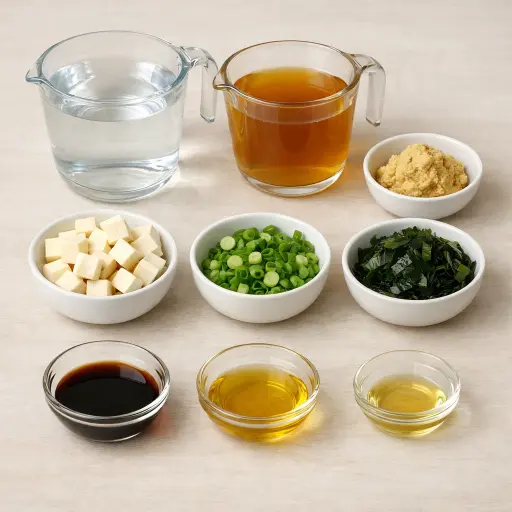
Water and dashi stock form the base of our soup, delivering a subtle yet profound depth. While water dilutes, the dashi brings a smoky, umami-rich backbone that’s essential in Japanese cooking. White miso paste adds the characteristic sweet, salty, and umami-rich layer to the soup. This fermented soybean paste is milder than darker varieties, making it perfect for a balanced, smooth soup. Tofu provides a gentle texture contrast and a source of protein, absorbing flavors beautifully. The green onions not only add a pop of color but also a sharp, fresh kick to each spoonful. Wakame seaweed, when rehydrated, offers a subtle brininess and a slightly chewy texture. Finally, a dash of soy sauce and sesame oil enhances the umami flavor and adds a hint of nutty aroma.
Why This Traditional Miso Soup Works
As the water and dashi warm up together, the broth starts to taste full and a little salty, but still light. It never needs a hard boil; a gentle simmer is enough for the dashi to spread through the water. When the tofu and wakame go in, they sit in that hot broth just long enough to heat through. The tofu stays soft and silky instead of breaking apart, and the wakame loosens up and becomes tender instead of chewy.
Once some hot broth is mixed with the miso in a small bowl, the paste thins out and smooths out. By adding it back to the pot at the end and keeping the soup below a boil, the miso stays cloudy and soft, and the soup keeps that gentle, rounded taste instead of turning sharp. Soy sauce and a little sesame oil slide through the hot liquid and cling to the tofu and seaweed. Right at the end, the green onions go in so they stay a bit crisp and bright on top of the warm, mellow soup.
Traditional Miso Soup Tips & Tricks
- Always dissolve the miso in a separate bowl with hot broth to prevent clumping.
- Avoid boiling the soup after adding miso to maintain its delicate flavor.
- Experiment with different types of miso for varied flavors; red miso offers a stronger taste.
Mistakes To Avoid
Letting the soup boil after the miso goes in is the fastest way to ruin it. The high heat makes the miso separate and turn grainy, and the broth goes from smooth and cloudy to rough-looking. The flavor also goes flat, so the soup tastes harsh instead of gentle and comforting.
Adding the miso paste straight into the pot without dissolving it in hot broth first often leaves clumps. Those lumps sit at the bottom or float around without breaking down, so some bites are salty and pasty while other parts of the soup stay weak and watery.
Putting the tofu in too early and simmering it hard for a long time makes it tough on the outside and rubbery in the center. Instead of soft cubes that soak up the broth, the tofu feels squeaky and can even start to break apart into little bits.
Letting the wakame sit too long in water before adding it can cause trouble. Over-soaked wakame swells a lot, so once it hits the pot it can crowd the soup, turning it thick and slippery, with big chewy strands instead of light, tender pieces.
Equipment Used:
Ingredients
- 4 cups water
- 2 cups dashi stock
- 3 tablespoons white miso paste
- 1/2 cup tofu, diced
- 1/4 cup green onions, sliced
- 1/4 cup wakame seaweed, rehydrated
- 1 tablespoon soy sauce
- 1/2 teaspoon sesame oil
Step-by-step Instructions
- 1. In a pot, bring water and dashi stock to a gentle simmer.
- 2. Add diced tofu and rehydrated wakame seaweed, and cook for 2-3 minutes.
- 3. In a small bowl, dissolve miso paste with a little hot broth, then add to the pot; do not boil.
- 4. Stir in soy sauce and sesame oil for added flavor.
- 5. Serve hot, garnished with sliced green onions.
Trending Now

Old-Fashioned Pancakes
Relish in the simplicity and comfort of homemade old-fashioned pancakes, perfect f...
View Recipe
Spiced Brown Sugar Pork Chops
A delightful twist on traditional pork chops, featuring a brown sugar glaze mixed ...
View Recipe
Moist Banana Loaf
Discover the timeless charm of our Moist Banana Loaf, a luscious and tender treat ...
View Recipe
Classic Blueberry Muffins
Deliciously moist and fluffy, these classic blueberry muffins are bursting with fr...
View RecipeFrequently Asked Questions
- Can I make this soup vegetarian?
- Yes, use a vegetarian dashi made from kombu (seaweed) and shiitake mushrooms instead of the traditional fish-based dashi.
- How should I store leftovers?
- Store any leftover soup in an airtight container in the refrigerator for up to 2 days. Reheat gently on the stove, avoiding boiling.
- Can I add other ingredients?
- Absolutely! Feel free to add mushrooms, spinach, or even thinly sliced carrots for extra nutrition and variety.
More Soups & Stews Recipes

Classic Clam Chowder
Indulge in a timeless seaside staple with our Classic Clam Chowder recipe, a rich ...
View Recipe
Traditional Beef Stew
A heartwarming traditional beef stew that combines tender beef chunks with classic...
View Recipe
Southwestern Chipotle Taco Soup
Explore the bold flavors of the Southwest with this unique variation of taco soup,...
View Recipe
Southwest Fiesta Taco Soup
Discover the vibrant flavors of our Southwest Fiesta Taco Soup, a quick and hearty...
View Recipe