
Sushi
Sushi isn't just food; it's an experience. This recipe brings the Japanese classic into your home with fresh, vibrant flavors that will make you feel like a sushi chef in your own kitchen. Perfect for impressing guests or treating yourself to something special, this sushi recipe is both approachable and rewarding.
 Share
Share

This post may contain affiliate links. As an Amazon Associate, we earn from qualifying purchases.
Ingredients for Sushi
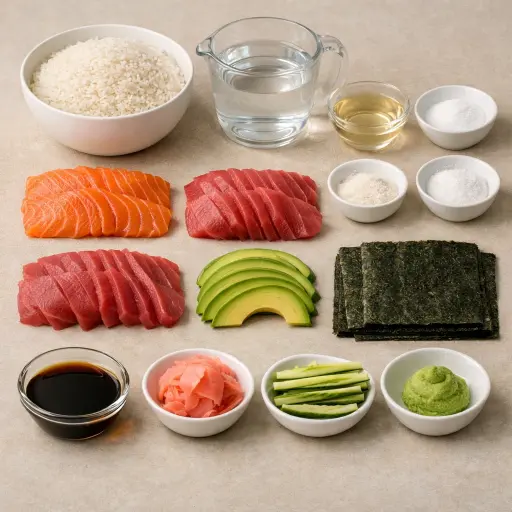
Sushi rice is the foundation of your rolls, providing that sticky texture essential for holding everything together. Rice vinegar, sugar, and salt create the subtle seasoning that gives sushi rice its distinctive flavor. Freshness is key for the salmon and tuna, as their natural flavors shine through when raw. Avocado adds creaminess, balancing the texture, while cucumber brings a refreshing crunch. Nori seaweed acts as the wrapper that holds it all together. Finally, serving with soy sauce, pickled ginger, and wasabi enhances the experience with traditional accompaniments.
Why This Sushi Works
Rinsing the sushi rice washes off extra starch on the outside of the grains. During cooking, this lets the rice swell and stick just enough without turning gluey. In the rice cooker, the grains soak up the measured water and steam from the inside, so they stay plump and hold their shape instead of breaking apart.
While the rice is still warm, the vinegar, sugar, and salt mixture goes in. At this stage the grains are soft and open, so the liquid can slide between them and coat each grain. As the rice cools to room temperature, the surface dries a little and the grains firm up. That cooling time is what gives sushi rice its slightly sticky, moldable feel instead of a wet, mushy one.
Once the rice is in that sweet spot, it grips the nori and wraps around the salmon, tuna, avocado, and cucumber. The rice acts like gentle glue, so the roll stays tight when it is sliced, and the pieces hold together when picked up.
Sushi Tips & Tricks
- Always use a sharp knife to slice your rolls—this ensures clean cuts and prevents the roll from squishing.
- If you're new to sushi rolling, practice with a simple cucumber roll first to get the hang of it.
- Keep a small bowl of water nearby to wet your hands; this prevents the rice from sticking to your fingers.
- Experiment with different fillings like crab, shrimp, or even tempura for variety.
Mistakes To Avoid
Rinsing the rice only once or twice leaves a lot of starch on the grains. During cooking this extra starch turns the rice gluey and clumpy, so it sticks in big patches on the nori instead of spreading in a thin, even layer.
Using hot or warm rice for rolling often causes trouble. The steam softens the nori too fast, making it stretchy and fragile, so the sheet tears or wrinkles and the roll ends up loose and misshapen.
Skipping the step of dissolving the sugar and salt into the vinegar in a pan leaves gritty crystals. Those undissolved bits sit in the rice instead of soaking in, so some bites feel sandy and the seasoning doesn’t spread evenly through the bowl.
Cutting the fish too thick makes rolling hard. The fillings push against the rice and nori, so the roll won’t close tightly, and when sliced, the pieces split open and the fish slides out.
Equipment Used:
Ingredients
- 2 cups sushi rice
- 2 1/2 cups water
- 1/4 cup rice vinegar
- 2 tbsp sugar
- 1 1/2 tsp salt
- 1/2 lb fresh salmon, sliced thin
- 1/2 lb fresh tuna, sliced thin
- 1 avocado, sliced
- 1 cucumber, julienned
- 4 sheets nori seaweed
- Soy sauce, for serving
- Pickled ginger, for serving
- Wasabi, for serving
Step-by-step Instructions
- 1. Rinse the sushi rice in cold water until the water runs clear.
- 2. Combine rice and water in a rice cooker and cook until done.
- 3. While the rice is cooking, mix rice vinegar, sugar, and salt in a small saucepan over low heat until dissolved. Allow to cool.
- 4. Transfer cooked rice to a large bowl and gently fold in the vinegar mixture. Allow to cool to room temperature.
- 5. Place a sheet of nori on a bamboo sushi mat. Spread an even layer of rice over the nori, leaving a 1-inch border at the top edge.
- 6. Arrange slices of salmon, tuna, avocado, and cucumber in a line along the bottom third of the rice.
- 7. Carefully roll the sushi using the bamboo mat, applying gentle pressure to shape it into a tight roll.
- 8. Slice the roll into bite-sized pieces using a sharp knife.
- 9. Repeat with remaining ingredients.
- 10. Serve with soy sauce, pickled ginger, and wasabi.
Trending Now

Old-Fashioned Bread Pudding
Discover the classic charm of Old-Fashioned Bread Pudding - a timeless dessert com...
View Recipe
Hearty Breakfast Casserole
This Hearty Breakfast Casserole is the quintessential morning dish, combining savo...
View Recipe
Traditional Stuffed Peppers
Explore the delightful blend of seasoned beef, rice, and tomato sauce nestled in v...
View Recipe
Traditional Lemon Pound Cake
A delightful and moist traditional lemon pound cake infused with the fresh zest an...
View RecipeFrequently Asked Questions
- Can I use regular rice instead of sushi rice?
- Sushi rice has a specific texture and stickiness that is crucial for making proper sushi. Regular rice won't hold together as well.
- How do I know if the fish is fresh?
- Fresh fish should have a clean, ocean-like smell and a firm texture. It's best to buy from a trusted fishmonger and ask for sushi-grade fish.
- Can I make sushi ahead of time?
- It's best enjoyed fresh, but you can prepare it a few hours in advance and keep it refrigerated. Just note that the rice may harden slightly in the fridge.
Serving Ideas for Sushi
Sushi pairs wonderfully with a light miso soup or a simple cucumber salad. If you're hosting, a platter of assorted sushi alongside edamame makes for a delightful spread. For a refreshing drink, consider serving green tea or a chilled sake.
More Main Dishes Recipes
Unique Homemade Corned Beef
Discover the ultimate homemade corned beef recipe that balances rich flavors and t...
View Recipe
Spicy Lime Seared Ahi Tuna
Experience a burst of flavor with our Spicy Lime Seared Ahi Tuna, a perfect fusion...
View Recipe
Traditional Chicken Parmesan
Savor the authentic taste of Italian cuisine with our Traditional Chicken Parmesan...
View Recipe
Seared Ahi Tuna
Experience the sublime taste of seared Ahi tuna, a Japanese-inspired dish that hig...
View Recipe