
Miso Soup
If you're craving comfort in a bowl, then miso soup is your answer. With its rich umami flavor and simple preparation, this classic Japanese soup is perfect for a cozy night in or as an appetizer for a larger meal. Let's dive into this soul-warming recipe!
 Share
Share

This post may contain affiliate links. As an Amazon Associate, we earn from qualifying purchases.
Ingredients for Miso Soup
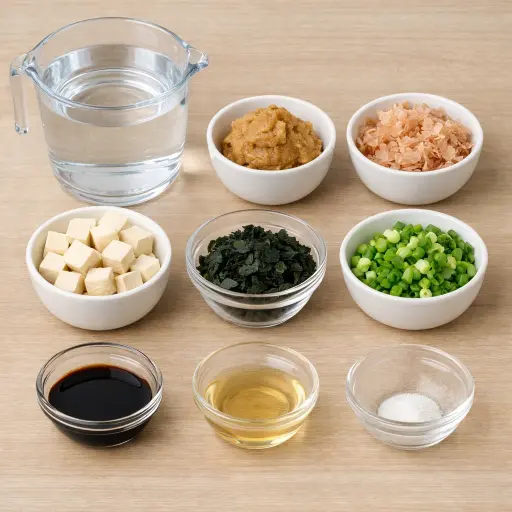
Water is the base of our soup, acting as the foundation for all the flavors to meld together. Bonito flakes, made from dried fish, are the key to our dashi stock, providing a smoky, savory depth. Miso paste is the star, offering that distinct, rich umami taste. We use firm tofu for its ability to hold shape and provide a satisfying texture. Dried wakame seaweed adds a hint of briny flavor and a pleasant chewiness. Scallions not only add a pop of color but also a fresh, sharp note. Finally, soy sauce and mirin help balance the flavors, adding saltiness and a touch of sweetness, respectively.
Why This Miso Soup Works
During the first step, the bonito flakes sit in hot water instead of boiling for a long time. In that short steeping time, the flakes soften and their taste spreads into the water, but they do not break down and turn the broth cloudy. Straining them out leaves a clear, light base that still has a lot of taste.
Once the dashi is hot again, the miso is mixed with a little warm broth on the side. Doing it this way lets the miso dissolve smoothly, so it blends into the pot without clumps. The soup stays silky instead of grainy, and the miso keeps more of its gentle taste because it is not boiled hard.
As the wakame sits in the hot broth, it soaks up water and plumps back up, giving a soft, slightly chewy bite. The tofu just warms through, so it stays tender and doesn’t fall apart. Right at the end, scallions, soy sauce, and mirin go in, so their taste stays bright and doesn’t fade in the heat.
Miso Soup Tips & Tricks
- If you can, use a sieve when mixing miso paste with dashi to ensure it's perfectly smooth.
- For an extra depth of flavor, briefly toast the bonito flakes in a dry pan before using them.
- Don't boil the soup after adding miso paste, as it can lose its delicate flavors.
Mistakes To Avoid
Letting the dashi boil hard with the bonito flakes for too long makes the stock harsh and cloudy. The flakes start to break down and release fine bits that stay in the liquid, so the soup loses its clean, light body and can feel a bit gritty on the tongue.
Adding the miso paste straight into boiling hot stock causes it to separate and turn grainy. The miso solids can clump and sink, so the soup ends up with sandy bits at the bottom and a thin, weak-tasting broth on top instead of a smooth, even texture.
Putting the tofu in too early and simmering it for a long time makes the cubes tough and rubbery. Instead of soft, silky pieces that hold their shape, the tofu can feel squeaky when bitten and may start to crumble apart in the bowl.
Adding the scallions at the start of cooking rather than at the end leads to limp, dull pieces that almost disappear into the broth. The soup then loses that fresh, light crunch and bright green look on top.
Ingredients
- 4 cups water
- 1/4 cup miso paste
- 1/4 cup bonito flakes
- 1/4 cup firm tofu, cubed
- 2 tablespoons dried wakame seaweed
- 2 tablespoons chopped scallions
- 1/2 teaspoon soy sauce
- 1/2 teaspoon mirin
Step-by-step Instructions
- 1. Prepare the dashi stock by boiling 4 cups of water in a pot. Add 1/4 cup bonito flakes, then remove from heat and let steep for 5 minutes.
- 2. Strain the dashi into another pot, removing the bonito flakes, and bring the liquid to a gentle simmer.
- 3. In a small bowl, mix 1/4 cup miso paste with a little hot dashi until smooth, then stir it back into the pot.
- 4. Add 1/4 cup cubed tofu and 2 tablespoons dried wakame to the pot, simmer for 2-3 minutes until the wakame rehydrates and the tofu heats through.
- 5. Stir in 2 tablespoons chopped scallions, 1/2 teaspoon soy sauce, and 1/2 teaspoon mirin before serving.
Trending Now

Oven-Baked Pork Chops
Enjoy a delightful dinner with these tender and juicy oven-baked pork chops, seaso...
View Recipe
Traditional Corn Casserole
A delightful corn casserole dish that embodies the comforting flavors of sweet cor...
View Recipe
Traditional Cucumber and Tomato Salad
A refreshing and simple salad combining crisp cucumbers and juicy tomatoes, season...
View Recipe
Savory Zucchini Bread
Savory Zucchini Bread is a delectable twist on traditional zucchini recipes, combi...
View RecipeFrequently Asked Questions
- Can I use vegetable stock instead of bonito flakes for a vegetarian version?
- Yes, you can use a light vegetable broth or kombu (dried kelp) to make a vegetarian dashi.
- What type of miso paste should I use?
- White miso (Shiro miso) is mild and sweet, making it a great choice for this soup. However, you can experiment with other types like red miso for a more robust flavor.
- How do I store leftovers?
- Miso soup is best enjoyed fresh, but you can store it in the fridge for up to 2 days. Just be mindful that the tofu may change texture slightly.
Serving Ideas for Miso Soup
Miso soup is traditionally served as a starter, but it can also be a light meal on its own. Pair it with a side of steamed rice or a small bowl of edamame for a complete, satisfying meal. If you’re hosting, it complements a sushi spread beautifully.
More Soups & Stews Recipes

Classic Clam Chowder
Indulge in a timeless seaside staple with our Classic Clam Chowder recipe, a rich ...
View Recipe
Traditional Beef Stew
A heartwarming traditional beef stew that combines tender beef chunks with classic...
View Recipe
Southwestern Chipotle Taco Soup
Explore the bold flavors of the Southwest with this unique variation of taco soup,...
View Recipe
Southwest Fiesta Taco Soup
Discover the vibrant flavors of our Southwest Fiesta Taco Soup, a quick and hearty...
View Recipe