
Traditional Chicken Stock
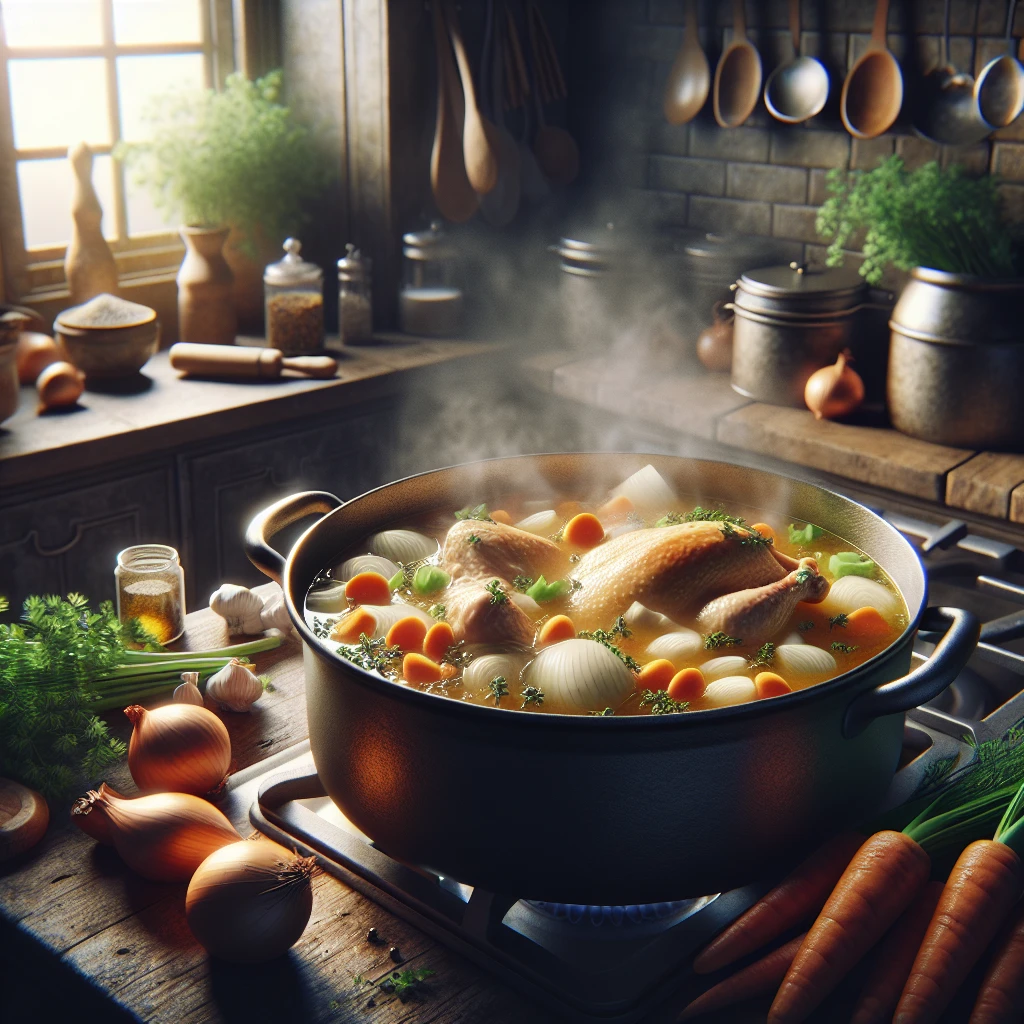
This traditional chicken stock recipe is a kitchen staple that brings warmth and depth to any dish. It's simple, nourishing, and the perfect way to make use of a whole chicken, turning humble ingredients into liquid gold. Let's get simmering!
 Share
Share
This post may contain affiliate links. As an Amazon Associate, we earn from qualifying purchases.
Ingredients for Traditional Chicken Stock
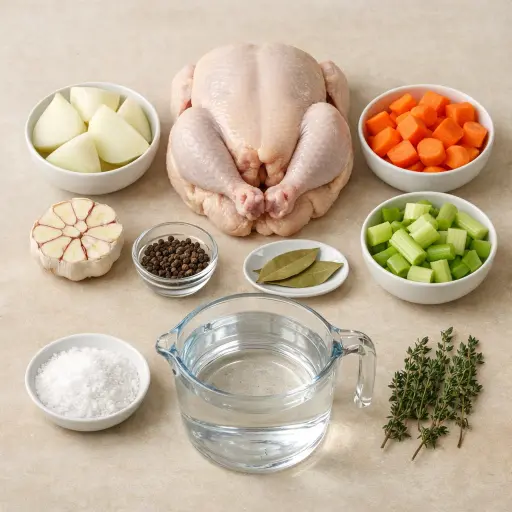
Chicken: The star of the show, providing the essential meaty richness and body to the stock. Use a whole chicken for maximum flavor.
Onions: Quartered and added for sweetness and depth, contributing to the overall savory profile.
Carrots: Chopped and included for their natural sweetness, enhancing the stock's complexity.
Celery: Adds a subtle earthiness and aromatic quality that rounds out the flavors.
Garlic: Halved to release its pungent aroma and warmth, taking the stock to new aromatic heights.
Black peppercorns: Infuse a mild heat and slight spice without overpowering the gentle flavors.
Bay leaves: Lend a subtle, herby fragrance that enhances the overall aroma.
Fresh thyme: Introduces a gentle herbal note, complementing the other ingredients beautifully.
Water: The base liquid, which extracts the flavors from all ingredients, transforming into a flavorful stock.
Salt: Essential for seasoning and enhancing the natural flavors. Add to taste once the stock is complete.
Why This Traditional Chicken Stock Works
As the pot sits at a gentle simmer, the chicken slowly gives up everything good inside it. The bones, skin, and meat stay in the hot water for hours, so the collagen in the joints and skin starts to melt into the water. Over time the liquid goes from thin and clear to a fuller, slightly silky stock that feels richer in the mouth, even though it is mostly water.
While everything cooks, the onions, carrots, celery, and garlic soften and break down. Their edges start to fray, and their sweetness and sharpness spread through the pot. The peppercorns, bay leaves, and thyme sit in the hot water long enough that their taste moves out into the stock too, instead of staying locked in the whole pieces.
By the time the chicken is lifted out, most of its taste has moved into the pot. Straining removes the tired solids, but all the melted collagen and vegetable goodness stay in the liquid. After it cools, the stock even firms up a bit in the fridge, showing how much has been pulled from the chicken bones.
Traditional Chicken Stock Tips & Tricks
- If you have chicken feet or wings, throw them in for even richer stock.
- For a clearer stock, avoid boiling — a gentle simmer is key.
- Use a slotted spoon to easily remove foam and impurities.
- Store in ice cube trays for handy portioning when cooking.
Mistakes To Avoid
Letting the pot boil hard instead of keeping a gentle simmer makes the stock cloudy and greasy. The rolling bubbles break the chicken and vegetables apart, sending tiny bits and fat all through the liquid. The final stock looks murky and can feel slightly oily instead of clear and clean.
Starting with too little water, or not topping it up so it still covers the chicken, leads to uneven cooking and a harsh, concentrated stock. Parts of the chicken end up poking out and drying on the surface, while the liquid reduces too fast and turns dark and slightly sticky. The finished stock can feel heavy and flat instead of light.
Skipping the skimming in the first hour leaves gray foam and scum in the pot. As it cooks, that foam breaks down into tiny particles that stay in the liquid. The stock then looks dull and dirty instead of bright and clear.
Salting heavily at the start instead of at the end often makes the stock too salty. Over three hours, the liquid slowly cooks down, so the salt level climbs. The result is a stock that can’t be fixed by adding much else, because the base is already too intense.
Equipment Used:
Ingredients
- 1 whole chicken (about 4 lbs)
- 2 large onions, quartered
- 3 carrots, chopped
- 3 celery stalks, chopped
- 1 head of garlic, halved
- 10 black peppercorns
- 2 bay leaves
- 3 sprigs of fresh thyme
- 3 quarts water
- Salt to taste
Step-by-step Instructions
- Step 1: Place the chicken in a large stockpot.
- Step 2: Add onions, carrots, celery, garlic, peppercorns, bay leaves, and thyme.
- Step 3: Pour in water to cover the chicken and vegetables by about 1 inch.
- Step 4: Bring to a gentle simmer over medium heat, skimming foam as needed.
- Step 5: Reduce heat to low, cover, and simmer for 3 hours.
- Step 6: Remove chicken and set aside for another use.
- Step 7: Strain the stock through a fine-mesh sieve into a large bowl.
- Step 8: Season with salt to taste.
- Step 9: Let cool completely before refrigerating or freezing.
Trending Now

Traditional Fluffy Pancakes
Discover the perfect start to your morning with our Traditional Fluffy Pancakes, a...
View Recipe
Old-Fashioned Bread Pudding
Discover the classic charm of Old-Fashioned Bread Pudding - a timeless dessert com...
View Recipe
Zucchini Fries
Crispy oven-baked zucchini fries with a golden crust, perfect for a healthy snack ...
View Recipe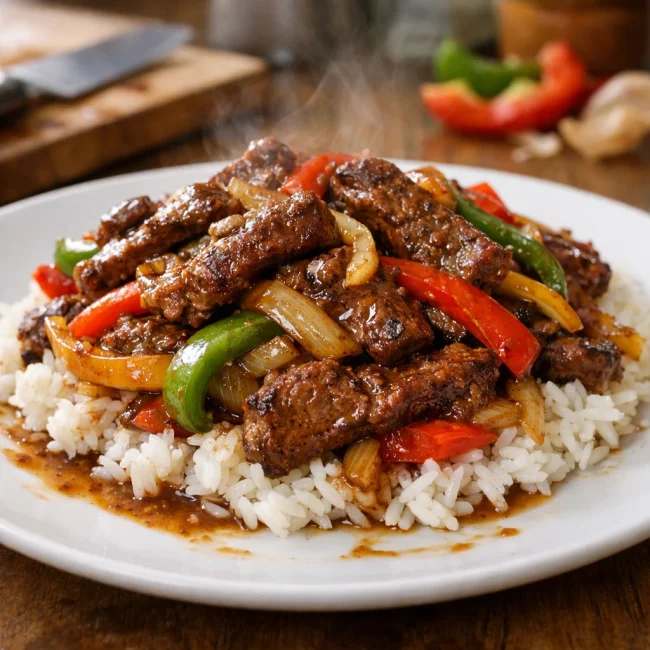
Traditional Pepper Steak
A timeless savory dish, Traditional Pepper Steak features juicy beef strips cooked...
View RecipeFrequently Asked Questions
- Can I use leftover rotisserie chicken?
- Yes, using leftover chicken works well, but keep in mind it might have less flavor than a raw whole chicken.
- How long does homemade chicken stock last?
- In the fridge, it will last up to 5 days. In the freezer, it can keep for up to 3 months.
- What can I do with the leftover chicken?
- Use it for soups, salads, sandwiches, or tacos. It's versatile and can be seasoned as needed.
Serving Ideas for Traditional Chicken Stock
This chicken stock is a versatile base for countless dishes. Use it as a broth for a comforting chicken noodle soup, or as a base for risotto or gravy. It's also wonderful for braising vegetables or adding depth to sauces and stews.
More Soups & Stews Recipes
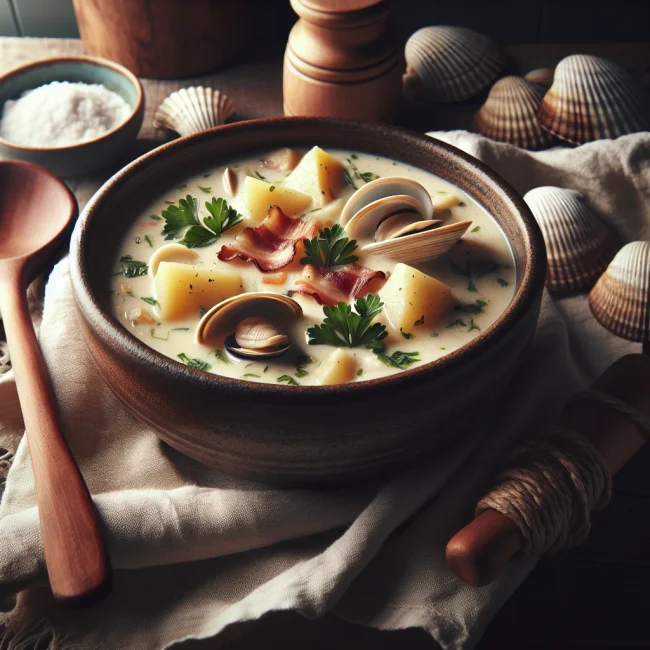
Classic Clam Chowder
Indulge in a timeless seaside staple with our Classic Clam Chowder recipe, a rich ...
View Recipe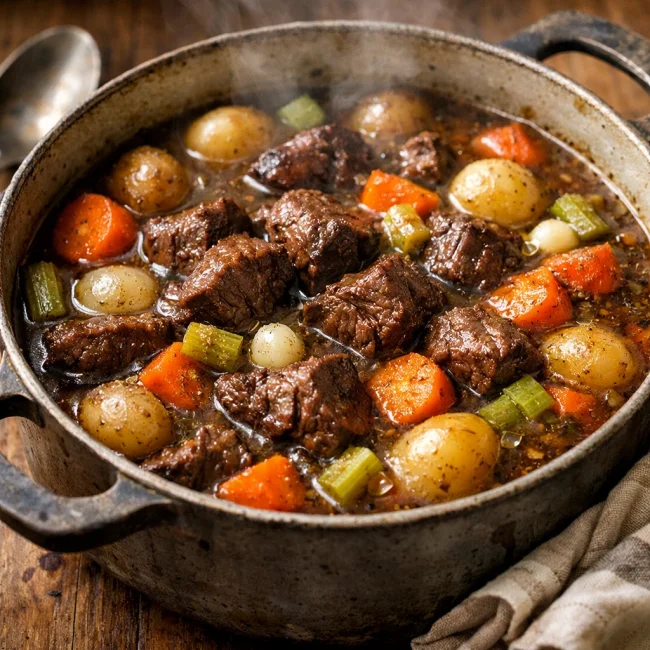
Traditional Beef Stew
A heartwarming traditional beef stew that combines tender beef chunks with classic...
View Recipe
Southwestern Chipotle Taco Soup
Explore the bold flavors of the Southwest with this unique variation of taco soup,...
View Recipe
Southwest Fiesta Taco Soup
Discover the vibrant flavors of our Southwest Fiesta Taco Soup, a quick and hearty...
View Recipe