
Rustic Herb Bread
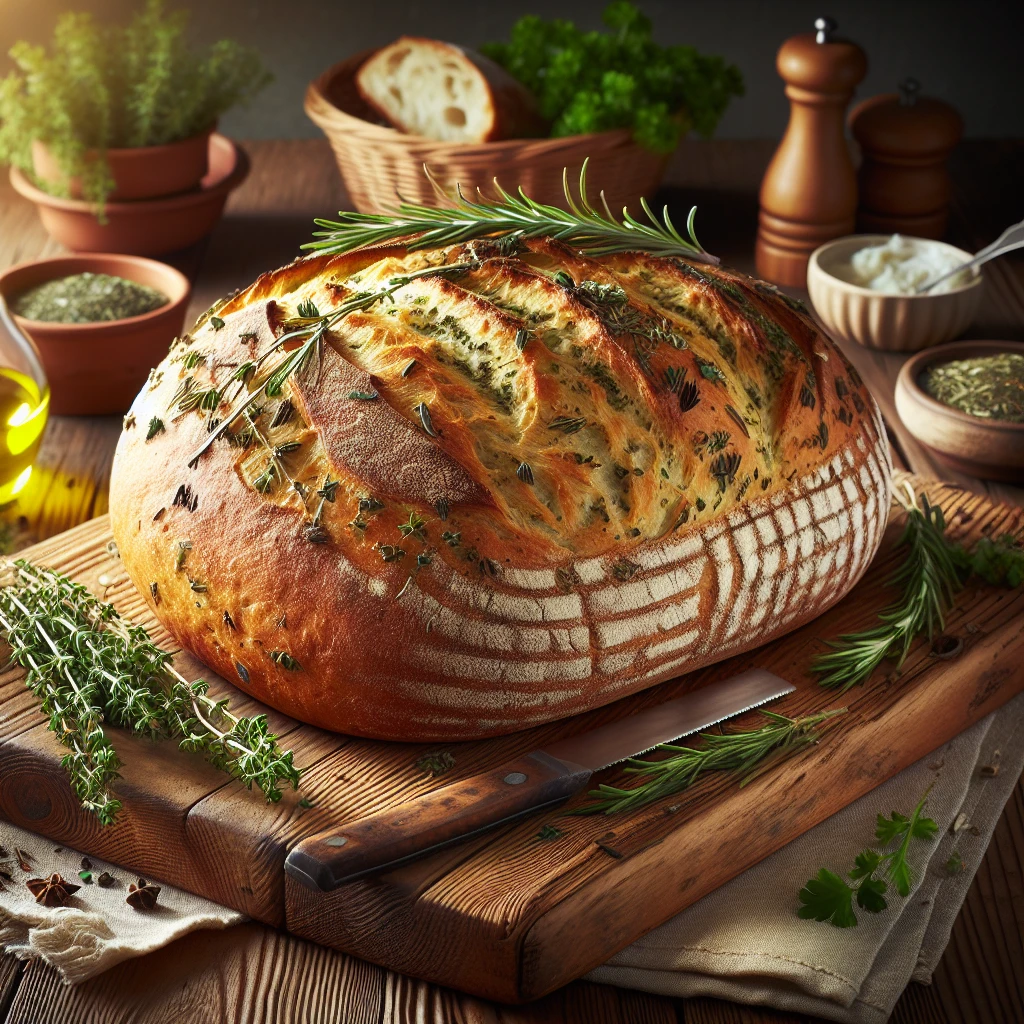
Rustic Herb Bread is the perfect way to bring the comforting aroma of fresh herbs into your kitchen. This homemade bread recipe is simple to make and fills the house with the irresistible scent of rosemary and thyme. Whether you're a seasoned baker or a novice, this bread is a delightful addition to any meal.
 Share
Share
This post may contain affiliate links. As an Amazon Associate, we earn from qualifying purchases.
Ingredients for Rustic Herb Bread
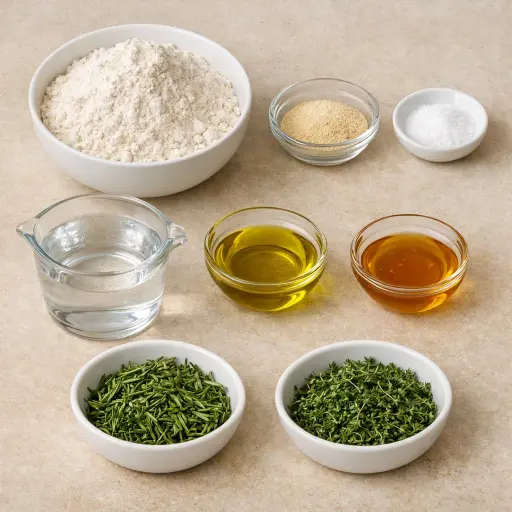
All-purpose flour forms the base of our bread, providing structure and texture. Active dry yeast is the magical ingredient that makes our bread rise, giving it that lovely, airy texture. A pinch of salt enhances the flavors, while warm water helps activate the yeast. Olive oil adds richness and a slight fruity note, and honey balances the flavors with a touch of sweetness. Freshly chopped rosemary and thyme are the stars here, infusing the bread with their aromatic, earthy flavors.
Why This Rustic Herb Bread Works
Warm water wakes up the yeast so it starts to bubble and grow. As it spreads through the flour, tiny gas pockets form in the dough. While the dough rests in the bowl, those pockets slowly stretch the dough and make it rise. Honey gives the yeast something easy to eat, so it works a little faster and stronger. Salt keeps the yeast from going wild and also tightens the dough just enough so it can hold its shape.
During kneading, the flour and water change from a sticky mess into a smooth, stretchy ball. Long strands form inside the dough and act like a net. Later in the oven, that net traps the steam from the water and the air from the yeast, so the bread bakes up light instead of dense. The olive oil coats that net and keeps it from drying out, so the bread stays soft. Once the loaf hits the hot oven, the outside firms up into a crust while the inside stays tender, and the chopped rosemary and thyme spread through every slice.
Rustic Herb Bread Tips & Tricks
- If your kitchen is cold, let the dough rise in a warm oven (turned off) to speed up the process.
- For an extra crispy crust, place a shallow pan of water in the oven while baking.
- Don't rush the kneading; the texture of the bread depends on it.
Mistakes To Avoid
Using water that is too hot kills the yeast, while water that is just lukewarm leaves it sluggish. In both cases the dough barely rises, so the loaf bakes up flat and tight inside instead of puffed and airy.
Skipping or rushing the kneading step leaves the dough uneven and weak. The gluten never stretches out properly, so the bread tears easily, spreads sideways on the tray, and comes out dense with a gummy center.
Adding the chopped herbs right at the start with the flour and yeast can cause trouble. The sharp bits of rosemary and thyme cut through the gluten strands as they form, so the dough struggles to get elastic and the loaf bakes up short and heavy.
Letting the dough rise in a cold room often means it never really doubles. The surface may look slightly puffed, but inside it stays compact, and the finished bread feels thick and bready instead of light with small, even holes.
Overbaking at 375°F dries the loaf out fast. The crust turns hard and tough while the inside loses moisture, so the slices crumble and feel chalky instead of soft and chewy.
Equipment Used:
Mixing bowl, Baking sheet, Parchment paper, Measuring cups, and spoons
Ingredients
- 3 cups all-purpose flour
- 1 packet (2 1/4 tsp) active dry yeast
- 1 tsp salt
- 1 cup warm water (110°F)
- 2 tbsp olive oil
- 1 tbsp honey
- 1/4 cup freshly chopped rosemary
- 1/4 cup freshly chopped thyme
Step-by-step Instructions
- 1. In a large bowl, combine the flour, yeast, and salt.
- 2. In a separate bowl, mix the warm water, olive oil, and honey until well combined.
- 3. Gradually add the wet ingredients to the dry ingredients, mixing until a dough forms.
- 4. Knead the dough on a floured surface for about 10 minutes, or until smooth and elastic.
- 5. Incorporate the chopped rosemary and thyme into the dough.
- 6. Place the dough in a lightly oiled bowl, cover with a damp cloth, and let rise in a warm place until doubled in size, about 1 hour.
- 7. Preheat the oven to 375°F (190°C).
- 8. Punch down the dough and shape it into a loaf.
- 9. Place the loaf on a baking sheet lined with parchment paper.
- 10. Bake in the preheated oven for 25-30 minutes, or until the bread is golden brown and sounds hollow when tapped on the bottom.
- 11. Allow to cool on a wire rack before slicing.
Trending Now

Zucchini Fries
Crispy oven-baked zucchini fries with a golden crust, perfect for a healthy snack ...
View Recipe
Old-Fashioned Bread Pudding
Discover the classic charm of Old-Fashioned Bread Pudding - a timeless dessert com...
View Recipe
Classic Cinnamon Rolls
Indulge in the sweet embrace of our homemade cinnamon rolls, perfect for breakfast...
View Recipe
Traditional Hollandaise Sauce
Discover the rich and creamy essence of traditional Hollandaise Sauce, perfect for...
View RecipeFrequently Asked Questions
- Can I use dried herbs instead of fresh?
- Yes, you can substitute dried herbs, but use half the amount as dried herbs are more concentrated.
- Can I make this bread gluten-free?
- You can try using a gluten-free all-purpose flour blend, but results may vary.
- How do I store the bread?
- Keep it in an airtight container at room temperature for up to three days, or freeze for longer storage.
Serving Ideas for Rustic Herb Bread
This herb bread is a fantastic companion to soups and stews. It's also great for making sandwiches, especially with roasted vegetables and goat cheese. For a simple snack, serve it with a small dish of olive oil and balsamic vinegar for dipping.
More Breads & Baked Goods Recipes

Traditional Italian Easter Bread
Savor the delightful taste of a classic Italian Easter bread, a sweet, soft, and s...
View Recipe
Old-Fashioned Pineapple Bread
A delightful and flavorful bread infused with juicy pineapple, perfect for breakfa...
View Recipe
Old-Fashioned Blueberry Muffins
Transport yourself to simpler times with these delightful old-fashioned blueberry ...
View Recipe
Strawberry Basil Scones
These tender scones combine the sweetness of fresh strawberries with a hint of pep...
View Recipe