
Lucky Southern New Year Feast
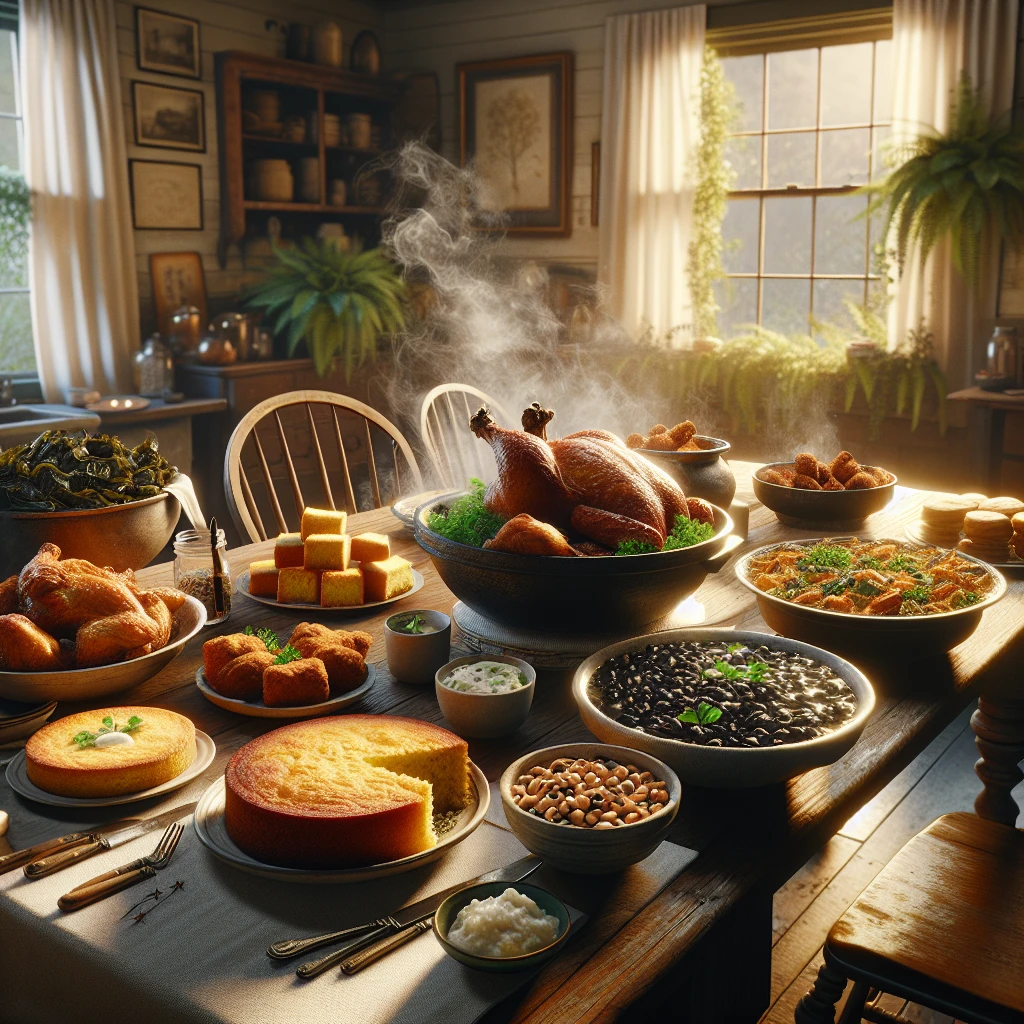
The Lucky Southern New Year Feast is a time-honored tradition, bringing together flavors that symbolize good fortune and prosperity. With tender pork, hearty collard greens, and soul-satisfying black-eyed peas, this dish is as delicious as it is meaningful — perfect for welcoming the New Year with open arms and a full belly.
 Share
Share
This post may contain affiliate links. As an Amazon Associate, we earn from qualifying purchases.
Ingredients for Lucky Southern New Year Feast
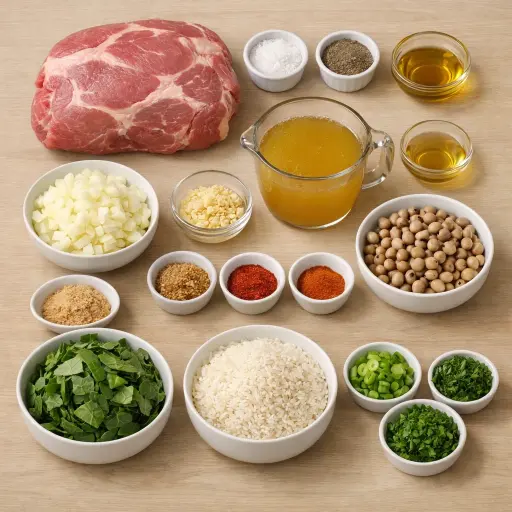
The star of this dish is the pork shoulder, chosen for its rich flavor and ability to become incredibly tender when slow-cooked. Salt and black pepper are your basic seasonings, enhancing the natural taste of the pork. Olive oil helps to sear the meat, locking in those flavors. The yellow onion and garlic add depth and aromatic richness to the dish.
Chicken broth ensures the pork stays juicy and adds a savory base, while apple cider vinegar gives a tangy kick that brightens the overall flavor profile. A bit of brown sugar balances the acidity, complemented by smoked paprika for a subtle smoky note and cayenne pepper for some heat. Collard greens and black-eyed peas are not just traditional but also add nutritional heft and texture. Long-grain white rice serves as the perfect base for soaking up all the delicious juices. Finally, green onions and fresh parsley give a fresh finish and a pop of color.
Why This Lucky Southern New Year Feast Works
In the pot, the pork shoulder is first browned so the outside firms up and gets a deeper color. That browned crust keeps the juices inside while the meat sits in the oven for hours. With the low oven heat, the tough parts in the pork slowly break down. Over time the meat loosens and starts to fall apart instead of staying chewy.
While the pork cooks in the broth, vinegar, and spices, the liquid slowly moves into the meat. The apple cider vinegar gently breaks down the fibers, and the broth keeps everything moist so the pork doesn’t dry out. Near the end, collard greens and black-eyed peas go into the same pot. They soften in the hot liquid and soak up the seasoned juices from the pork.
Once the pork is shredded back into the pot, the meat, greens, and peas all mix into one soft, spoonable mixture. Serving it over plain white rice gives all that juicy pork and broth somewhere to sink in, so every bite stays moist and comforting.
Lucky Southern New Year Feast Tips & Tricks
- If you’re short on time, use a pressure cooker to speed up the cooking process.
- Let the pork rest for a few minutes before shredding to lock in the juices.
- Use the leftover broth from the pot to moisten the rice if needed.
Mistakes To Avoid
Letting the pork shoulder cook too short a time leaves the meat tight and chewy instead of soft. The connective tissue doesn’t have time to break down, so it won’t shred easily and stays in big, tough chunks that don’t mix well with the greens and peas.
Starting with an oven that’s too hot or searing on very high heat can scorch the outside of the pork and the brown bits in the pot. Those burnt bits stick to the bottom and turn the cooking liquid harsh and bitter, and the meat can dry out on the edges before the inside gets tender.
Adding the collard greens and black-eyed peas too early makes them cook for hours and break down too much. The greens turn dull and stringy, and the peas split and go mushy, so the finished pot looks muddy and has no separate textures.
Skipping the browning step on the pork and onions leaves the cooking liquid pale and thin. The meat still cooks, but the sauce around it stays flat and watery, and the shredded pork feels less rich and satisfying over the rice.
Equipment Used:
Ingredients
- 4 lbs pork shoulder
- 2 tsp salt
- 1 tsp black pepper
- 1 tbsp olive oil
- 1 large yellow onion, chopped
- 4 cloves garlic, minced
- 2 cups chicken broth
- 2 tbsp apple cider vinegar
- 1 tbsp brown sugar
- 1 tsp smoked paprika
- 1/2 tsp cayenne pepper
- 2 cups collard greens, chopped
- 2 cups black-eyed peas, cooked
- 1 cup long-grain white rice
- 1/4 cup green onions, sliced
- 1/4 cup fresh parsley, chopped
Step-by-step Instructions
- 1. Preheat oven to 300°F.
- 2. Season the pork shoulder with salt and pepper.
- 3. Heat olive oil in a large Dutch oven over medium-high heat. Sear the pork shoulder on all sides until browned, about 4 minutes per side.
- 4. Remove the pork and set aside. In the same pot, add chopped onions and cook until translucent, about 5 minutes.
- 5. Stir in minced garlic, chicken broth, apple cider vinegar, brown sugar, smoked paprika, and cayenne pepper. Bring to a simmer.
- 6. Return the pork shoulder to the pot, cover, and transfer to the preheated oven. Cook for 3 to 4 hours until the meat is tender and easily pulls apart.
- 7. In the last 30 minutes of cooking, add collard greens and black-eyed peas to the pot.
- 8. Cook rice according to package instructions.
- 9. Once the pork is ready, shred it with two forks and mix with the greens and peas in the pot.
- 10. Serve the dish over a bed of rice, garnished with green onions and parsley.
Trending Now

Old-Fashioned Pancakes
Relish in the simplicity and comfort of homemade old-fashioned pancakes, perfect f...
View Recipe
Spiced Brown Sugar Pork Chops
A delightful twist on traditional pork chops, featuring a brown sugar glaze mixed ...
View Recipe
Moist Banana Loaf
Discover the timeless charm of our Moist Banana Loaf, a luscious and tender treat ...
View Recipe
Classic Blueberry Muffins
Deliciously moist and fluffy, these classic blueberry muffins are bursting with fr...
View RecipeFrequently Asked Questions
- Can I use a different cut of pork?
- While pork shoulder is ideal, a pork butt or even a boneless pork roast can work if needed.
- Can I make this dish spicy?
- Absolutely! Increase the amount of cayenne pepper or add a dash of hot sauce to the broth.
- How do I store leftovers?
- Store any leftovers in an airtight container in the fridge for up to three days. Reheat gently on the stove or in the microwave.
Serving Ideas for Lucky Southern New Year Feast
This dish is a complete meal on its own, but pairing it with a side of cornbread or a crisp, green salad can add a nice contrast. A glass of sweet tea would complement the Southern flavors beautifully.
More Main Dishes Recipes
Unique Homemade Corned Beef
Discover the ultimate homemade corned beef recipe that balances rich flavors and t...
View Recipe
Spicy Lime Seared Ahi Tuna
Experience a burst of flavor with our Spicy Lime Seared Ahi Tuna, a perfect fusion...
View Recipe
Traditional Chicken Parmesan
Savor the authentic taste of Italian cuisine with our Traditional Chicken Parmesan...
View Recipe
Seared Ahi Tuna
Experience the sublime taste of seared Ahi tuna, a Japanese-inspired dish that hig...
View Recipe