
Croissants
Croissants are the quintessential French pastry, known for their flaky layers and buttery taste. This recipe breaks down the process into manageable steps, so even beginners can enjoy fresh, homemade croissants that rival those from a Parisian bakery.
 Share
Share

This post may contain affiliate links. As an Amazon Associate, we earn from qualifying purchases.
Ingredients for Croissants
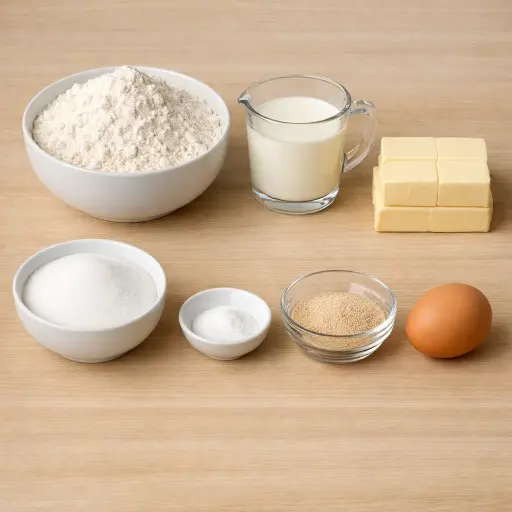
All-purpose flour provides the structure and base for the dough. It’s versatile and perfect for achieving the right texture. Granulated sugar adds a hint of sweetness that balances the rich buttery layers. Salt enhances the overall flavor, making it more pronounced. The active dry yeast is crucial for the dough to rise and develop that airy texture. Whole milk adds richness and helps activate the yeast. Unsalted butter is the star here — it needs to be cold and sliced thinly to create those irresistible layers. Lastly, the egg wash gives the croissants a beautiful golden sheen once baked.
Why This Croissants Works
During the first rise, the yeast wakes up in the warm milk and starts making tiny air pockets inside the dough. The sugar feeds the yeast, so the dough slowly puffs and becomes stretchy instead of stiff. By the time the dough is ready to roll, it can bend and fold without tearing.
When the cold butter goes in as thin slices, it stays in flat sheets between layers of dough. Each time the dough is folded and rolled, those sheets spread out and stack on top of each other. After chilling, the butter firms back up, so it doesn’t melt into the dough too early.
In the hot oven, the butter finally melts and gives off steam. That steam pushes the dough layers apart, so the croissants rise and separate into flakes. At the same time, the egg wash on the outside dries and browns, so the surface turns shiny and golden while the inside stays soft and light.
Croissants Tips & Tricks
- Keep the butter cold at all times to ensure flakiness; if it starts to soften, chill the dough.
- Don’t skip the resting phases — they allow the gluten to relax, making rolling easier.
- Use a sharp knife or pizza cutter to cut clean edges, which helps the layers puff up evenly.
Mistakes To Avoid
Using milk that is too hot for the yeast can kill it, so the dough barely rises. The dough then rolls out dense and heavy, and the croissants bake up thick, tight, and bready instead of light with visible layers.
Kneading the dough too long at the start makes it very strong and stretchy. Later, when it is rolled and folded, the dough fights back and shrinks, so the layers press into each other and the baked croissants come out tough with fewer flaky pockets.
Letting the butter warm up or soften before it goes into the dough causes trouble. Soft butter squeezes into the dough instead of staying in flat sheets, so in the oven it melts straight into the dough and the croissants turn out more like soft rolls with almost no flake.
Rolling the shaped croissants too tight stretches and seals the layers together. In the oven, steam has no room to push them apart, so they puff only a little and end up small, dense, and chewy in the center.
Equipment Used:
Ingredients
- 4 cups all-purpose flour
- 1/2 cup granulated sugar
- 1 tbsp salt
- 1 packet (2 1/4 tsp) active dry yeast
- 1 1/4 cups whole milk
- 1 cup unsalted butter (cold)
- 1 egg (for egg wash)
Step-by-step Instructions
- 1. In a large bowl, mix flour, sugar, and salt. Dissolve yeast in warm milk and add to dry ingredients. Mix until a dough forms.
- 2. Knead the dough on a floured surface until smooth. Cover and let rise for 1 hour.
- 3. Roll the dough into a large rectangle. Place thin slices of cold butter on two-thirds of the dough.
- 4. Fold the unbuttered third over the middle, then fold the opposite end over, like a letter. Roll out the dough again, fold, and repeat twice more.
- 5. Chill the folded dough for 30 minutes.
- 6. Roll out the dough, cut into triangles, and roll each triangle into a crescent shape. Place on a baking sheet.
- 7. Brush with egg wash and let rise for 1 hour.
- 8. Preheat oven to 375°F (190°C). Bake croissants for 15-20 minutes until golden brown.
Trending Now

Old-Fashioned Pancakes
Relish in the simplicity and comfort of homemade old-fashioned pancakes, perfect f...
View Recipe
Spiced Brown Sugar Pork Chops
A delightful twist on traditional pork chops, featuring a brown sugar glaze mixed ...
View Recipe
Moist Banana Loaf
Discover the timeless charm of our Moist Banana Loaf, a luscious and tender treat ...
View Recipe
Classic Blueberry Muffins
Deliciously moist and fluffy, these classic blueberry muffins are bursting with fr...
View RecipeFrequently Asked Questions
- Can I use salted butter?
- It's best to use unsalted butter to control the salt level, but if you use salted, reduce the added salt in the recipe.
- How do I store leftover croissants?
- Store them in an airtight container at room temperature for up to two days, or freeze for longer storage.
- Can I prepare the dough ahead of time?
- Yes, you can prepare the dough up to the folding stage and refrigerate overnight. Let it come to room temperature before proceeding.
Serving Ideas for Croissants
Serve your croissants warm with a selection of jams, honey, or a bit of salted butter for a classic French breakfast. For a savory twist, pair them with cheese and cured meats. They also make a decadent base for eggs benedict or sandwiches.
More Breads & Baked Goods Recipes

Traditional Italian Easter Bread
Savor the delightful taste of a classic Italian Easter bread, a sweet, soft, and s...
View Recipe
Old-Fashioned Pineapple Bread
A delightful and flavorful bread infused with juicy pineapple, perfect for breakfa...
View Recipe
Old-Fashioned Blueberry Muffins
Transport yourself to simpler times with these delightful old-fashioned blueberry ...
View Recipe
Strawberry Basil Scones
These tender scones combine the sweetness of fresh strawberries with a hint of pep...
View Recipe