
Two-Bean Chipotle Chili
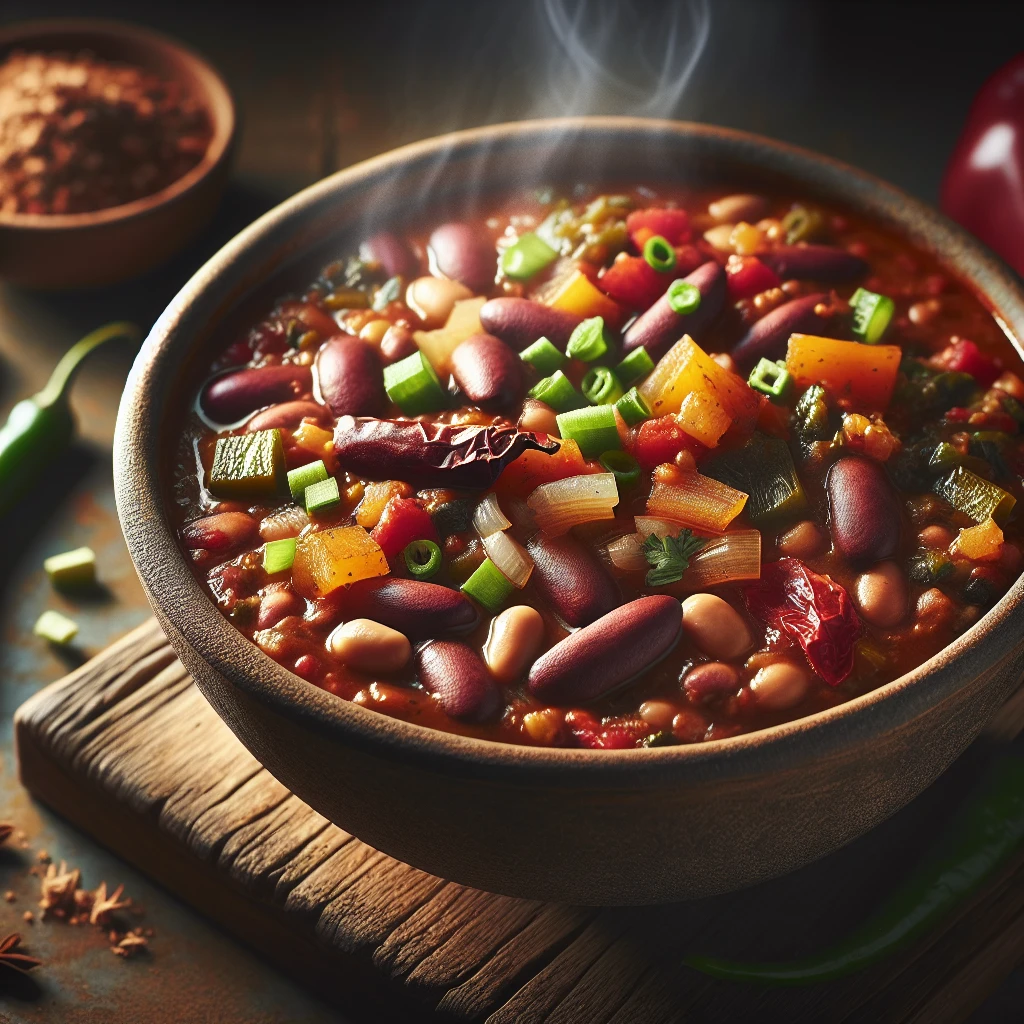
This Two-Bean Chipotle Chili is a hearty, flavor-packed dish perfect for cozy nights or casual gatherings. With its smoky chipotle kick and vibrant mix of veggies and beans, it's a satisfying meal that brings warmth and comfort.
 Share
Share
This post may contain affiliate links. As an Amazon Associate, we earn from qualifying purchases.
Ingredients for Two-Bean Chipotle Chili
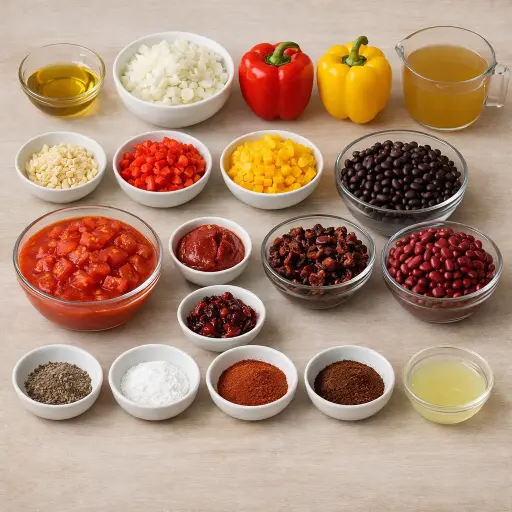
Olive oil serves as the base for sautéing the aromatics, providing a subtle richness to the dish. The onion and garlic create a savory foundation that enhances the overall flavor profile. Adding both red and yellow bell peppers not only brings a pop of color but also a sweet, fresh bite to the chili.
The combination of black beans and kidney beans offers a delightful texture and makes the chili hearty. Diced tomatoes and tomato paste contribute acidity and depth, while chipotle peppers in adobo sauce introduce a smoky heat that's truly the star of this dish. Ground cumin, smoked paprika, and chili powder add layers of warmth and spice, and a pinch of black pepper and salt ties everything together.
Vegetable broth adds moisture and helps meld the flavors, while a splash of fresh lime juice at the end brightens the chili, balancing the richness. Finally, a sprinkle of fresh cilantro adds a fragrant, herbaceous finish.
Why This Two-Bean Chipotle Chili Works
As the pot heats up, the onion and garlic soften in the olive oil and lose their sharp bite. They start to taste a little sweeter and milder, so they don’t overpower the chili. Once the bell peppers go in, they soften too, but still keep a bit of bite so the chili doesn’t feel mushy.
After the beans, tomatoes, and tomato paste are added, the whole pot is pretty loose and chunky. While everything simmers, the beans sit in the hot liquid and start to break down just a little on the outside. Some of their starch mixes into the broth, so the chili slowly thickens and feels more hearty instead of soupy. The tomato paste also swells and blends into the liquid, which makes the base smoother and richer.
During the simmer, the chipotle, cumin, smoked paprika, and chili powder spread through the whole pot. By the end, every spoonful tastes even. The lime juice and cilantro go in at the end so they stay bright and fresh and don’t fade in the long cooking.
Two-Bean Chipotle Chili Tips & Tricks
- If you like extra heat, add an extra chipotle pepper or a dash of cayenne pepper.
- For a thicker chili, let it simmer a bit longer until it reaches your desired consistency.
- Use a potato masher to partially mash some of the beans if you prefer a creamier texture.
Mistakes To Avoid
Letting the heat stay too high after adding the beans and tomatoes can make the chili catch on the bottom of the pot. The thick tomato base sticks and burns in spots while the top still looks fine. Those burnt bits break loose when stirred and leave the whole pot with a harsh, bitter edge and a slightly gritty texture.
Adding the lime juice and cilantro early in the simmer changes the way the chili thickens. The acid from the lime can keep the tomatoes from breaking down as nicely, so the sauce stays a bit thin and watery, and the cilantro turns dull and soft instead of staying fresh and bright on top.
Skipping the step of rinsing the canned beans often leads to a heavy, muddy pot of chili. The starchy, salty can liquid makes the base thicker in a gluey way and can throw off the salt level, so the chili ends up pasty and overly salty even before any extra seasoning goes in.
Using too little simmer time leaves the spices tasting sharp and separate. The beans stay a bit firm in the center, and the liquid doesn’t have time to reduce, so the chili eats more like a bean soup than a thick, cozy bowl of chili.
Equipment Used:
Ingredients
- 2 tbsp olive oil
- 1 large onion, chopped
- 4 cloves garlic, minced
- 1 red bell pepper, diced
- 1 yellow bell pepper, diced
- 2 cans (15 oz each) black beans, drained and rinsed
- 2 cans (15 oz each) kidney beans, drained and rinsed
- 1 can (28 oz) diced tomatoes
- 2 tbsp tomato paste
- 2 chipotle peppers in adobo sauce, chopped
- 2 tsp ground cumin
- 2 tsp smoked paprika
- 1 tsp chili powder
- 1/2 tsp black pepper
- Salt to taste
- 1 cup vegetable broth
- 1 tbsp fresh lime juice
- 1/4 cup fresh cilantro, chopped
Step-by-step Instructions
- 1. Heat olive oil in a large pot over medium heat.
- 2. Add onion and garlic, sauté until the onion is translucent.
- 3. Stir in red and yellow bell peppers, cook until slightly softened.
- 4. Add black beans, kidney beans, diced tomatoes, and tomato paste to the pot.
- 5. Mix in chipotle peppers, cumin, smoked paprika, chili powder, black pepper, and salt.
- 6. Pour in the vegetable broth, stir well to combine all ingredients.
- 7. Bring the chili to a boil, then lower the heat and let it simmer uncovered for 30 minutes, stirring occasionally.
- 8. Adjust seasoning if necessary, then mix in lime juice and fresh cilantro before serving.
Trending Now
Traditional Cucumber and Tomato Salad
A refreshing and simple salad combining crisp cucumbers and juicy tomatoes, season...
View Recipe
Oven-Baked Pork Chops
Enjoy a delightful dinner with these tender and juicy oven-baked pork chops, seaso...
View Recipe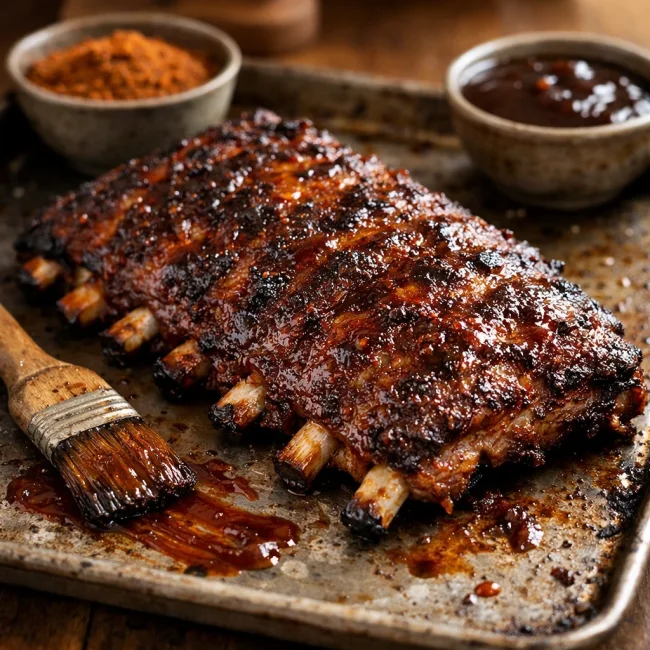
Oven-Roasted Baby Back Ribs
Savor the classic, finger-licking deliciousness of perfectly oven-roasted baby bac...
View Recipe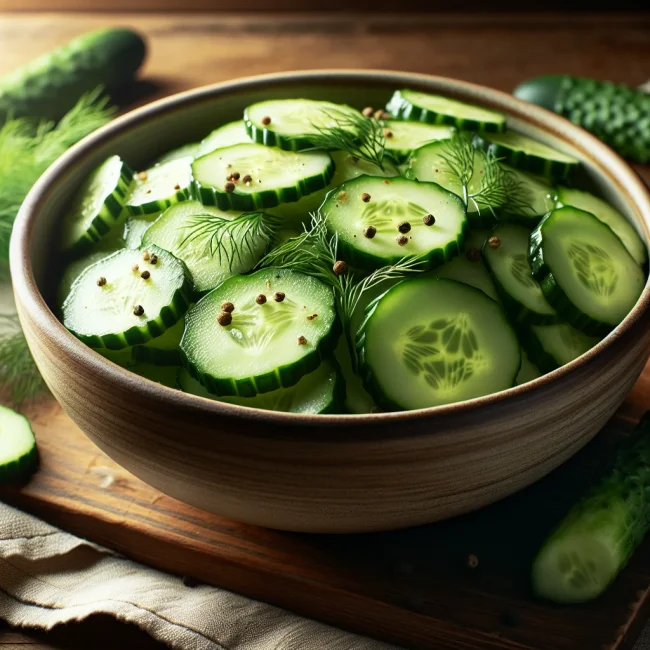
Classic Cucumber Salad
A refreshing and light cucumber salad featuring crisp cucumbers and a tangy vinaig...
View RecipeFrequently Asked Questions
- Can I use fresh tomatoes instead of canned?
- Yes, you can use fresh tomatoes. Dice about 4 large tomatoes and include all their juices.
- Is there a substitute for chipotle peppers?
- If you can't find chipotle peppers, smoked paprika or a bit of liquid smoke can mimic the smoky flavor, though you'll miss the heat.
- How long does this chili keep?
- Stored in an airtight container in the fridge, this chili will keep for up to 5 days. It also freezes well for up to 3 months.
Serving Ideas for Two-Bean Chipotle Chili
This chili pairs beautifully with a side of warm cornbread or over a bed of fluffy rice. Top with avocado slices, a dollop of sour cream, or shredded cheese for added richness. A fresh green salad can also balance the hearty flavor of the chili.
More Main Dishes, Vegan, Gluten-Free Recipes
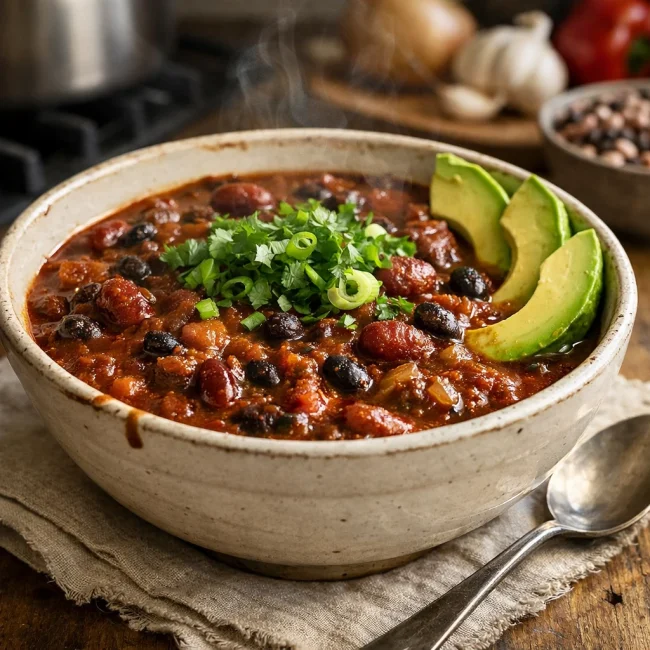
Two-Bean Chipotle Chili
Discover the vibrant flavors of our Two-Bean Chipotle Chili, a hearty and spicy de...
View Recipe
Savory Mushroom Quinoa Stuffed Cabbage
Discover the delightful twist on classic stuffed cabbage with our savory mushroom ...
View Recipe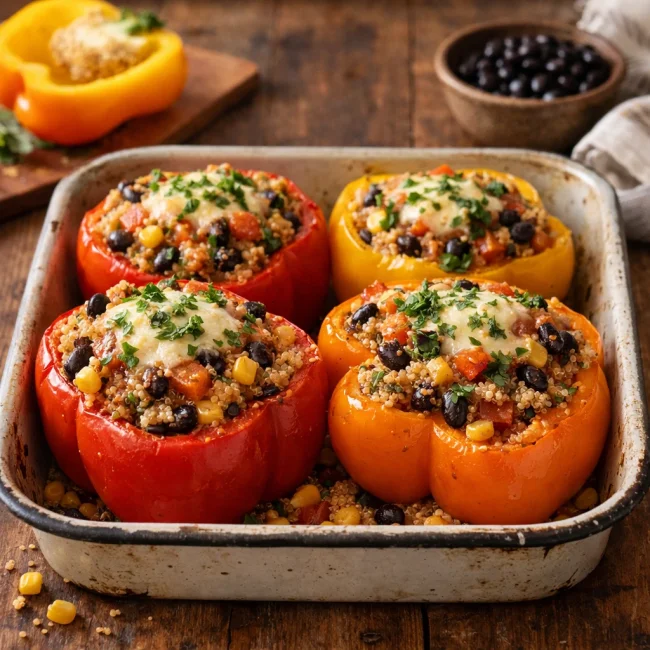
Quinoa Stuffed Bell Peppers
Delicious and vibrant bell peppers are stuffed with a savory blend of quinoa, blac...
View Recipe