
Lemon Basil Olive Oil Cake
If you’re craving something that bridges the gap between dessert and a sophisticated snack, look no further than this Lemon Basil Olive Oil Cake. The aromatic blend of lemon and basil, paired with the richness of olive oil, makes this cake a unique treat that will impress your friends and family.
 Share
Share

This post may contain affiliate links. As an Amazon Associate, we earn from qualifying purchases.
Ingredients for Lemon Basil Olive Oil Cake
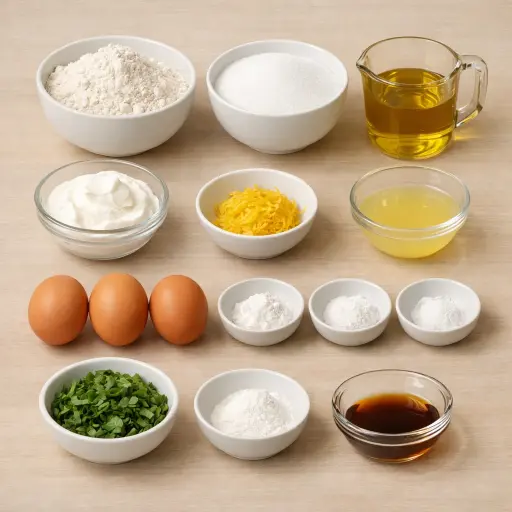
All-purpose flour provides the structure for the cake, while granulated sugar adds sweetness. Olive oil is the star here, giving the cake its rich texture and unique flavor. Plain Greek yogurt ensures a moist crumb while adding a slight tang. Lemon zest and fresh lemon juice bring a bright, citrusy note that pairs perfectly with the fresh basil. The eggs help bind everything together, and the baking powder and baking soda are essential for the cake to rise. A pinch of salt enhances all the flavors, and vanilla extract rounds it all off with a subtle sweetness.
Why This Lemon Basil Olive Oil Cake Works
In the bowl, the sugar and olive oil coat each other and turn thick and glossy. As the eggs go in, that mixture loosens up and traps tiny bubbles. Those bubbles stay in the batter and later in the oven they expand, so the cake rises instead of baking up dense. Lemon juice and yogurt bring in a lot of moisture, but the baking powder and baking soda keep that extra liquid from weighing the cake down.
During baking, the flour soaks up the wet ingredients and firms up around those air pockets. Olive oil stays liquid even after the cake cools, so the crumb stays soft instead of drying out like a butter cake sometimes does. Greek yogurt adds body and a slight tang, and it keeps the inside tender.
As the heat moves through the pan, the lemon zest and chopped basil spread through the batter. By the time the cake is done and has cooled, the structure has set, but the inside stays moist, with little bits of basil and lemon running through a soft, even crumb.
Lemon Basil Olive Oil Cake Tips & Tricks
- If you’re out of parchment paper, a well-greased and floured pan will work in a pinch.
- For a more intense lemon flavor, you can add a teaspoon of lemon extract.
- Mixing the basil in by hand gives better control and ensures it doesn’t get too bruised.
Mistakes To Avoid
Overbaking this cake easily turns the crumb dry and crumbly. The olive oil and yogurt are there to keep it moist, but too long in the oven or using a dark pan without checking early makes the edges hard and the center lose its soft, tender texture.
Pouring in all the lemon juice at once with the eggs can cause the batter to look curdled and uneven. The acid hits the fat and eggs too strongly, so the mixture separates a bit and never fully smooths out, which can bake into a slightly uneven, patchy crumb.
Stirring the batter for too long after adding the flour mixture leads to a dense, tough cake. The more the flour is worked, the more the gluten tightens, so instead of a light, soft slice, the cake cuts into heavy wedges that feel a bit rubbery.
Using a strongly flavored or bitter olive oil overwhelms the cake’s balance. Instead of a gentle, fruity background, the finished cake can taste harsh and slightly greasy, and the lemon and basil come through much less.
Equipment Used:
Ingredients
- 1 1/2 cups all-purpose flour
- 1 cup granulated sugar
- 1/2 cup olive oil
- 1/2 cup plain Greek yogurt
- 1 tablespoon lemon zest
- 2 tablespoons fresh lemon juice
- 3 large eggs
- 1 teaspoon baking powder
- 1/2 teaspoon baking soda
- 1/4 teaspoon salt
- 1/4 cup fresh basil, chopped
- 1 teaspoon vanilla extract
Step-by-step Instructions
- 1. Preheat the oven to 350°F (175°C). Grease a 9-inch round cake pan and line the bottom with parchment paper.
- 2. In a medium bowl, whisk together flour, baking powder, baking soda, and salt. Set aside.
- 3. In a large mixing bowl, beat the sugar and olive oil together until well combined. Add the eggs one at a time, mixing well after each addition.
- 4. Stir in the lemon zest, lemon juice, vanilla extract, and chopped basil.
- 5. Alternately add the flour mixture and Greek yogurt to the wet ingredients, starting and ending with the flour mixture. Mix until just combined.
- 6. Pour the batter into the prepared cake pan and smooth the top with a spatula.
- 7. Bake for 35-40 minutes or until a toothpick inserted into the center comes out clean.
- 8. Allow the cake to cool in the pan for 10 minutes before transferring it to a wire rack to cool completely.
Trending Now
Old-Fashioned Bread Pudding
Discover the classic charm of Old-Fashioned Bread Pudding - a timeless dessert com...
View Recipe
Zucchini Fries
Crispy oven-baked zucchini fries with a golden crust, perfect for a healthy snack ...
View Recipe
Classic Cinnamon Rolls
Indulge in the sweet embrace of our homemade cinnamon rolls, perfect for breakfast...
View Recipe
Traditional Pepper Steak
A timeless savory dish, Traditional Pepper Steak features juicy beef strips cooked...
View RecipeFrequently Asked Questions
- Can I use a different type of oil?
- Yes, but keep in mind that olive oil gives this cake its distinctive flavor. A mild vegetable oil could be used as a substitute.
- Can I use dried basil instead of fresh?
- Fresh basil is recommended for its vibrant flavor, but you can use dried basil in a pinch. Use about half the amount if substituting dried for fresh.
- Is this cake freezer-friendly?
- Absolutely! Wrap it tightly in plastic wrap and store it in an airtight container before freezing.
Serving Ideas for Lemon Basil Olive Oil Cake
This cake pairs beautifully with a dollop of whipped cream or a drizzle of honey for added sweetness. For a savory twist, serve a slice alongside a cheese platter — it complements soft cheeses like brie or goat cheese wonderfully.
More Desserts, Baking, Mediterranean, Vegetarian Recipes
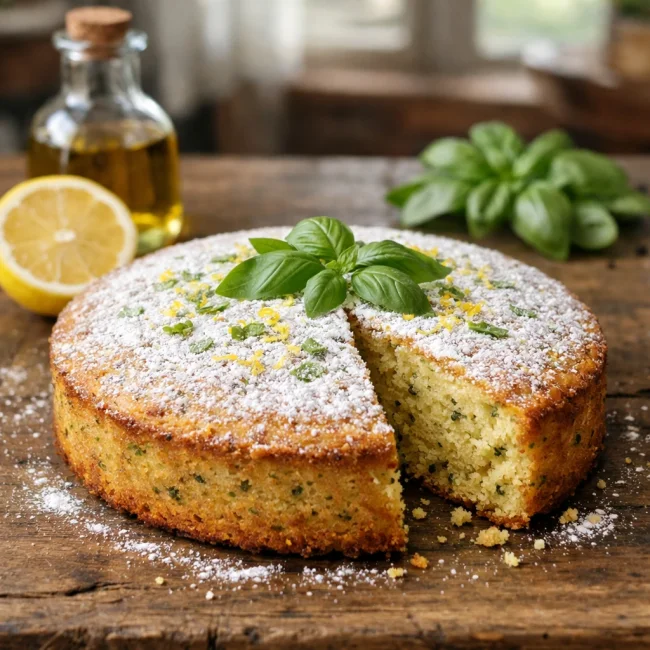
Lemon Basil Olive Oil Cake
A unique twist on the traditional lemon cake, this Lemon Basil Olive Oil Cake is i...
View Recipe