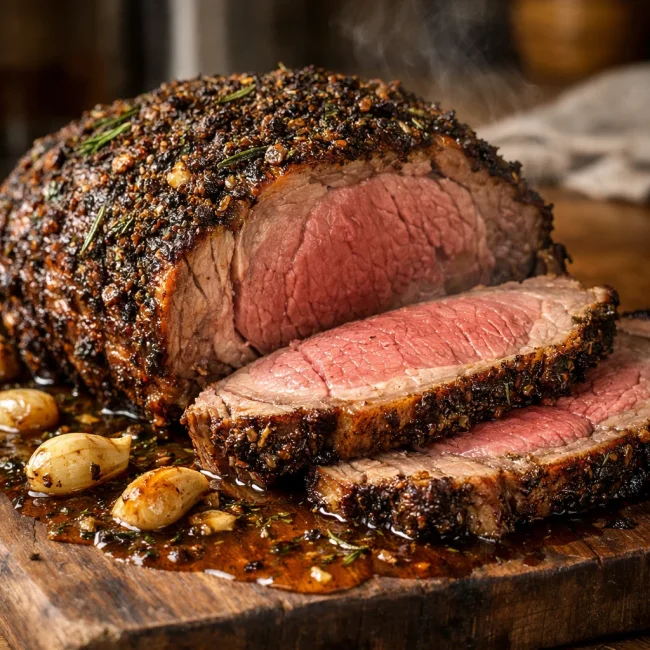
Herb-Crusted Roast Beef with Balsamic Glaze
Discover the ultimate herb-crusted roast beef recipe with a sweet and tangy balsamic glaze. Perfect for holidays or special dinners, this recipe promises to deliver a tender and flavorful main course. Optimized for those looking to impress with a unique yet accessible roast beef dish.
Prep time: 15 minutesCook time: 2 hoursServes: 8
Ingredients
1 (5-pound) boneless beef rib roast
2 tablespoons olive oil
3 cloves garlic, minced
1 tablespoon sea salt
1 tablespoon freshly ground black pepper
2 tablespoons fresh rosemary, chopped
2 tablespoons fresh thyme, chopped
1/4 cup balsamic vinegar
1 tablespoon honey
Instructions
1. Preheat your oven to 450°F (232°C) and place a rack in the center of the oven.
2. In a small bowl, combine olive oil, garlic, salt, pepper, rosemary, and thyme to create an herb paste.
3. Rub the herb paste generously all over the beef roast, ensuring it is well coated.
4. Place the roast on a roasting rack in a roasting pan, fat side up.
5. Roast in the preheated oven for 15 minutes, then reduce the temperature to 325°F (163°C).
6. Continue roasting for approximately 1 hour and 45 minutes, or until the internal temperature reaches 135°F (57°C) for medium-rare.
7. While the roast is cooking, combine balsamic vinegar and honey in a small saucepan over medium heat. Simmer until reduced by half and slightly thickened, about 5 minutes.
8. Once the beef is done, remove it from the oven, tent loosely with aluminum foil, and let it rest for 20 minutes before carving.
9. Drizzle the warm balsamic glaze over the sliced roast just before serving.
Storage
Store leftover roast beef in an airtight container in the refrigerator for up to 3 days.
Reheating
Reheat slices of roast beef in a 350°F (177°C) oven, covered, for 10 minutes or until warmed through.
Scan for cooking tips & leave a review!
 itsonly.recipes/view/herb-crusted-roast-beef-with-balsamic-glaze
This recipe is for informational purposes only. Always follow proper food safety practices, cook foods to safe internal temperatures, and store leftovers appropriately. Results may vary.