
Traditional Lemon Pudding Delight
This Traditional Lemon Pudding Delight is a bright and zesty dessert that perfectly balances sweet and tangy flavors. It's a classic comfort dish that brings a refreshing twist to any meal, making it perfect for spring and summer gatherings.
 Share
Share

This post may contain affiliate links. As an Amazon Associate, we earn from qualifying purchases.
Ingredients for Traditional Lemon Pudding Delight
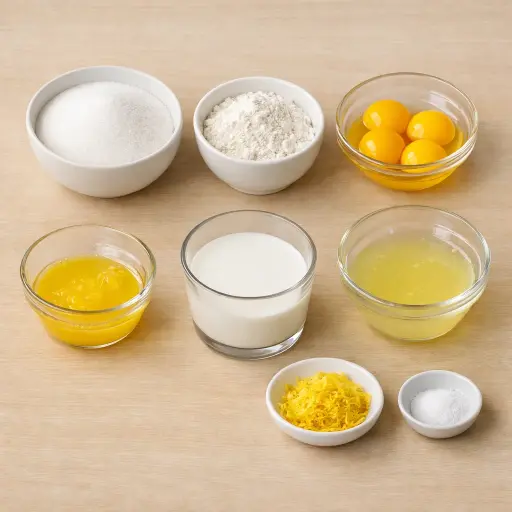
Granulated sugar adds sweetness and balances the tartness of the lemon. All-purpose flour helps thicken the pudding, giving it structure. The egg yolks add richness, while the egg whites are beaten to create the fluffy top layer. Unsalted butter adds creaminess and flavor depth. Whole milk contributes to the pudding’s creaminess. Freshly squeezed lemon juice and lemon zest are the stars, bringing that vibrant, tangy flavor. Finally, a pinch of salt enhances all these flavors.
Why This Traditional Lemon Pudding Delight Works
In the oven, two things happen at once. The lemon batter sinks a bit and stays soft, while the beaten egg whites rise and set on top. Sugar, flour, milk, and egg yolks bake into a smooth, custardy layer. At the same time, the fluffy egg whites hold tiny air pockets that puff up and turn into a light, cake-like top. So one spoonful scoops through a soft cake layer and then into a warm pudding underneath.
During baking, the hot water bath keeps the heat gentle. The sides of the dish do not get too hot, so the eggs in the lemon base set slowly instead of scrambling or turning grainy. Flour gives just enough structure so the pudding holds together but still stays silky. As it cools a little, the layers settle: the top stays tender and slightly springy, and the lemon layer thickens just enough to cling to the spoon.
Traditional Lemon Pudding Delight Tips & Tricks
- Use room-temperature eggs for easier separation and better volume when beating the whites.
- Freshly squeezed lemon juice is key. Bottled juice just won’t cut it for this recipe.
- If you're short on time, you can prepare this a day in advance and store it in the fridge.
Mistakes To Avoid
Letting the pudding overbake, or baking it until the top is very dark, makes the bottom pudding layer dry and rubbery instead of soft and custardy. The water bath can’t save it once all the moisture has cooked out, so the dessert ends up more like a tough cake with barely any creamy layer underneath.
Skipping the water bath or using too little water causes the edges to cook much faster than the center. The outside turns firm and sometimes curdled while the middle stays loose and runny, so the pudding doesn’t set in an even layer.
Adding hot melted butter straight into the egg yolks without cooling it slightly can partially cook the yolks on contact. This leaves tiny scrambled bits in the mixture, and those bits stay grainy in the finished pudding instead of blending into a smooth texture.
Beating the egg whites only to soft peaks, or folding them in roughly, keeps the batter from holding enough air. The pudding then bakes up flat and dense, with a thin or almost missing fluffy cake layer on top.
Equipment Used:
Ingredients
- 1 cup granulated sugar
- 1/4 cup all-purpose flour
- 3 large eggs, separated
- 1/4 cup unsalted butter, melted
- 1 cup whole milk
- 1/3 cup freshly squeezed lemon juice
- 1 tablespoon lemon zest
- 1/4 teaspoon salt
Step-by-step Instructions
- 1. Preheat your oven to 350°F (175°C) and butter a 1.5-quart baking dish.
- 2. In a large bowl, whisk together sugar and flour.
- 3. In a separate bowl, beat egg yolks and combine with melted butter, milk, lemon juice, and lemon zest.
- 4. Add the wet ingredients to the dry ingredients and mix until just combined.
- 5. In a clean bowl, beat egg whites with salt until stiff peaks form.
- 6. Gently fold the egg whites into the lemon batter until no white streaks remain.
- 7. Pour the mixture into the prepared baking dish.
- 8. Place the baking dish in a larger pan and fill the pan with hot water until it reaches halfway up the sides of the baking dish.
- 9. Bake for 45 minutes or until the top is lightly golden and the pudding layer is set beneath.
- 10. Allow to cool slightly before serving.
Trending Now
Old-Fashioned Bread Pudding
Discover the classic charm of Old-Fashioned Bread Pudding - a timeless dessert com...
View Recipe
Traditional Italian Bruschetta
Experience the authentic taste of Italian bruschetta, a perfect blend of fresh tom...
View Recipe
Classic Green Beans
Discover the timeless delight of Classic Green Beans, a simple yet flavorful side ...
View Recipe
Classic Banana Bread
Classic Banana Bread is a timeless dessert beloved for its moist texture and sweet...
View RecipeFrequently Asked Questions
- Can I use a different type of milk?
- Yes, you can substitute the whole milk with a lower fat option, but the pudding may be slightly less creamy.
- How do I know when the pudding is done?
- Check for a lightly golden top and a set pudding layer beneath. It should jiggle slightly but not be liquidy.
Serving Ideas for Traditional Lemon Pudding Delight
This lemon pudding is a treat on its own, but you could add a dollop of freshly whipped cream for extra indulgence. For a bit of texture, sprinkle some crushed shortbread cookies on top. It pairs beautifully with a fresh berry compote, which complements the lemony flavor with a hint of sweetness.
More Desserts Recipes

Rustic Vanilla Peach Cobbler
This rustic vanilla peach cobbler combines a rich, buttery crust with the sweet, v...
View Recipe
Traditional Lemon Curd
A classic, tangy lemon curd that is perfect for enhancing desserts, breakfast dish...
View Recipe
Traditional Cream Cheese Pie
A delightful and timeless dessert, Traditional Cream Cheese Pie offers a rich and ...
View Recipe
Timeless Cream Puff Delight
Indulge in a delectable Timeless Cream Puff Delight, a classic dessert featuring a...
View Recipe