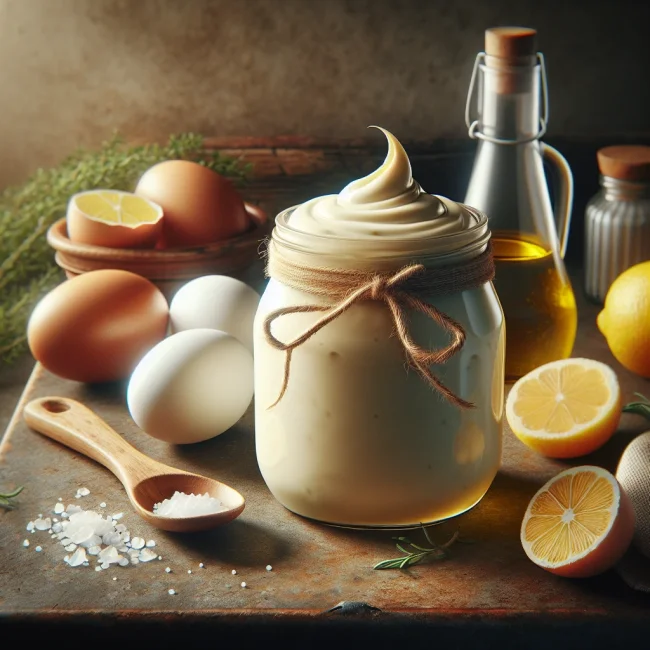
Traditional Homestyle Mayonnaise
Whipping up a batch of homemade mayonnaise isn't just satisfying; it's a culinary revelation. With just a handful of ingredients, you can create a creamy, fresh condiment that's miles better than anything store-bought. Let's dive into this simple yet transformative recipe.
 Share
Share
This post may contain affiliate links. As an Amazon Associate, we earn from qualifying purchases.
Ingredients for Traditional Homestyle Mayonnaise
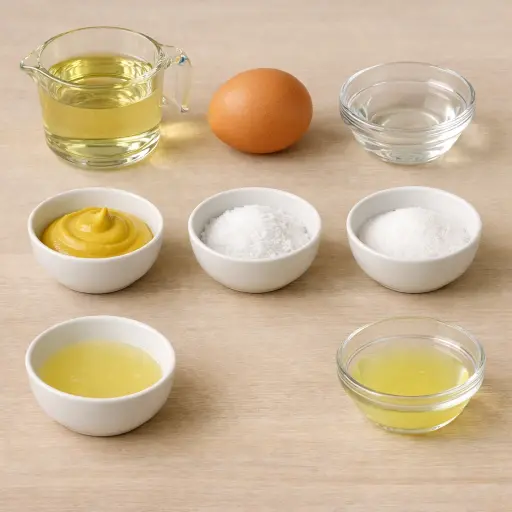
Vegetable oil forms the base of your mayonnaise, giving it a smooth texture and mild taste. Egg is the key emulsifier, helping to blend oil and other ingredients into a creamy consistency. White vinegar adds tang and helps with the emulsification process. Mustard not only enhances flavor but also stabilizes the emulsion. Salt enhances overall taste, while a touch of sugar balances the acidity. Finally, lemon juice brings fresh flavor and acts as a natural preservative.
Why This Traditional Homestyle Mayonnaise Works
At the start, the egg, vinegar, mustard, salt, and sugar form a loose, watery base. As the whisk moves and the oil goes in a few drops at a time, the egg yolk grabs onto the oil on one side and the water-based stuff on the other. Bit by bit, the oil no longer sits on top in a slick layer. Instead, it breaks into tiny bits and spreads all through the egg mixture. That is when the mayonnaise starts to look creamy and thick instead of runny.
Once the first amount of oil is mixed in and the base is already thick, the lemon juice goes in without breaking it. The mixture is strong enough now to hold together, so the extra liquid just loosens it slightly and brightens the taste. As more oil is whisked in, the sauce keeps thickening and turns smooth and glossy. By the end, the egg and mustard are holding a lot of oil in a stable, spoonable sauce that stays together instead of separating.
Traditional Homestyle Mayonnaise Tips & Tricks
- Use room temperature ingredients for better emulsification.
- If the mayo separates, start fresh with a new egg and slowly whisk in the broken mixture.
- A hand blender can speed up the emulsification process.
- Store in an airtight container in the fridge and use within a week for best freshness.
Mistakes To Avoid
Pouring the oil in too fast makes the egg mixture lose control; instead of slowly thickening, the liquid stays runny and the oil floats on top. Once it splits like this, the bowl ends up with a greasy layer and a thin, yellow puddle that never turns into real mayonnaise.
Starting with cold ingredients straight from the fridge often keeps the mixture from coming together. The egg and oil don’t blend smoothly, so the mayo can look grainy or streaky, with tiny beads of oil that refuse to disappear no matter how much whisking happens.
Whisking too gently or stopping often means the emulsion never really forms. The mixture might seem to thicken a little at first, but then it loosens again, and the final mayo turns out thin and unstable, separating after a short time in the fridge.
Adding all the lemon juice at the very beginning can make the base too sharp and watery before it has a chance to thicken. The liquid then struggles to grab the oil, and the mayonnaise stays looser and more soupy than creamy.
Equipment Used:
Ingredients
- 1 cup
- vegetable oil
- 1 large
- egg
- 1 tablespoon
- white vinegar
- 1 teaspoon
- mustard
- 1/2 teaspoon
- salt
- 1/4 teaspoon
- sugar
- 1 tablespoon
- lemon juice
Step-by-step Instructions
- 1. In a medium mixing bowl, combine the egg, vinegar, mustard, salt, and sugar.
- 2. Begin whisking the mixture while slowly drizzling in the vegetable oil.
- 3. Continue whisking vigorously as the mixture starts to thicken and emulsify.
- 4. Once the initial batch of oil is incorporated, add the lemon juice for flavor and preservation.
- 5. Gradually add the remaining oil while maintaining a steady whisking motion until the mayonnaise reaches your desired thickness.
- 6. Taste and adjust the seasoning if needed, adding more salt or lemon juice to suit your preference.
Trending Now
Old-Fashioned Bread Pudding
Discover the classic charm of Old-Fashioned Bread Pudding - a timeless dessert com...
View Recipe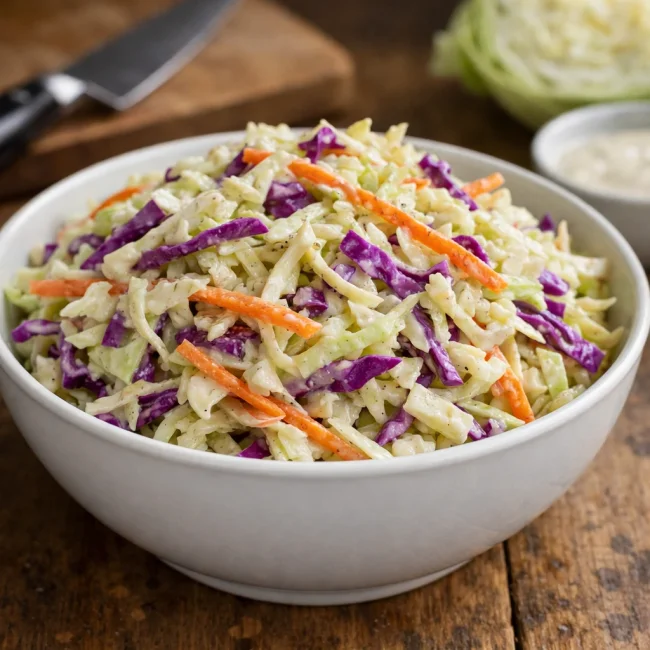
Traditional Crisp Coleslaw
A classic coleslaw recipe featuring finely shredded cabbage and carrots tossed in ...
View Recipe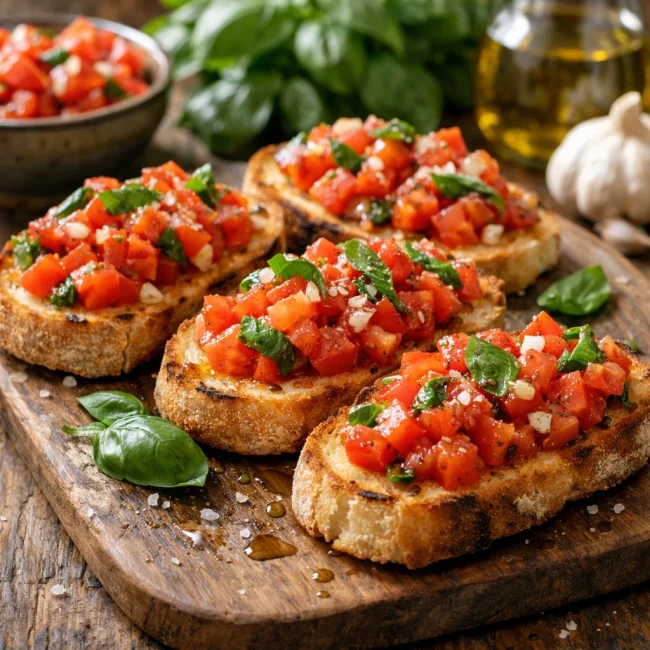
Traditional Italian Bruschetta
Experience the authentic taste of Italian bruschetta, a perfect blend of fresh tom...
View Recipe
Classic Banana Bread
Classic Banana Bread is a timeless dessert beloved for its moist texture and sweet...
View RecipeFrequently Asked Questions
- Can I use olive oil instead of vegetable oil?
- Yes, but note that olive oil has a stronger flavor, which will affect the taste of your mayonnaise.
- What if my mayonnaise doesn’t thicken?
- Try starting over with a new egg and slowly whisk in the broken mayonnaise.
- How long does homemade mayonnaise last?
- It lasts about a week in the fridge when stored properly in an airtight container.
Serving Ideas for Traditional Homestyle Mayonnaise
This homemade mayonnaise shines on sandwiches, burgers, or wraps. Try it as a base for salad dressings or mix it with herbs and spices for a quick aioli. It's also perfect for dipping fries or veggies.