
Traditional Harissa
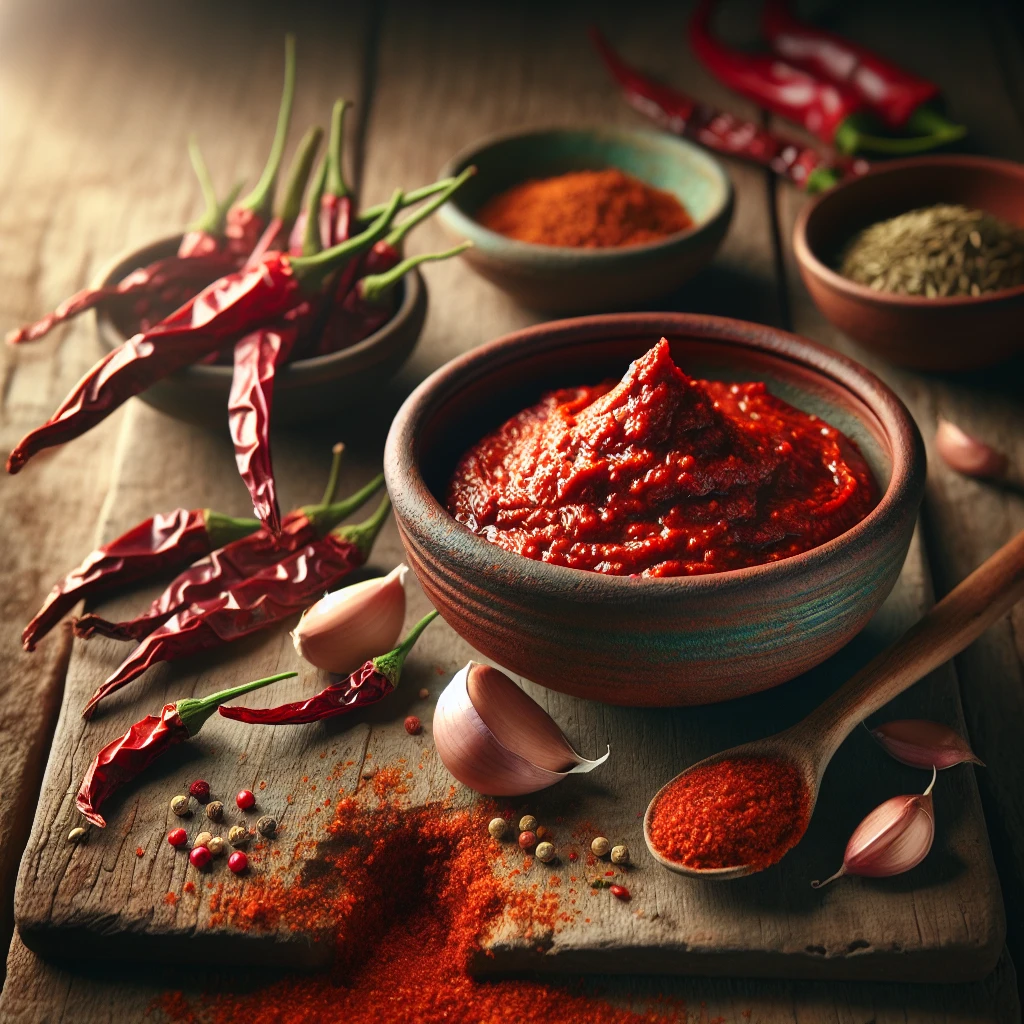
If you're on the hunt for a versatile and spicy condiment that can elevate almost any dish, look no further than traditional Harissa. This North African chili paste is a flavor-packed gem that adds an irresistible kick to your meals.
 Share
Share
This post may contain affiliate links. As an Amazon Associate, we earn from qualifying purchases.
Ingredients for Traditional Harissa
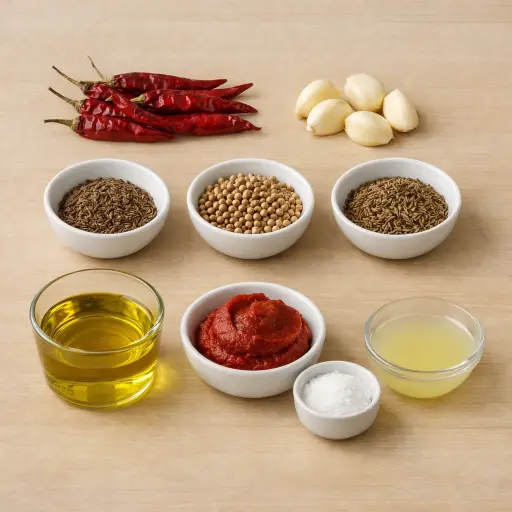
Dried Red Chili Peppers: These form the base of the Harissa, providing heat and a deep, rich flavor. Adjust the type for more or less spiciness.
Garlic: Adds depth and a subtle pungency that complements the chilies beautifully.
Caraway Seeds: These bring a slight anise-like flavor, adding complexity to the paste.
Coriander Seeds: Provide a citrusy, nutty layer that balances the heat.
Cumin Seeds: Offer a warm, earthy note that grounds the flavors together.
Olive Oil: Smooths out the paste and helps preserve it, infusing richness into every spoonful.
Tomato Paste: Adds a slight tang and helps bind the ingredients into a cohesive mixture.
Salt: Enhances all the flavors, making everything pop.
Lemon Juice: Brightens the paste, cutting through the richness with a refreshing zing.
Why This Traditional Harissa Works
Soaking the dried chilies in hot water lets them fill back up with moisture. They start out tough and papery, but after a while they turn soft and bendy, almost like roasted red peppers. Once the stems and seeds are removed, the softened chili flesh blends smoothly instead of staying gritty or stringy.
While the pan toasts the caraway, coriander, and cumin, the seeds dry out a bit more and crack slightly. As they warm, their insides loosen up, so when they are ground they break down into a fine, even powder that spreads easily through the paste.
In the food processor, the soft chilies, garlic, and ground spices mash into a thick, even paste. Tomato paste gives body, so it doesn’t feel watery. As the olive oil and lemon juice go in slowly, the paste catches the liquids and holds them. The oil keeps the harissa thick and smooth, and the lemon juice thins it just enough so it spreads easily but still stays in place on a spoon.
Traditional Harissa Tips & Tricks
- If you like it smoky, try using smoked paprika or chipotle chilies for a variation.
- Adjust the oil and lemon juice to control the texture — less oil for a thicker paste.
- Experiment with different chilies to create your unique heat profile.
Mistakes To Avoid
Soaking the chilies in water that is only lukewarm or not giving them enough time leaves them tough and leathery inside. The blender then struggles to break them down, and the harissa ends up with hard bits of skin instead of a smooth paste.
Skipping the toasting of the caraway, coriander, and cumin seeds means the spices stay a bit raw and sharp. In the finished paste, the seed pieces can feel gritty and separate instead of blending smoothly into the chili and oil.
Processing everything at once and dumping in all the oil and lemon juice from the start often makes the mixture too loose. The paste then turns more like a runny sauce, so it won’t hold its shape on a spoon and can separate in the jar.
Leaving too many seeds inside the chilies after soaking makes the paste harsh and sharp. The tiny seeds also stay as hard specks, so the texture feels sandy instead of creamy and thick.
Equipment Used:
Ingredients
- 8 dried red chili peppers
- 4 cloves garlic
- 1 tsp caraway seeds
- 1 tsp coriander seeds
- 1 tsp cumin seeds
- 1/2 cup olive oil
- 2 tbsp tomato paste
- 1 tsp salt
- 1/4 cup lemon juice
Step-by-step Instructions
- 1. Soak the dried chili peppers in hot water for 30 minutes until soft.
- 2. Drain the peppers and remove the stems and seeds.
- 3. Toast the caraway, coriander, and cumin seeds in a dry skillet over medium heat until fragrant, about 2 minutes.
- 4. Grind the toasted seeds in a spice grinder or mortar and pestle.
- 5. In a food processor, combine the softened peppers, garlic cloves, ground spices, tomato paste, and salt. Blend to form a smooth paste.
- 6. Gradually add the olive oil and lemon juice while processing to achieve a thick, smooth consistency.
- 7. Transfer the Harissa paste to a sterilized jar and seal tightly.
Trending Now
Oven-Baked Pork Chops
Enjoy a delightful dinner with these tender and juicy oven-baked pork chops, seaso...
View Recipe
Traditional Corn Casserole
A delightful corn casserole dish that embodies the comforting flavors of sweet cor...
View Recipe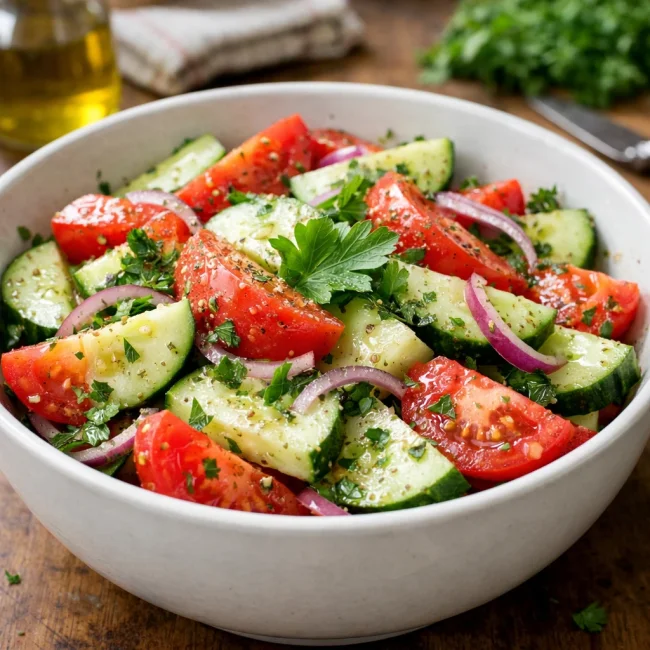
Traditional Cucumber and Tomato Salad
A refreshing and simple salad combining crisp cucumbers and juicy tomatoes, season...
View Recipe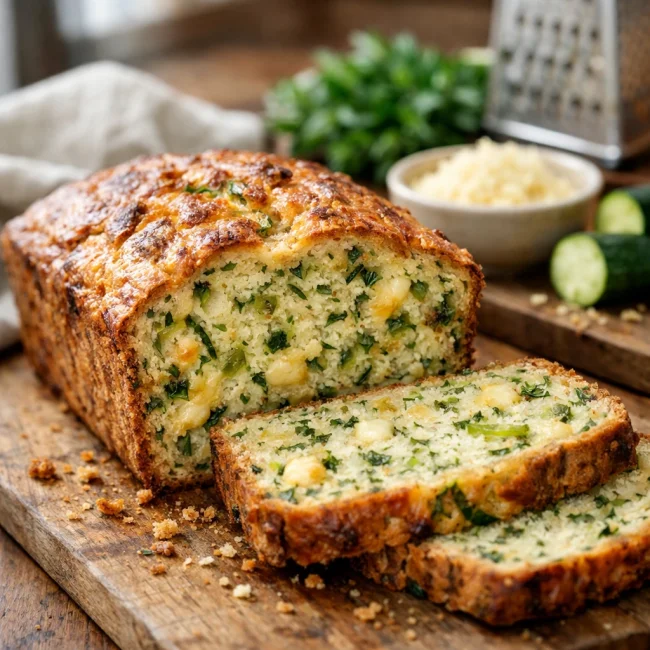
Savory Zucchini Bread
Savory Zucchini Bread is a delectable twist on traditional zucchini recipes, combi...
View RecipeFrequently Asked Questions
- Can I freeze Harissa?
- Yes, you can! Portion it into ice cube trays, freeze, and then store the cubes in a freezer bag for up to 3 months.
- What if I don't have a food processor?
- A blender or immersion blender can work, though you may need to add a bit more oil to help it blend smoothly.
- Is there a substitute for caraway seeds?
- You can use fennel seeds or omit them entirely if needed, though the flavor will be slightly different.
Serving Ideas for Traditional Harissa
Harissa is incredibly versatile. Dollop it on grilled meats, mix it into stews, or swirl it into soups for an extra layer of flavor. It's also fantastic as a marinade base or spread onto sandwiches for a spicy kick.
More Condiments Recipes
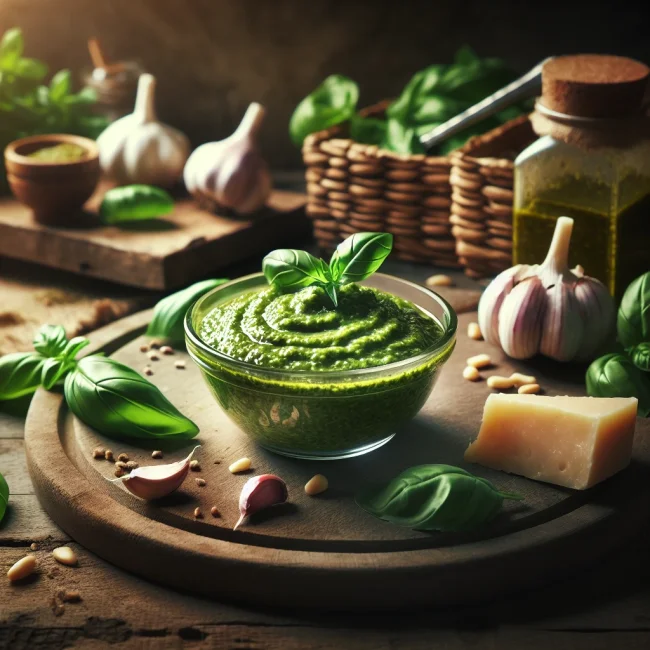
Traditional Pesto
Discover the authentic taste of Italy with our Traditional Pesto recipe, a vibrant...
View Recipe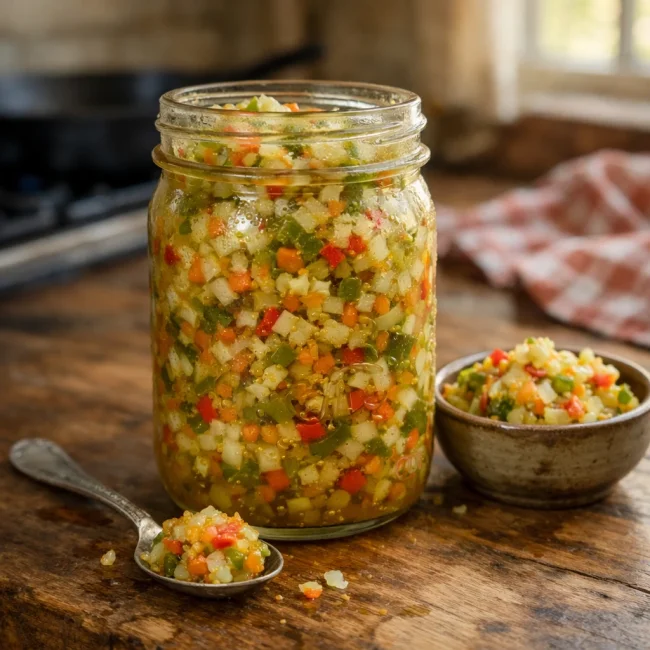
Southern-style Vegetable Chow Chow
Revitalize your palate with our Southern-style Vegetable Chow Chow, a tangy, crunc...
View Recipe
Traditional Teriyaki Sauce
A savory and sweet traditional teriyaki sauce that perfectly balances flavors to e...
View Recipe
Timeless Vinaigrette
A zesty and delightful vinaigrette perfect for enhancing any salad with its classi...
View Recipe