
Traditional French Crepes
Welcome to the delightful world of traditional French crepes! This recipe captures the essence of French cuisine with a simple, versatile dish that’s perfect for any meal of the day. Whether you’re aiming for a sweet or savory creation, these crepes are your canvas.
 Share
Share

This post may contain affiliate links. As an Amazon Associate, we earn from qualifying purchases.
Ingredients for Traditional French Crepes
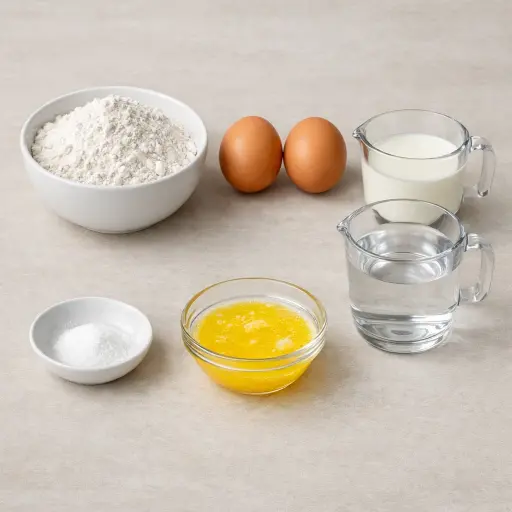
The backbone of our crepes is all-purpose flour, which provides structure while keeping them soft and tender. The eggs bind the batter, giving the crepes their delicate texture. A combination of whole milk and water ensures the batter is thin enough to spread evenly in the pan. A pinch of salt enhances the flavors, while unsalted butter adds richness and helps prevent sticking.
Why This Traditional French Crepes Works
As the batter comes together, the flour soaks up the milk, water, and eggs and turns into a very thin, smooth liquid. Eggs give that liquid some strength, so it can stretch in the pan without tearing. Melted butter and a bit of salt spread through the batter and keep it from tasting flat or sticking too hard to the pan.
During cooking, the hot skillet sets the thin layer of batter almost right away. The water and milk start to steam, which makes tiny bubbles and lightens the crepe without making it thick like a pancake. As one side browns, the flour and egg firm up just enough so the crepe can be flipped in one piece.
Once flipped, the second side finishes cooking very quickly. The butter in the batter and the light oil in the pan keep the crepe soft and flexible instead of dry and crackly. By the time it comes off the heat, the crepe is thin, bendy, and ready to roll or fold around any filling.
Traditional French Crepes Tips & Tricks
- For perfectly smooth batter, let it rest for 30 minutes to allow the flour to absorb the liquids fully.
- If you don’t have a non-stick skillet, a well-seasoned cast iron pan works well too.
- Practice makes perfect! The first crepe is often a test run to get the pan temperature just right.
Mistakes To Avoid
Pouring the batter into the pan while it is barely warm often makes the crepe stick and tear. The batter sits instead of setting right away, so it soaks up oil in patches and cooks unevenly. The result is a pale, soft crepe that breaks when flipped instead of lifting off cleanly.
When the pan is too hot, the batter sets the second it hits the surface and cannot spread thin. The edges brown fast while the center is still thick and a bit doughy. This gives a stiff, almost rubbery crepe instead of one that bends and folds easily.
Leaving lumps in the batter by not whisking enough keeps dry pockets of flour in the mix. Those lumps stay as little chewy spots that never fully smooth out while cooking. Each bite ends up with tiny gummy bits instead of a uniform, tender texture.
Skipping the resting time for the mixed batter (even 15–20 minutes on the counter) keeps the flour from fully soaking up the liquid. The batter stays a bit foamy and elastic, so the crepes cook up thicker and slightly tough instead of thin and delicate.
Equipment Used:
Ingredients
- 1 cup all-purpose flour
- 2 large eggs
- 1/2 cup whole milk
- 1/2 cup water
- 1/4 teaspoon salt
- 2 tablespoons unsalted butter, melted
Step-by-step Instructions
- 1. In a mixing bowl, whisk together the flour and eggs.
- 2. Gradually add in the milk and water, stirring to combine.
- 3. Add the salt and butter, beating until smooth.
- 4. Heat a lightly oiled non-stick skillet over medium-high heat.
- 5. Pour or scoop the batter onto the skillet, using approximately 1/4 cup for each crepe.
- 6. Tilt the pan with a circular motion so that the batter coats the surface evenly.
- 7. Cook the crepe for about 2 minutes, until the bottom is light brown.
- 8. Loosen with a spatula, turn and cook the other side.
- 9. Serve hot with desired fillings.
Trending Now
Oven-Baked Pork Chops
Enjoy a delightful dinner with these tender and juicy oven-baked pork chops, seaso...
View Recipe
Traditional Corn Casserole
A delightful corn casserole dish that embodies the comforting flavors of sweet cor...
View Recipe
Traditional Cucumber and Tomato Salad
A refreshing and simple salad combining crisp cucumbers and juicy tomatoes, season...
View Recipe
Savory Zucchini Bread
Savory Zucchini Bread is a delectable twist on traditional zucchini recipes, combi...
View RecipeFrequently Asked Questions
- Can I make the batter ahead of time?
- Absolutely! You can prepare the batter up to 24 hours in advance. Just store it in the fridge and give it a good stir before using.
- What if my crepes keep sticking?
- Make sure your pan is well-heated and lightly oiled. If they still stick, try adding a little more butter to the batter.
- Can I use a different type of flour?
- You can experiment with gluten-free flour, but the texture may vary. All-purpose flour is recommended for the best results.
Serving Ideas for Traditional French Crepes
These crepes are incredibly versatile. For a classic sweet option, fill them with fresh berries and a sprinkle of powdered sugar. Drizzle with lemon juice for a refreshing twist. If you’re leaning towards savory, try filling them with ham and cheese for a delicious lunch or light dinner. Pair with a crisp green salad and a glass of chilled white wine for the full French bistro experience.
More Breakfast & Brunch Recipes

Traditional Quiche Lorraine
Experience the classic French Quiche Lorraine, a savory pie with a flaky crust fil...
View Recipe
Lemon-Blueberry Oat Coffee Cake
This Lemon-Blueberry Oat Coffee Cake is a delightful twist on the traditional favo...
View Recipe
Smoked Salmon Benedict
A luxurious twist on the classic Eggs Benedict, featuring smoked salmon and a zest...
View Recipe
Savory Garden Veggie Quiche
A delightful and easy-to-make quiche filled with garden-fresh vegetables, perfect ...
View Recipe