
Tangy Lemon Buttermilk
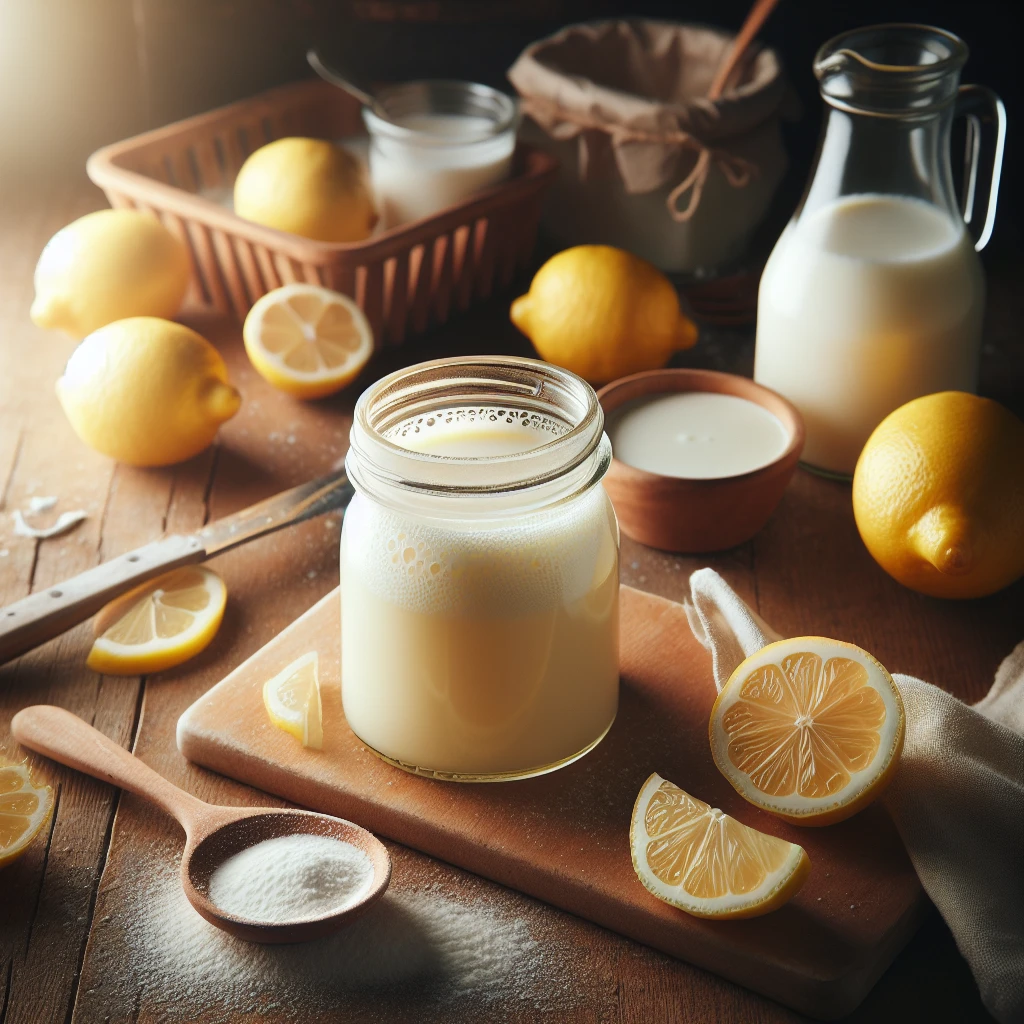
Meet your new kitchen staple: Tangy Lemon Buttermilk. Perfect for adding a zesty twist to your favorite recipes, this quick and easy mixture will elevate your baking and cooking game with just two simple ingredients.
 Share
Share
This post may contain affiliate links. As an Amazon Associate, we earn from qualifying purchases.
Ingredients for Tangy Lemon Buttermilk
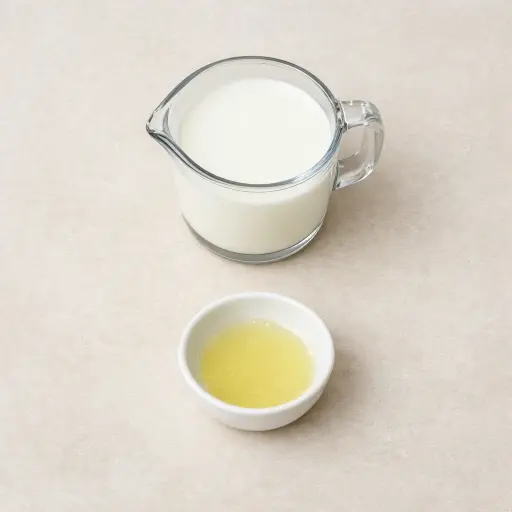
Whole milk is the base of this recipe, providing a rich and creamy texture that's perfect for creating a thick buttermilk. Using whole milk ensures the right consistency and flavor. Freshly squeezed lemon juice is the magic ingredient that causes the milk to curdle slightly, giving it that tangy buttermilk taste we all love.
Why This Tangy Lemon Buttermilk Works
Once the lemon juice hits the whole milk, the acid in the lemon starts to react with the milk. At first nothing seems to happen, but as it sits, the milk slowly begins to thicken and tiny soft lumps start to form. The milk doesn’t fully separate like cheese, it just changes from smooth and runny to a little creamy and slightly clumpy.
During those 10 minutes of resting, the milk loosens up on the inside and doesn’t behave like plain milk anymore. It starts to act more like real buttermilk in baking: thicker, a bit tangy, and better at clinging to flour. When it is stirred again at the end, the small curds spread through the liquid so it pours evenly.
In a batter or dough, this tangy milk mixture sits close to the flour and baking soda or baking powder. That slight sourness lets baked goods rise higher and stay more tender than they would with plain milk.
Tangy Lemon Buttermilk Tips & Tricks
- If you need a thicker consistency, let the mixture sit for an extra 5 minutes.
- Use organic lemons for the best taste and to avoid any unwanted chemicals.
- Leftover buttermilk can be stored in the fridge for up to 3 days.
- If your recipe calls for more buttermilk, this method can easily be doubled or tripled.
Mistakes To Avoid
Using ultra-pasteurized or very low-fat milk often keeps the mixture from curdling properly. The lemon juice just thins the milk instead of forming soft clumps, so the result stays watery and doesn’t thicken the way buttermilk should.
Pouring in bottled lemon juice instead of fresh can cause weak curdling. The acid level is often lower or inconsistent, so the milk may only barely thicken and stays closer to plain milk, which makes any recipe that needs thicker buttermilk turn out looser.
Skipping the rest time means the milk and lemon don’t have a chance to react. The mixture looks almost the same as when it started, so it stays smooth and thin instead of getting that slight grainy, thick texture that buttermilk has.
Letting the mixture sit much longer than 10–15 minutes at warm room temperature can push it too far. The milk can separate into a thick layer and a watery layer and start to smell off, giving a harsh, spoiled taste and an uneven texture.
Equipment Used:
Ingredients
- 1 cup whole milk
- 1 tablespoon freshly squeezed lemon juice
Step-by-step Instructions
- 1. Pour 1 cup of whole milk into a mixing bowl.
- 2. Add 1 tablespoon of freshly squeezed lemon juice to the milk.
- 3. Stir gently until the lemon juice is fully incorporated.
- 4. Let the mixture sit at room temperature for 10 minutes, allowing it to curdle slightly.
- 5. Stir again before using or storing.
Trending Now
Oven-Baked Pork Chops
Enjoy a delightful dinner with these tender and juicy oven-baked pork chops, seaso...
View Recipe
Traditional Corn Casserole
A delightful corn casserole dish that embodies the comforting flavors of sweet cor...
View Recipe
Traditional Cucumber and Tomato Salad
A refreshing and simple salad combining crisp cucumbers and juicy tomatoes, season...
View Recipe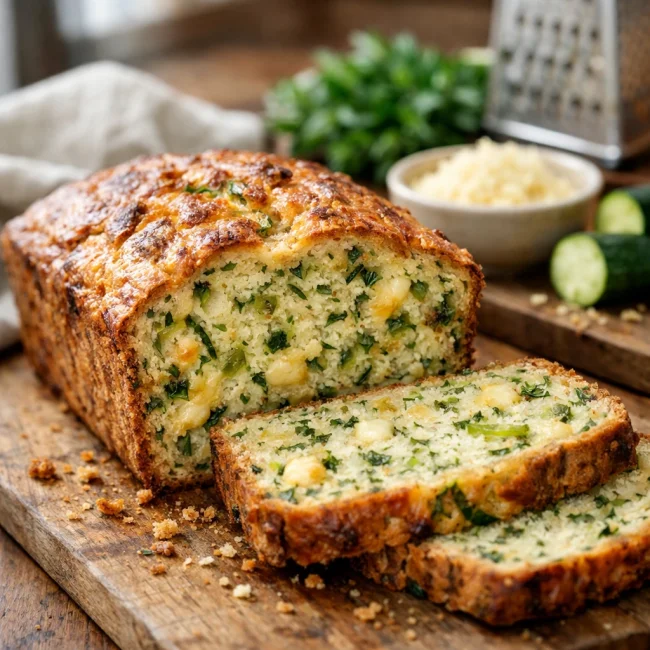
Savory Zucchini Bread
Savory Zucchini Bread is a delectable twist on traditional zucchini recipes, combi...
View RecipeFrequently Asked Questions
- Can I use low-fat milk?
- Yes, but the buttermilk will be less creamy and slightly less flavorful.
- What if I don't have lemon juice?
- You can substitute with white vinegar, although the flavor will differ slightly.
- How long can I store it?
- Store in the fridge for up to 3 days. Shake well before using.
Serving Ideas for Tangy Lemon Buttermilk
Use this tangy lemon buttermilk in pancakes, waffles, or scones for a delightful morning treat. It also works wonders as a marinade for chicken, adding a tender, juicy texture. For a savory twist, incorporate it into creamy salad dressings or mashed potatoes.
More Beverages Recipes
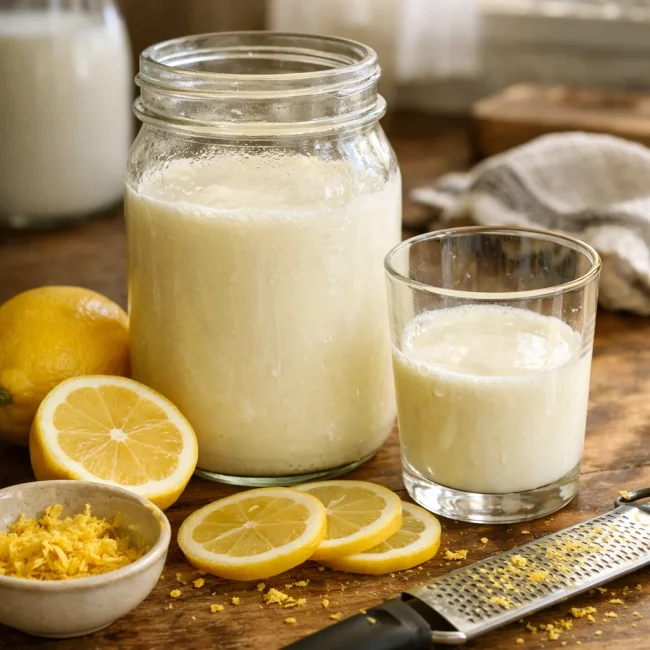
Tangy Lemon Buttermilk
Discover the unique twist of homemade buttermilk with a zesty lemon infusion. Perf...
View Recipe
Timeless Bloody Mary
Discover the classic Timeless Bloody Mary, a zesty and savory cocktail perfect for...
View Recipe
Traditional Martini
A timeless cocktail that exemplifies elegance and simplicity, combining gin with a...
View Recipe
Island Breeze Smoothie
Delight in the refreshing taste of the Island Breeze Smoothie, a vibrant blend of ...
View Recipe