
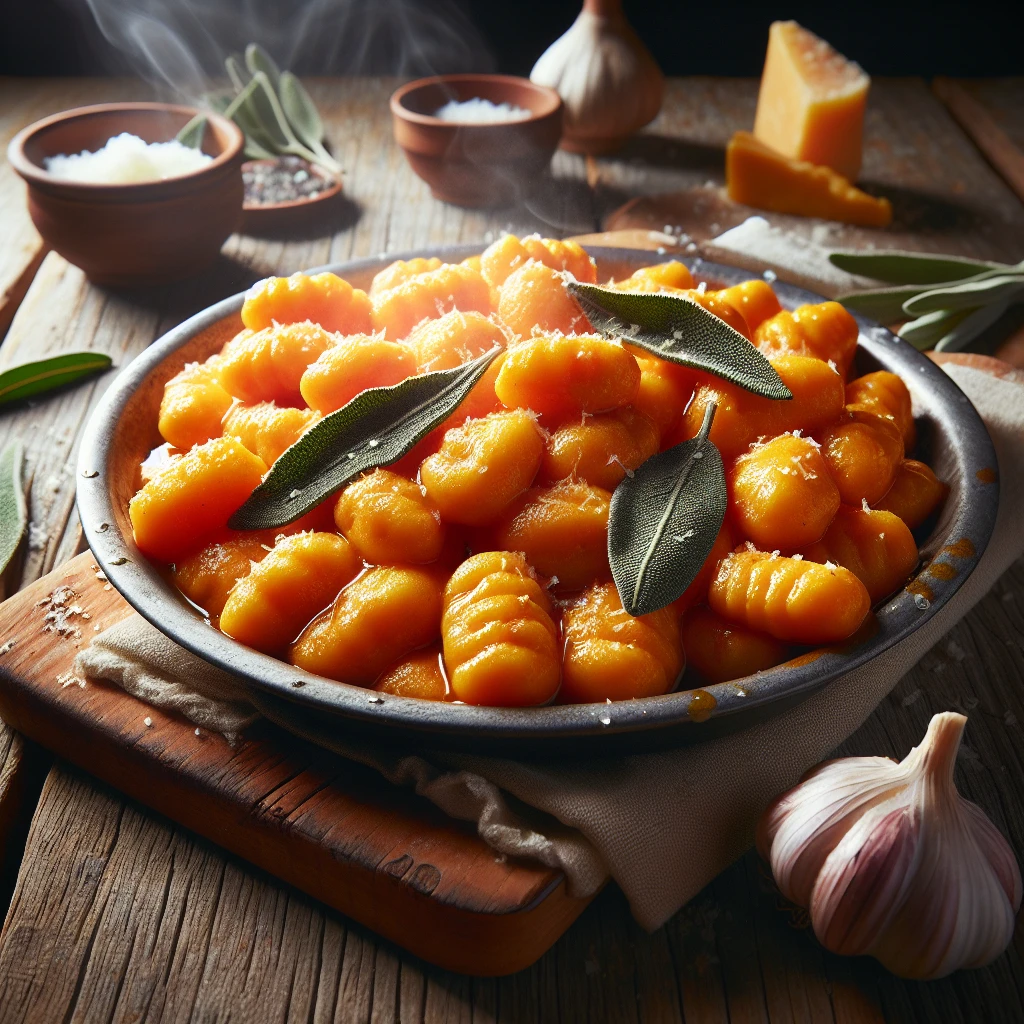
Sweet Potato Gnocchi with Sage Butter
If you’re looking to impress your family or friends with a homemade dish that feels like it came straight from a cozy Italian kitchen, this Sweet Potato Gnocchi with Sage Butter is your go-to recipe. It’s a delightful twist on traditional gnocchi, celebrating the sweet, earthy flavors of sweet potatoes with the aromatic touch of sage butter.
 Share
Share
This post may contain affiliate links. As an Amazon Associate, we earn from qualifying purchases.
Ingredients for Sweet Potato Gnocchi with Sage Butter
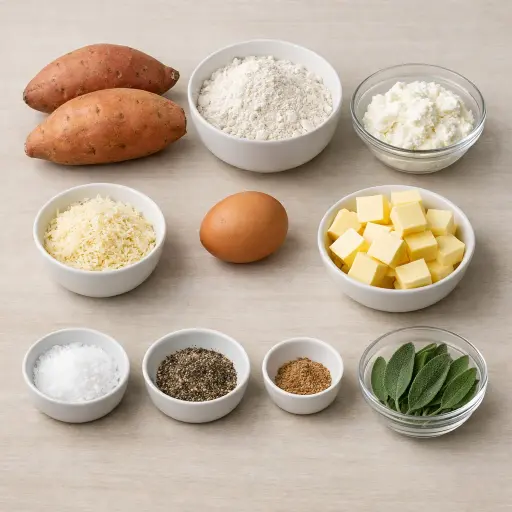
Sweet potatoes are the star of this dish, providing a natural sweetness and a vibrant color. The all-purpose flour helps bind the gnocchi, giving them structure without making them dense. Ricotta cheese adds creaminess and lightness to the dough. The egg acts as a binder, ensuring the gnocchi hold together when cooked. A touch of Parmesan cheese brings a savory, umami depth. Nutmeg adds a warm, spicy hint that complements the sweet potatoes wonderfully. Finally, the unsalted butter and fresh sage leaves create a rich, aromatic sauce that pairs beautifully with the gnocchi.
Why This Sweet Potato Gnocchi with Sage Butter Works
In the oven, the sweet potatoes dry out a bit as they bake. Their water steams off and the flesh gets soft and fluffy instead of wet and soggy. That drier, mashed sweet potato holds onto the flour, egg, ricotta, and Parmesan better, so the dough stays soft but doesn’t fall apart in the water. Ricotta keeps the gnocchi tender, while the egg sets once it hits the boiling water and gives each piece a light structure so it doesn’t break.
During boiling, the gnocchi firm up from the outside in. As soon as they float, the centers are cooked through but still a little pillowy. Pulling them at that point keeps them from getting dense or gummy. In the skillet, the butter slowly browns and the milk solids in it toast, while the sage leaves dry out and crisp. When the gnocchi go into the pan, their soft surface soaks up the browned butter and clings to the crispy sage, so they stay tender inside with a slightly chewy, coated outside.
Sweet Potato Gnocchi with Sage Butter Tips & Tricks
- Roast the sweet potatoes a day ahead to save time.
- Test the dough by boiling a small piece first; adjust flour if necessary.
- If the dough feels too sticky, add a little more flour, but be careful not to overdo it.
- Use a non-stick skillet to avoid the gnocchi sticking during the final step.
Mistakes To Avoid
Boiling or microwaving the sweet potatoes instead of baking them leaves them full of water. The extra moisture makes the dough loose and gluey, so more flour gets added just to make it workable, and the gnocchi end up heavy instead of light and tender.
Adding all the flour at once often pushes the dough too far. The flour doesn’t have time to hydrate evenly, so it feels sticky at first, more flour goes in, and the dough turns stiff; in the pot, those gnocchi stay dense and chewy instead of soft.
Working the dough like bread, with lots of kneading, compresses it. The sweet potato and flour form a tight, elastic mass, and in the water the gnocchi don’t puff at all, giving a gummy, rubbery bite.
Letting the gnocchi sit around too long before boiling makes them sag and stick to the counter. When they finally go into the water, many lose their shape or break apart, leaving starchy bits and cloudy water.
Browning the butter over high heat while the gnocchi are still cooking easily burns the milk solids and the sage. The butter turns very dark, the sage goes from crisp to brittle, and the gnocchi pick up a harsh, burnt coating instead of a nutty, toasty one.
Equipment Used:
Ingredients
- 1 1/2 lbs sweet potatoes
- 1 1/2 cups all-purpose flour, plus more for dusting
- 1/2 cup ricotta cheese
- 1 large egg
- 1/4 cup grated Parmesan cheese
- 1 tsp salt
- 1/4 tsp nutmeg
- 1/2 cup unsalted butter
- 10 fresh sage leaves
- Salt and pepper to taste
Step-by-step Instructions
- 1. Preheat your oven to 400°F (200°C).
- 2. Pierce the sweet potatoes with a fork and bake them on a baking sheet for about 45 minutes, or until tender.
- 3. Let the sweet potatoes cool slightly, then peel and mash them in a large bowl.
- 4. Mix in the ricotta, egg, Parmesan, salt, and nutmeg to the mashed sweet potatoes.
- 5. Gradually add the flour, mixing until a soft dough forms that is slightly sticky.
- 6. On a floured surface, divide the dough into four parts and roll each into a long rope, about 1/2-inch thick.
- 7. Cut the ropes into 1-inch pieces and press each piece with the back of a fork to make ridges.
- 8. In a large pot of boiling salted water, cook the gnocchi in batches for 2-3 minutes, or until they float to the top. Remove with a slotted spoon.
- 9. In a large skillet, melt the butter over medium heat and add the sage leaves. Cook until the butter begins to brown and the sage is crispy.
- 10. Add the cooked gnocchi to the skillet, gently tossing to coat in the sage butter. Season with salt and pepper to taste.
Trending Now
Oven-Baked Pork Chops
Enjoy a delightful dinner with these tender and juicy oven-baked pork chops, seaso...
View Recipe
Traditional Corn Casserole
A delightful corn casserole dish that embodies the comforting flavors of sweet cor...
View Recipe
Traditional Cucumber and Tomato Salad
A refreshing and simple salad combining crisp cucumbers and juicy tomatoes, season...
View Recipe
Savory Zucchini Bread
Savory Zucchini Bread is a delectable twist on traditional zucchini recipes, combi...
View RecipeFrequently Asked Questions
- Can I use other types of potatoes?
- Yes, but using regular potatoes will alter the flavor and texture. Sweet potatoes give the best results for this recipe.
- How do I store leftovers?
- Store any leftover gnocchi in an airtight container in the refrigerator for up to two days. Reheat gently in a skillet with a little butter.
- Can I freeze the gnocchi?
- Yes, freeze the uncooked gnocchi in a single layer on a baking sheet, then transfer to a freezer bag. Cook from frozen, adding an extra minute or two to the cooking time.
Serving Ideas for Sweet Potato Gnocchi with Sage Butter
This gnocchi pairs beautifully with a simple green salad dressed in lemon vinaigrette. For a more substantial meal, serve alongside grilled chicken or a light fish dish. A crisp white wine, like a Sauvignon Blanc, complements the dish’s flavors perfectly.
More Main Dishes, Vegetarian, Italian Recipes
Rustic Vegetable Lasagna
A hearty and healthy twist on the classic Italian dish, loaded with fresh vegetabl...
View Recipe
Savory Herb Garden Pizza
A delightful twist on classic pizza, the Savory Herb Garden Pizza combines fresh h...
View Recipe
Mediterranean Margherita Pizza
Experience a Mediterranean twist on the classic Margherita pizza, featuring a frag...
View Recipe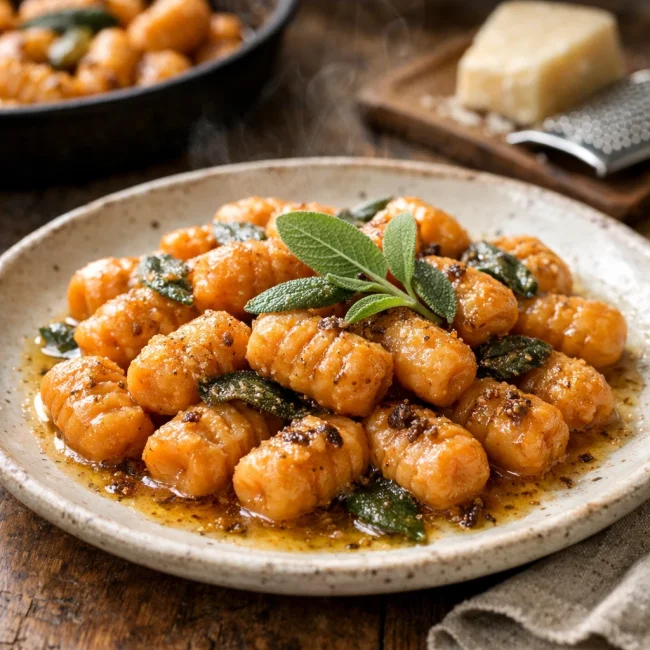
Sweet Potato Gnocchi with Sage Butter
Delight in the comforting flavors of homemade Sweet Potato Gnocchi with a rich, ar...
View Recipe