
Sushi Rolls (Maki-zushi)
If you’ve ever marveled at the delicate beauty of sushi rolls, it’s time to roll up your sleeves and make them at home. These Sushi Rolls, or Maki-zushi, are not only a feast for the eyes but also a delight for the taste buds, combining fresh fish and crisp vegetables encased in nori and perfectly seasoned rice.
 Share
Share
.webp)
This post may contain affiliate links. As an Amazon Associate, we earn from qualifying purchases.
Ingredients for Sushi Rolls (Maki-zushi)
-ingredients.webp)
The heart of any good sushi is the rice. Sushi rice forms the foundation, bringing a slightly sticky texture that holds everything together. The seasoning mixture of rice vinegar, sugar, and salt adds that essential tangy-sweet balance.
Nori seaweed provides both structure and that unique umami taste. For the filling, fresh tuna and salmon offer rich, buttery flavors, while cucumber adds a refreshing crunch. Avocado brings a creamy texture that contrasts beautifully with the other ingredients.
Why This Sushi Rolls (Maki-zushi) Works
Rinsing the sushi rice washes off extra starch on the outside of the grains. During cooking, that lets the rice swell and stick just enough without turning gluey. When the hot rice is mixed with the warm vinegar, sugar, and salt, the grains soak in that liquid while they are still a bit open from cooking. As the rice cools, the surface firms up and becomes slightly sticky, so it clings to the nori and the fillings instead of falling apart.
Once the rice is spread on the nori, the sticky surface acts like glue. The tuna, salmon, cucumber, and avocado sit in a tight line, and the bamboo mat presses everything into one solid log. As the roll rests for a short time, the rice grips the nori more, and the moistened edge of the seaweed seals shut. A sharp knife and quick, clean cuts keep that structure intact, so each slice holds together when picked up and dipped.
Sushi Rolls (Maki-zushi) Tips & Tricks
- Use a very sharp knife to prevent tearing the nori and smashing the roll.
- Keep your hands moist while handling the rice to prevent it from sticking.
- Feel free to experiment with filling ingredients like crab sticks or shrimp tempura.
- A bamboo sushi mat is a game-changer for rolling tight, even sushi.
Mistakes To Avoid
Using warm rice to roll the sushi often makes the nori soften too fast and turn rubbery. The steam from the hot rice also makes the roll harder to tighten, so the fillings slide around and the roll won’t hold its shape when sliced.
Rinsing the rice only once or not until the water runs clear leaves too much surface starch. During cooking the grains stick together in a gluey mass, so the rice spreads in clumps on the nori and squeezes out when the roll is tightened.
Skipping or guessing the vinegar mixture throws off the rice texture. Too little vinegar-sugar-salt mix leaves the rice a bit dry and crumbly, so it won’t press into a smooth layer, while too much makes it wet and heavy, causing loose, sagging rolls.
Cutting the fish into thick, uneven chunks instead of even strips makes rolling uneven. The fat pieces push against the nori, creating bulges, and the roll tends to split or crush when sliced, giving messy pieces that fall apart when picked up.
Equipment Used:
Ingredients
- 2 cups sushi rice
- 2 1/2 cups water
- 1/4 cup rice vinegar
- 2 tbsp sugar
- 1 tsp salt
- 5 sheets nori seaweed
- 4 oz fresh tuna, sliced into strips
- 4 oz fresh salmon, sliced into strips
- 1 cucumber, julienned
- 1 avocado, sliced
- Soy sauce, for dipping
- Pickled ginger, for serving
- Wasabi, for serving
Step-by-step Instructions
- 1. Rinse the sushi rice under cold water until the water runs clear. Drain well.
- 2. Combine the rice and water in a rice cooker and cook according to the manufacturer’s instructions. Once cooked, let it cool slightly.
- 3. In a small saucepan, heat the rice vinegar, sugar, and salt over low heat until the sugar dissolves. Remove from heat and let it cool.
- 4. Transfer the cooked rice to a large bowl and gently fold in the vinegar mixture using a wooden paddle or spatula. Fan the rice to room temperature.
- 5. Place a bamboo sushi mat on a clean surface and lay a sheet of nori on top, shiny side down.
- 6. Wet your hands to prevent sticking, then spread a thin layer of rice over the nori, leaving a 1-inch border at the top edge.
- 7. Arrange the tuna, salmon, cucumber, and avocado in a line along the bottom edge of the rice.
- 8. Using the sushi mat, carefully roll the nori over the filling, pressing gently to shape it into a tight roll.
- 9. Moisten the top border of the nori with water to seal the roll.
- 10. Use a sharp knife to slice the roll into 6-8 pieces. Wipe the knife with a damp cloth between cuts for clean slices.
- 11. Serve the sushi rolls with soy sauce, pickled ginger, and wasabi.
Trending Now
Old-Fashioned Bread Pudding
Discover the classic charm of Old-Fashioned Bread Pudding - a timeless dessert com...
View Recipe
Traditional Crisp Coleslaw
A classic coleslaw recipe featuring finely shredded cabbage and carrots tossed in ...
View Recipe
Traditional Italian Bruschetta
Experience the authentic taste of Italian bruschetta, a perfect blend of fresh tom...
View Recipe
Classic Banana Bread
Classic Banana Bread is a timeless dessert beloved for its moist texture and sweet...
View RecipeFrequently Asked Questions
- What if I don’t have a rice cooker?
- You can cook sushi rice on the stovetop. Just use the same rice-to-water ratio and cook on low heat until the water is absorbed.
- Can I make sushi rolls in advance?
- Sushi is best enjoyed fresh, but you can prepare ingredients ahead of time. Assemble the rolls just before serving.
- How do I prevent the rolls from falling apart?
- Rolling the sushi tightly and sealing the edge with water are key to keeping it intact.
Serving Ideas for Sushi Rolls (Maki-zushi)
Sushi rolls are best enjoyed fresh, paired with a light miso soup or a crisp seaweed salad. A chilled sake or green tea complements the flavors beautifully. For an added touch, serve with a small dish of soy sauce for dipping, and a side of pickled ginger and wasabi to cleanse the palate between bites.
More Main Dishes Recipes
Unique Homemade Corned Beef
Discover the ultimate homemade corned beef recipe that balances rich flavors and t...
View Recipe
Spicy Lime Seared Ahi Tuna
Experience a burst of flavor with our Spicy Lime Seared Ahi Tuna, a perfect fusion...
View Recipe
Traditional Chicken Parmesan
Savor the authentic taste of Italian cuisine with our Traditional Chicken Parmesan...
View Recipe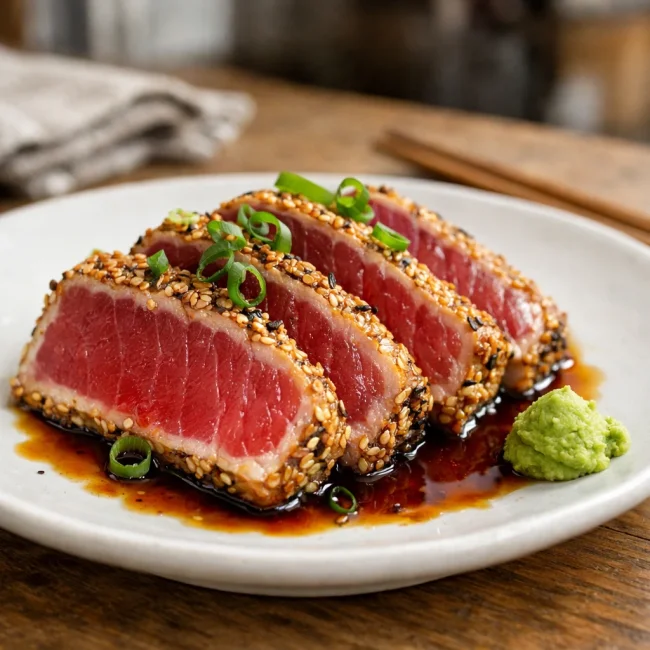
Seared Ahi Tuna
Experience the sublime taste of seared Ahi tuna, a Japanese-inspired dish that hig...
View Recipe