
Sage-Infused Homemade Turkey Gravy
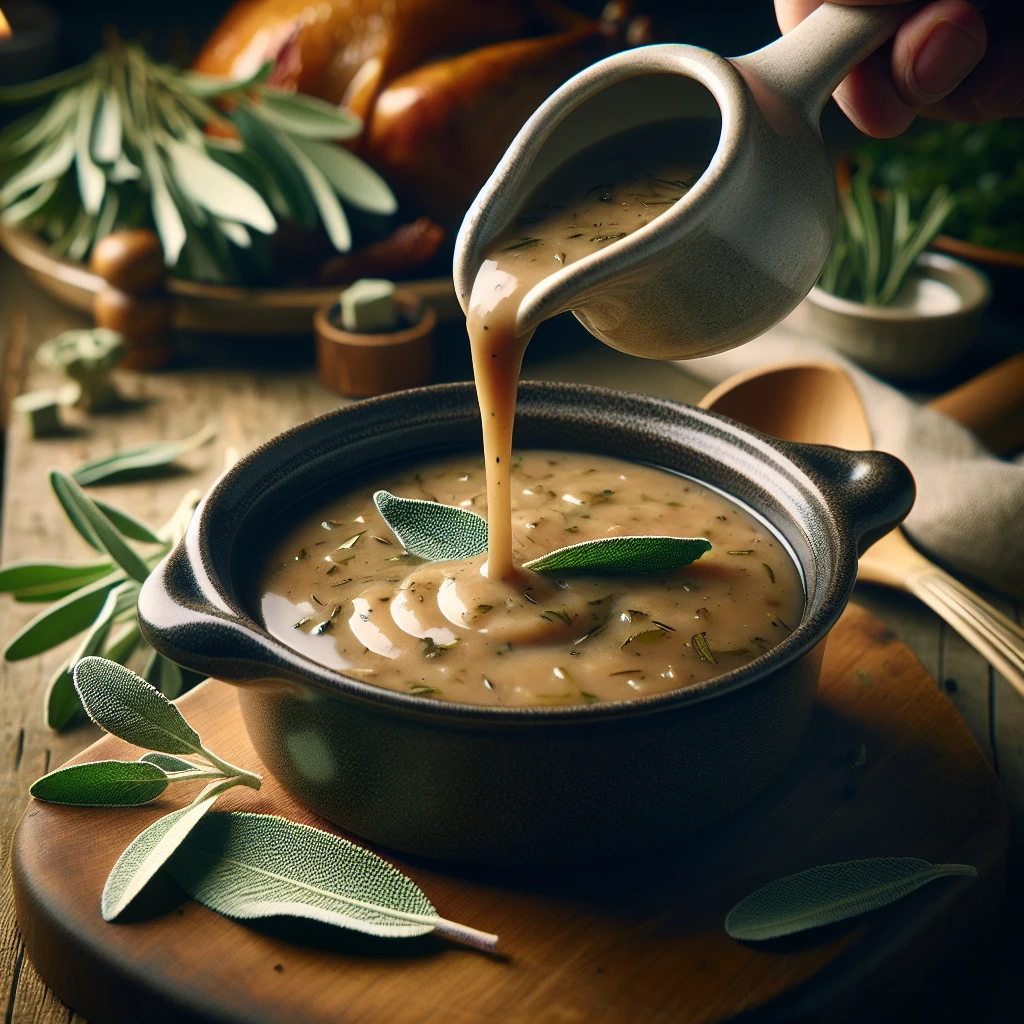
Sage-Infused Homemade Turkey Gravy is the perfect addition to your holiday table or any special meal. With its rich, savory flavor and creamy texture, this gravy is a step above the rest. Let’s dive into how you can make it effortlessly.
 Share
Share
This post may contain affiliate links. As an Amazon Associate, we earn from qualifying purchases.
Ingredients for Sage-Infused Homemade Turkey Gravy
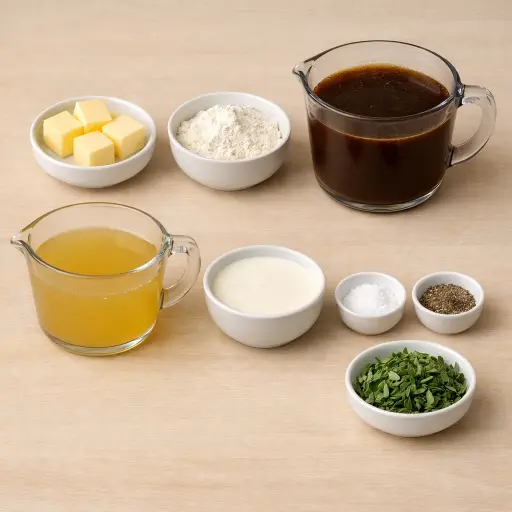
Butter serves as the base for your roux, creating a smooth, velvety texture. All-purpose flour thickens the gravy to the perfect consistency. Turkey drippings bring a depth of flavor that canned broth just can't match. If you’re short on drippings, chicken broth helps fill the gap while maintaining flavor. Heavy cream adds richness and creaminess, elevating the texture. Salt and black pepper are your basic seasonings, balancing the flavors. Finally, fresh sage gives the gravy its signature, aromatic quality.
Why This Sage-Infused Homemade Turkey Gravy Works
As the butter melts and the flour is whisked in, the flour coats itself in fat. That coating keeps the flour from clumping when liquid is added. After a minute or two, the flour starts to cook in the butter, which takes away that raw taste and gets it ready to thicken the gravy.
Once the turkey drippings and chicken broth are poured in slowly, the coated flour can spread through the liquid instead of forming lumps. With steady heat and whisking, the flour swells and the whole pan of liquid starts to tighten up. After a few minutes of simmering, the gravy thickens enough to lightly cling to a spoon instead of running off like broth.
When the heavy cream goes in at the end, it softens the texture so the gravy feels smooth and silky, not pasty. The chopped sage warms in the hot gravy and its taste spreads through every bite, while the salt and pepper settle the seasoning so the turkey gravy tastes full and rounded.
Sage-Infused Homemade Turkey Gravy Tips & Tricks
- If your gravy is too thick, add a splash of chicken broth to thin it out.
- For a smoother texture, strain the gravy before serving.
- Use a flat whisk for better lump-free results.
Mistakes To Avoid
Letting the butter get too hot and brown before adding the flour can throw the gravy off right away. The flour cooks unevenly, some bits scorch, and the roux turns speckled and bitter. The finished gravy ends up with dark flecks and a slightly burnt taste that no amount of cream can smooth out.
Dumping all the flour into the butter at once and barely whisking often leads to a lumpy base. Dry pockets of flour stay trapped and don’t hydrate properly, so when the drippings and broth go in, those clumps swell instead of dissolving. The gravy then has a grainy, uneven texture that feels pasty on the tongue.
Pouring in the turkey drippings and broth too fast can shock the roux and make it seize. The mixture tightens into a thick paste in some spots while staying thin in others, and it never fully smooths out. The final gravy looks streaky and can feel gummy instead of silky.
Adding the heavy cream at a hard boil can cause it to separate. The fat pulls away and forms an oily layer on top, while the liquid underneath turns thinner. The gravy loses that even, velvety body and looks broken in the serving bowl.
Stirring in the fresh sage at the very start of simmering keeps it on the heat too long. The leaves darken and go a bit dull, and tiny bits can turn slightly chewy. The gravy ends up with tired-looking green flecks instead of fresh, soft herb pieces.
Equipment Used:
Ingredients
- 4 tbsp unsalted butter
- 1/4 cup all-purpose flour
- 2 cups turkey drippings
- 1 cup chicken broth
- 1/4 cup heavy cream
- 1 tsp salt
- 1/2 tsp ground black pepper
- 2 tbsp fresh sage, finely chopped
Step-by-step Instructions
- 1. In a medium saucepan, melt the unsalted butter over medium heat.
- 2. Gradually whisk in the all-purpose flour to create a smooth roux.
- 3. Slowly add the turkey drippings, whisking continuously to avoid lumps.
- 4. Stir in the chicken broth and bring the mixture to a gentle boil.
- 5. Reduce heat and simmer for about 5 minutes, stirring occasionally until thickened.
- 6. Mix in the heavy cream, salt, black pepper, and fresh sage, adjusting seasoning to taste.
- 7. Remove from heat and serve warm.
Trending Now
Oven-Baked Pork Chops
Enjoy a delightful dinner with these tender and juicy oven-baked pork chops, seaso...
View Recipe
Traditional Corn Casserole
A delightful corn casserole dish that embodies the comforting flavors of sweet cor...
View Recipe
Traditional Cucumber and Tomato Salad
A refreshing and simple salad combining crisp cucumbers and juicy tomatoes, season...
View Recipe
Savory Zucchini Bread
Savory Zucchini Bread is a delectable twist on traditional zucchini recipes, combi...
View RecipeFrequently Asked Questions
- Can I substitute dried sage for fresh?
- Yes, but use half the amount since dried herbs are more potent.
- What if I don't have turkey drippings?
- Substitute with a combination of chicken broth and a bit of melted butter for added richness.
- Can I make this gravy ahead of time?
- Absolutely! It can be made a day in advance. Just reheat gently on the stove, adding a bit of broth if it thickens too much.
Serving Ideas for Sage-Infused Homemade Turkey Gravy
Pair this sage-infused gravy with roasted turkey, mashed potatoes, or even a hearty meatloaf. It's the perfect complement to stuffing or roasted vegetables, enhancing the flavors of your entire meal.
More Side Dishes Recipes

Savory Sautéed Cabbage
This savory sautéed cabbage dish brings out the natural sweetness and crispness of...
View Recipe
Herbed Spaetzle with Garlic Butter
Discover the delightful twist on traditional German Spaetzle with this easy-to-mak...
View Recipe
Golden Crispy Brussels Sprouts
Delight in the golden perfection of these crispy Brussels sprouts, a delightful si...
View Recipe
Marjoram-Seasoned Roasted Vegetables
Marjoram-Seasoned Roasted Vegetables bring a delightful floral note to roasted zuc...
View Recipe