
Saffron Milk Cake
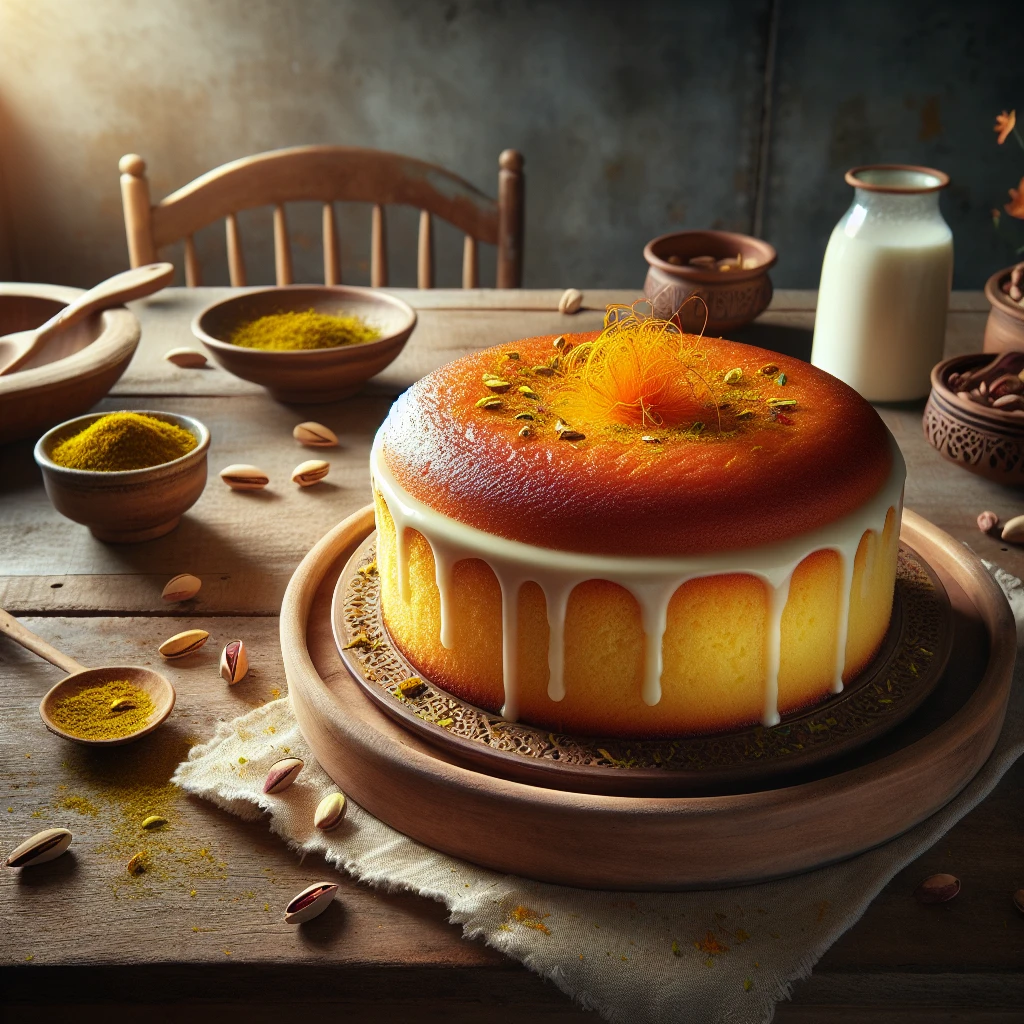
Saffron Milk Cake is a delightful fusion of rich flavors and textures, promising a unique dessert experience. This cake combines the exotic aroma of saffron with a creamy, milky soak, making it a perfect centerpiece for any special occasion.
 Share
Share
This post may contain affiliate links. As an Amazon Associate, we earn from qualifying purchases.
Ingredients for Saffron Milk Cake
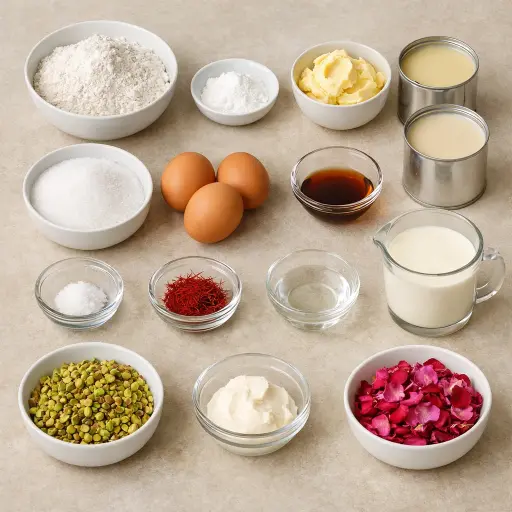
All-purpose flour provides the structure and base for the cake, ensuring a tender crumb. Baking powder gives the cake its rise, making it light and fluffy. Unsalted butter, when creamed with sugar, helps create a delicate texture while adding rich flavor. Granulated sugar sweetens the cake perfectly. Each egg adds moisture and richness, while vanilla extract provides a subtle, warm aroma.
The saffron strands are the star, imparting a luxurious flavor and golden hue. Whole milk is used to infuse the saffron, enhancing the cake’s flavor. The combination of sweetened condensed milk, evaporated milk, and heavy cream creates a luscious soak that makes this cake irresistibly creamy. A touch of rose water adds a floral note that complements the saffron. Finally, a pinch of salt balances the sweetness beautifully.
Why This Saffron Milk Cake Works
In the oven, the butter, sugar, and eggs trap tiny air bubbles while they bake, so the cake rises and sets into a soft, spongey layer. The flour and eggs firm up just enough that the cake can hold a lot of liquid later without falling apart. Warm milk loosens the saffron, so its color and taste spread through the batter instead of staying in little clumps.
After baking, the cake is still warm and a bit dry inside, which is exactly when it drinks in the milk mixture best. Once holes are poked all over, the condensed milk, evaporated milk, and cream slowly sink down through the crumb. Over time in the fridge, that liquid spreads out and settles, so every bite is moist but not mushy. Chilling also lets the butter and cream firm up again, so the cake slices cleanly and stays together, while the pistachios on top add a little crunch against the soft, soaked cake.
Saffron Milk Cake Tips & Tricks
- To enhance the saffron flavor, use a mortar and pestle to crush the strands before steeping in warm milk.
- For a neat presentation, use a piping bag to drizzle additional condensed milk over the cake before garnishing.
- Make sure to poke enough holes in the cake to ensure the milk mixture is fully absorbed.
Mistakes To Avoid
Overbaking the sponge can make the cake dry and tough, so when the milk mixture is poured on, it just sits on top or only soaks in unevenly. The result is a cake with hard edges and a wet layer on the surface instead of a soft, evenly soaked texture.
Pouring the milk mixture over a cake that is still very hot often causes the structure to collapse in the center. The crumb loosens too much at once, so the cake turns soggy and mushy instead of holding its shape while still being moist.
Skipping the step of poking enough holes leaves the milk mixture trapped on the surface. The top becomes overly wet and sticky, while the bottom stays closer to a plain sponge with barely any milk reaching it.
Adding too much rose water or using a very strong brand without measuring can overpower the saffron and dairy. The cake then ends up smelling and tasting sharply of perfume, and the gentle milk flavor gets lost.
Equipment Used:
Ingredients
- 1 1/2 cups all-purpose flour
- 1 tsp baking powder
- 1/2 cup unsalted butter, softened
- 3/4 cup granulated sugar
- 3 large eggs
- 1/2 tsp vanilla extract
- 1/2 cup whole milk
- 1/4 tsp saffron strands
- 1 can (14 oz) sweetened condensed milk
- 1 can (12 oz) evaporated milk
- 1/2 cup heavy cream
- 1 tbsp rose water
- Pinch of salt
- Pistachios, chopped for garnish
- Edible rose petals for garnish
Step-by-step Instructions
- 1. Preheat the oven to 350°F (175°C) and grease a 9x13 inch baking dish.
- 2. In a small bowl, warm 1/2 cup milk and add the saffron strands. Set aside to infuse.
- 3. In a large bowl, cream together the butter and sugar until light and fluffy.
- 4. Add the eggs one at a time, beating well after each addition. Stir in the vanilla extract.
- 5. In another bowl, whisk together the flour, baking powder, and salt.
- 6. Gradually add the dry ingredients to the wet ingredients, alternating with the saffron-infused milk, starting and ending with the flour mixture. Mix until just combined.
- 7. Pour the batter into the prepared baking dish and smooth the top.
- 8. Bake for 25-30 minutes or until a toothpick inserted into the center comes out clean.
- 9. While the cake is baking, combine the condensed milk, evaporated milk, heavy cream, and rose water in a separate bowl.
- 10. Once the cake is baked, remove it from the oven and let it cool for 10 minutes. Then, poke holes all over the cake with a skewer or fork.
- 11. Pour the milk mixture evenly over the warm cake, allowing it to soak in completely.
- 12. Let the cake chill in the refrigerator for at least 2 hours or overnight.
- 13. Before serving, garnish with chopped pistachios and edible rose petals.
Trending Now
Classic Banana Bread
Classic Banana Bread is a timeless dessert beloved for its moist texture and sweet...
View Recipe
Classic Cucumber Salad
A refreshing and light cucumber salad featuring crisp cucumbers and a tangy vinaig...
View Recipe
Zesty Summer Squash Casserole
This delightful summer squash casserole combines vibrant garden-fresh vegetables w...
View Recipe
Traditional Dump Cake
Discover the timeless delight of the Traditional Dump Cake, a simple and scrumptio...
View RecipeFrequently Asked Questions
- Can I use a different type of milk for the soak?
- While the recipe uses specific types of milk for their unique properties, you can experiment with coconut milk for a tropical twist.
- How long can the cake be stored?
- Store the cake in the refrigerator, covered, for up to 3 days. The flavors deepen over time, making it even more delicious.
Serving Ideas for Saffron Milk Cake
This Saffron Milk Cake pairs wonderfully with a scoop of vanilla ice cream or a dollop of whipped cream. For a refreshing contrast, serve it alongside fresh berries or a light fruit salad.
More Desserts Recipes

Rustic Vanilla Peach Cobbler
This rustic vanilla peach cobbler combines a rich, buttery crust with the sweet, v...
View Recipe
Traditional Lemon Curd
A classic, tangy lemon curd that is perfect for enhancing desserts, breakfast dish...
View Recipe
Traditional Cream Cheese Pie
A delightful and timeless dessert, Traditional Cream Cheese Pie offers a rich and ...
View Recipe
Timeless Cream Puff Delight
Indulge in a delectable Timeless Cream Puff Delight, a classic dessert featuring a...
View Recipe