
Quick Fermented Radish Kimchi
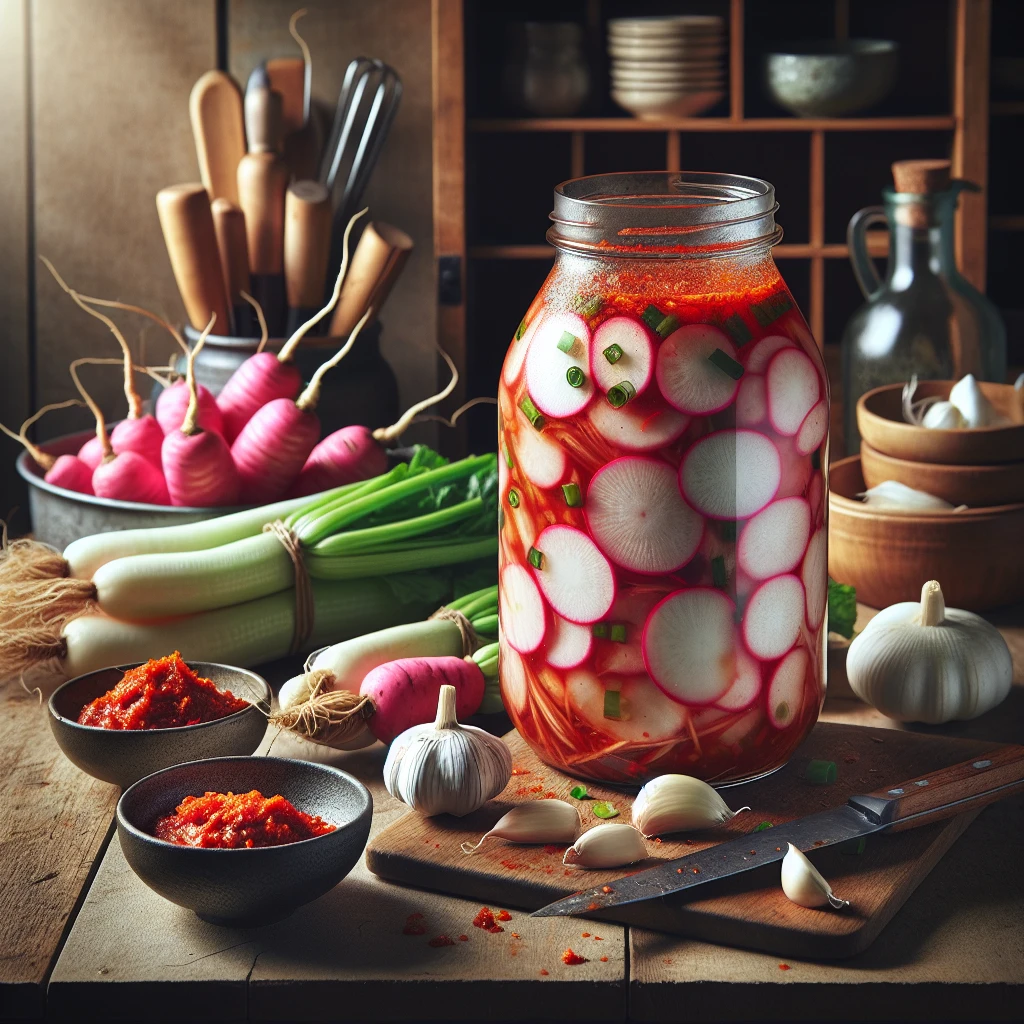
Quick Fermented Radish Kimchi is your go-to recipe for creating a tangy, spicy side dish that's packed with flavor. This version is perfect for those who love a bit of crunch and a lot of zest without the lengthy wait of traditional fermentation. Let's dive into this savory kimchi adventure!
 Share
Share
This post may contain affiliate links. As an Amazon Associate, we earn from qualifying purchases.
Ingredients for Quick Fermented Radish Kimchi
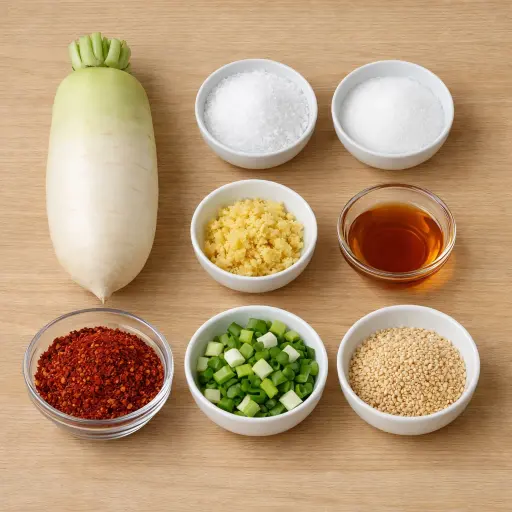
Daikon radish is the star, providing a crisp texture and mild flavor that soaks up the spicy, tangy brine beautifully. Kosher salt and sugar work together to draw out moisture from the radish, kickstarting the fermentation process. Garlic and ginger add depth and warmth, essential for that classic kimchi flavor. Fish sauce lends an umami richness, while Korean red pepper flakes (gochugaru) bring that iconic heat and vibrant color. Scallions add a fresh, oniony bite, and sesame seeds offer a nutty finish.
Why This Quick Fermented Radish Kimchi Works
Salt and sugar hit the radish first, and that’s where most of the work starts. As the cubes sit, water pulls out of the radish and pools in the bowl. The radish pieces lose some of their bite and start to feel a little bendy instead of hard. Because extra water leaves, the radish can soak in the seasoning later instead of watering it down.
After rinsing, the garlic, ginger, fish sauce, and gochugaru paste sticks to the outside of each piece. As everything sits in the jar, a bit more water comes out of the radish and mixes with that paste. Over a day or two, that liquid turns into a light brine that surrounds every cube.
During fermentation at room temperature, tiny bubbles start to form in the jar. The radish slowly becomes tangy, but it still stays crunchy because it was cut into big chunks and not cooked. The scallions and sesame seeds stay mixed through the jar, so each bite has some heat, some sourness, and a firm, juicy crunch.
Quick Fermented Radish Kimchi Tips & Tricks
- Use a non-metallic bowl and utensils to avoid any reaction with the fermentation process.
- If you prefer less heat, reduce the amount of gochugaru to suit your taste.
- Always use clean utensils when scooping out your kimchi to avoid contamination.
Mistakes To Avoid
Skipping the salting rest or cutting it short leaves too much water inside the radish. The pieces then leak a lot of liquid into the jar, the paste gets thin and slides off, and the kimchi turns out watery with bland, squeaky chunks instead of firm, crunchy bites.
Rinsing the radish too lightly after salting keeps a lot of salt and sugar on the surface. Once packed in the jar, the brine becomes overly salty and sharp, and the radish can tighten up and lose its pleasant snap.
Packing the jar loosely without pressing out air pockets creates big gaps where air stays trapped. Those pockets can lead to uneven fermentation, with some pieces turning sour and soft while others stay almost raw-tasting and hard.
Letting the jar sit at room temperature for too long in a very warm spot pushes the fermentation too far. The radish can go mushy, the liquid can bubble over, and the whole batch can end up overly sour and harsh instead of bright and crisp.
Equipment Used:
Ingredients
- 1 large daikon radish (about 1 lb)
- 1/4 cup kosher salt
- 2 tablespoons sugar
- 4 cloves garlic, minced
- 1-inch piece ginger, grated
- 1 tablespoon fish sauce
- 3 tablespoons Korean red pepper flakes (gochugaru)
- 2 scallions, chopped
- 1 tablespoon sesame seeds
Step-by-step Instructions
- 1. Peel and cut the daikon radish into bite-sized pieces, about 1-inch cubes.
- 2. In a large bowl, sprinkle the daikon with kosher salt and sugar. Toss well to coat evenly and let sit for 30 minutes to draw out moisture.
- 3. Rinse the radish under cold water to remove excess salt and sugar. Drain and pat dry with a clean kitchen towel.
- 4. In a separate bowl, combine minced garlic, grated ginger, fish sauce, and gochugaru. Mix into a paste.
- 5. Add the radish pieces to the paste, ensuring each piece is well coated.
- 6. Stir in the chopped scallions and sesame seeds, mixing thoroughly.
- 7. Transfer the kimchi into a clean, airtight jar, pressing down to remove air pockets.
- 8. Leave the jar at room temperature for 1-2 days until it reaches your desired level of fermentation.
- 9. Once fermented, store the kimchi in the refrigerator to slow down fermentation.
Trending Now
Oven-Baked Pork Chops
Enjoy a delightful dinner with these tender and juicy oven-baked pork chops, seaso...
View Recipe
Traditional Corn Casserole
A delightful corn casserole dish that embodies the comforting flavors of sweet cor...
View Recipe
Traditional Cucumber and Tomato Salad
A refreshing and simple salad combining crisp cucumbers and juicy tomatoes, season...
View Recipe
Savory Zucchini Bread
Savory Zucchini Bread is a delectable twist on traditional zucchini recipes, combi...
View RecipeFrequently Asked Questions
- Can I use another type of radish?
- Yes, but daikon is preferred for its texture and mild flavor. Other radishes might be more peppery or have a different crunch.
- How long does the kimchi last?
- Stored in the refrigerator, your kimchi can last several weeks, developing more flavor as it ages.
Serving Ideas for Quick Fermented Radish Kimchi
Enjoy this kimchi as a vibrant side dish with grilled meats or fish. Toss it into fried rice for an instant flavor boost or layer it into sandwiches for a spicy kick. It’s also fantastic with scrambled eggs or stirred into soups for an extra depth of flavor.
More Vegan Recipes

Butternut Squash Puree
Introduce your baby to the gentle sweetness of butternut squash with this easy-to-...
View Recipe
Herb-Roasted Spaghetti Squash
Discover a delicious and healthy way to prepare spaghetti squash with this herb-ro...
View Recipe
Roasted Red Pepper Hummus
Elevate your appetizer game with this smoky and creamy Roasted Red Pepper Hummus. ...
View Recipe
Creamy Vegan Mac and Cheese
Indulge in this luscious and creamy vegan mac and cheese, crafted with a rich blen...
View Recipe