
Pad Thai
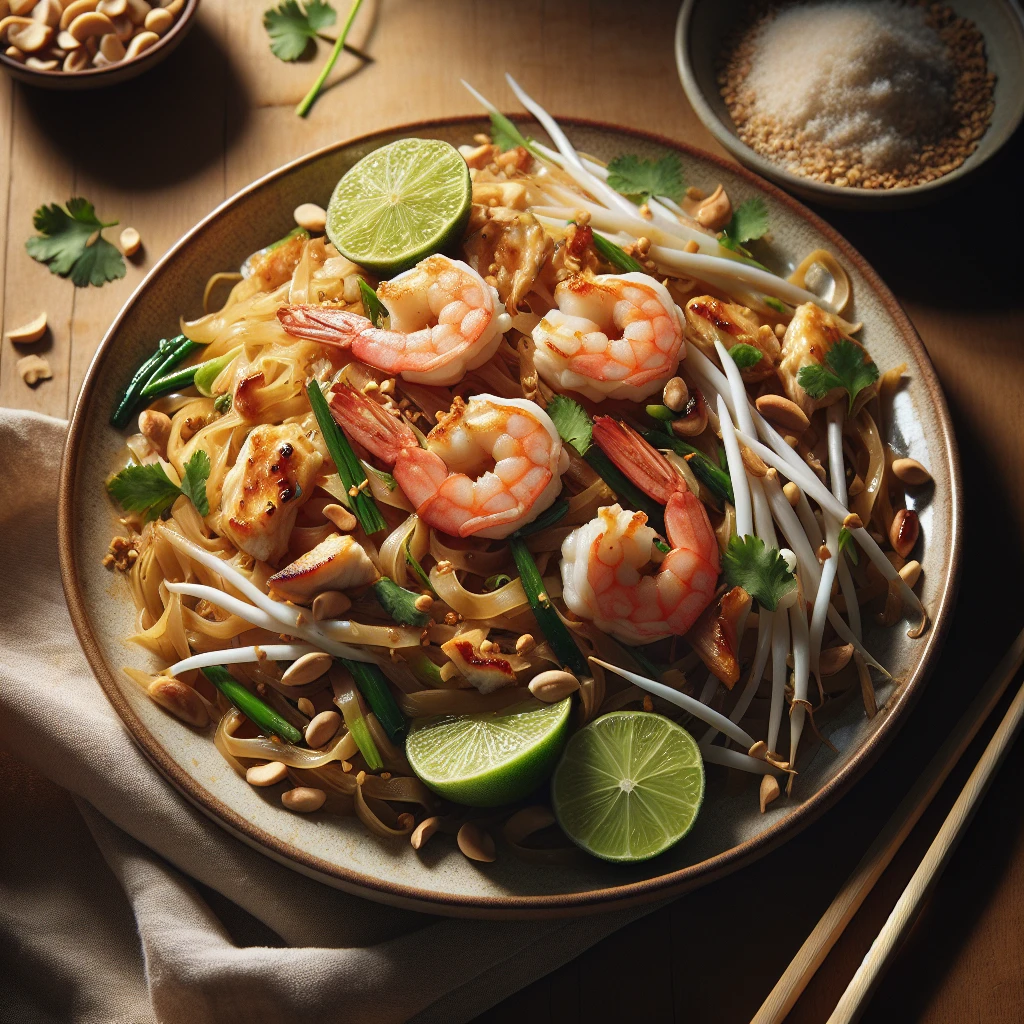
Pad Thai is a vibrant and flavorful dish that brings the taste of Thailand right into your kitchen. With tender rice noodles, juicy shrimp, and a perfect balance of sweet, sour, and spicy flavors, it's a dish that feels like a special treat any night of the week.
 Share
Share
This post may contain affiliate links. As an Amazon Associate, we earn from qualifying purchases.
Ingredients for Pad Thai
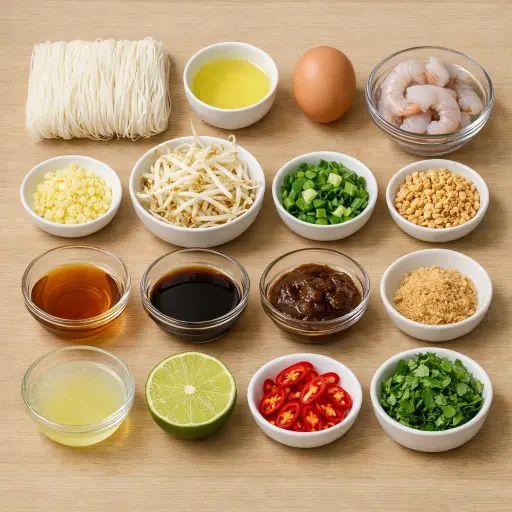
Rice noodles form the foundation of Pad Thai, offering a chewy texture that soaks up the sauce beautifully. Vegetable oil is used to sauté ingredients, maintaining a neutral flavor that doesn't overpower the dish. Garlic provides a savory, aromatic base. A large egg adds richness and protein, while shrimp brings a juicy, succulent element. Bean sprouts add freshness and crunch, and green onions lend a mild onion flavor. Crushed peanuts give a delightful crunch and nuttiness. The sauce, made from fish sauce, soy sauce, tamarind paste, and brown sugar, is the heart of the dish, balancing savory, sweet, and tangy notes. Lime juice adds brightness, while red chili offers a kick of heat. Finally, fresh cilantro provides an herbaceous finish.
Why This Pad Thai Works
Soaking the rice noodles first is what keeps them chewy instead of sticky. They slowly drink up just enough water to soften, so when they hit the hot pan they bend and toss easily instead of breaking or clumping. Once they go into the wok, they finish cooking in the sauce, so they take on the color and taste of the liquids instead of sitting in plain water.
As the garlic, egg, and shrimp cook, they firm up and brown a little, which gives some texture against the soft noodles. Pushing everything to one side before adding the noodles keeps the egg and shrimp from overcooking while the noodles start to warm and loosen. When the fish sauce, soy sauce, tamarind, and brown sugar go in, the heat melts the sugar and thins the tamarind, so it coats each strand of noodle.
Near the end, the bean sprouts and green onions only stay in the pan for a short time. They soften just a bit but still stay crisp, so the dish doesn’t feel mushy. Peanuts, cilantro, lime, and chili go on at the end, so they stay bright and crunchy instead of wilting in the heat.
Pad Thai Tips & Tricks
- For a vegetarian version, swap shrimp with tofu and use soy sauce instead of fish sauce.
- Soaking the noodles properly ensures they have the right texture; avoid boiling them.
- Adjust the level of chili according to your spice preference—start small if you're sensitive to heat.
Mistakes To Avoid
Letting the rice noodles soak too long in the water makes them turn mushy before they even hit the pan. Once they go into the wok, they break apart and clump instead of staying in long strands, so the Pad Thai ends up pasty and sticky instead of springy.
When the wok is not hot enough before the garlic, egg, and shrimp go in, everything steams in its own moisture. The shrimp turn soft and a bit rubbery instead of slightly firm, and the egg coats the pan in a wet layer that mixes poorly with the noodles later.
Adding the sauce mixture too early, before the noodles are in the pan, causes the liquid to reduce in the empty space. By the time the noodles are added, the sauce is too thick and sticky, so it grabs in patches and leaves some noodles dry and bland.
Cooking the bean sprouts and green onions for too long in the pan makes them lose their crunch and release water. The dish then turns slightly wet and limp, and the fresh, crisp bite that balances the chewy noodles disappears.
Equipment Used:
Ingredients
- 8 oz
- rice noodles
- 2 tbsp
- vegetable oil
- 2 cloves
- garlic, minced
- 1
- large egg
- 8 oz
- shrimp, peeled and deveined
- 1 cup
- bean sprouts
- 4
- green onions, chopped
- 1/4 cup
- crushed peanuts
- 2 tbsp
- fish sauce
- 1 tbsp
- soy sauce
- 2 tbsp
- tamarind paste
- 1 tbsp
- brown sugar
- 1/2
- lime, juiced
- 1
- red chili, sliced
- 1/4 cup
- fresh cilantro, chopped
Step-by-step Instructions
- 1. Soak rice noodles in warm water for 20 minutes until soft, then drain.
- 2. In a wok or large pan, heat vegetable oil over medium-high heat. Add minced garlic and sauté until fragrant.
- 3. Crack the egg into the pan, scramble, and cook until just set.
- 4. Add shrimp to the pan, cooking until pink and cooked through.
- 5. Push everything to one side of the pan and add the drained noodles.
- 6. In a small bowl, mix fish sauce, soy sauce, tamarind paste, and brown sugar. Pour over noodles and toss to coat.
- 7. Add bean sprouts and green onions, stirring to combine with the noodles and shrimp.
- 8. Cook for an additional 3-4 minutes, stirring frequently until everything is well combined and heated through.
- 9. Remove from heat and serve with crushed peanuts, lime juice, sliced chili, and fresh cilantro.
Trending Now
Classic Banana Bread
Classic Banana Bread is a timeless dessert beloved for its moist texture and sweet...
View Recipe
Classic Cucumber Salad
A refreshing and light cucumber salad featuring crisp cucumbers and a tangy vinaig...
View Recipe
Zesty Summer Squash Casserole
This delightful summer squash casserole combines vibrant garden-fresh vegetables w...
View Recipe
Traditional Dump Cake
Discover the timeless delight of the Traditional Dump Cake, a simple and scrumptio...
View RecipeFrequently Asked Questions
- Can I use chicken instead of shrimp?
- Absolutely! Simply substitute the shrimp with thin slices of chicken breast and cook them until fully done.
- What if I can't find tamarind paste?
- If tamarind paste is unavailable, you can use lime juice with a bit of brown sugar as a substitute, though the flavor will differ slightly.
Serving Ideas for Pad Thai
Pad Thai is perfect on its own as a complete meal, but you can serve it alongside a simple cucumber salad for extra freshness. It also pairs well with a light Thai-style soup, like Tom Yum, to complement the flavors.
More Thai, Stir-Fry Recipes
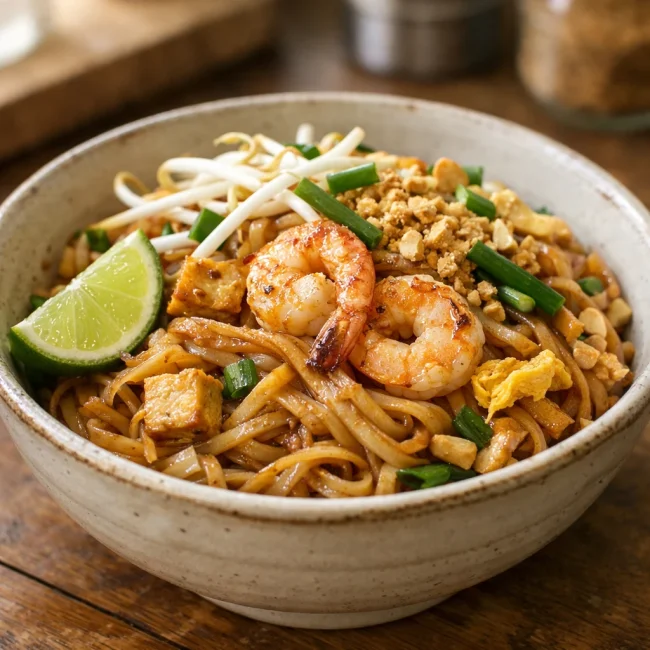
Pad Thai
Embark on a Thai culinary adventure with Pad Thai, a delightful stir-fried noodle ...
View Recipe