
Lemon Thyme Pickled Beets
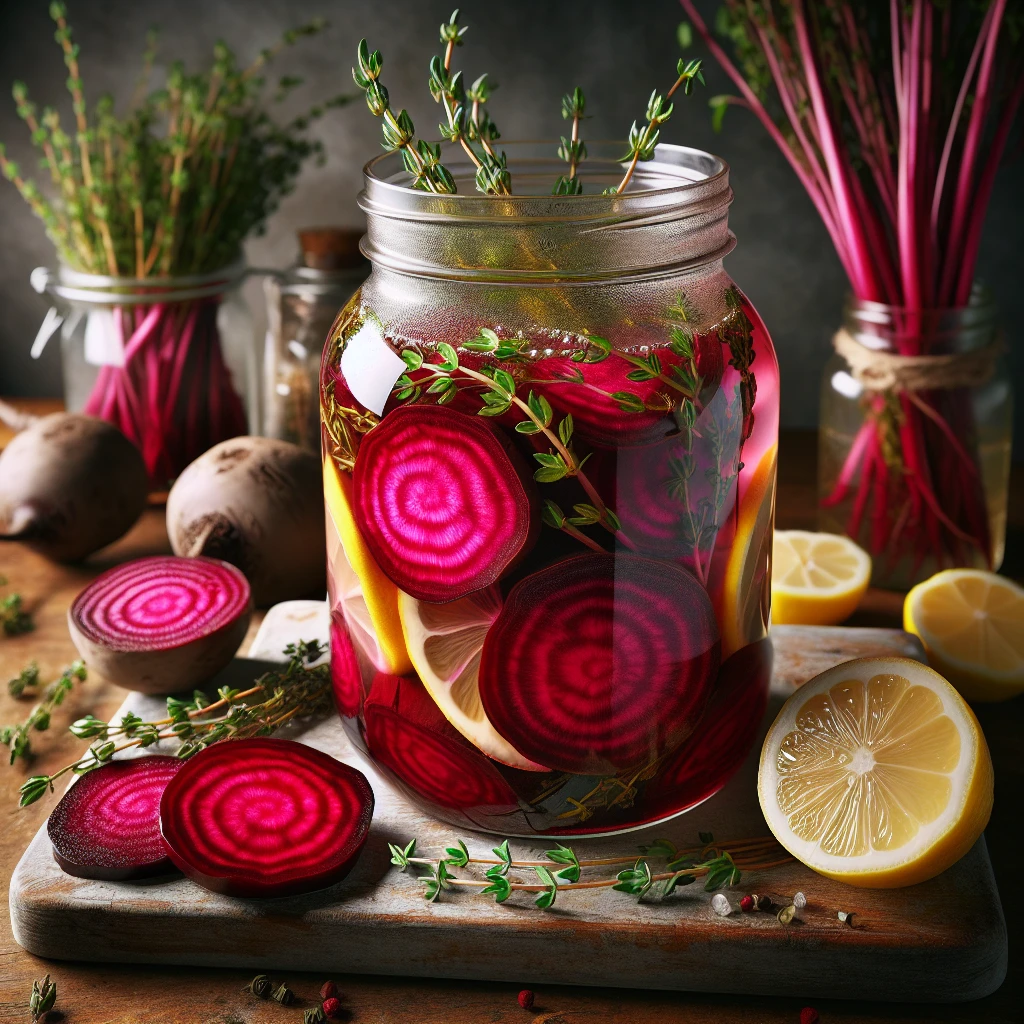
If you're looking to add a zesty kick to your meals, look no further than these Lemon Thyme Pickled Beets. Perfect for adding a splash of color and a burst of flavor to any dish, these pickled beets are a delightful way to preserve the earthy goodness of beets with a refreshing twist.
 Share
Share
This post may contain affiliate links. As an Amazon Associate, we earn from qualifying purchases.
Ingredients for Lemon Thyme Pickled Beets
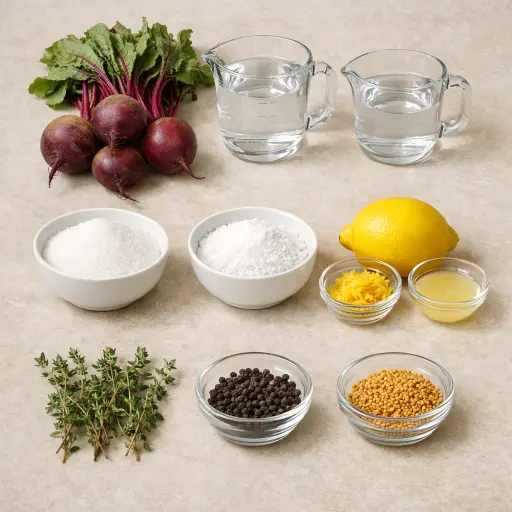
Beets are the star of the show here, providing a sweet and earthy base. You'll want them fresh and firm for the best texture.
White vinegar is the tangy component that helps preserve the beets while adding a sharp flavor.
Water slightly dilutes the vinegar, ensuring the brine isn't too overpowering.
Granulated sugar balances the acidity of the vinegar with a touch of sweetness.
Kosher salt enhances the overall flavor while helping to preserve the beets.
Lemon, both zested and juiced, brings a fresh, citrusy note that pairs beautifully with the sweetness of the beets.
Fresh thyme adds a subtle herbal aroma that complements the other flavors without overwhelming them.
Black peppercorns introduce a slight hint of heat and complexity.
Mustard seeds add a mild spiciness and a pleasant crunch to the brine.
Why This Lemon Thyme Pickled Beets Works
As the beets sit in the hot brine, they slowly drink in the vinegar, sugar, salt, lemon, and spices. At first the slices are firm and plain, but the heat from the brine opens them up a bit, so the liquid can move into the beet slices instead of just coating the outside. Over time in the fridge, that liquid keeps soaking deeper, so the color and taste run all the way through each piece.
While the brine simmers, the sugar and salt fully dissolve into the vinegar and water, so every spoonful of liquid tastes the same. The lemon juice sharpens the vinegar, and the zest and thyme sit in the hot liquid long enough that their taste spreads through it. By the time the beets have rested a day, they stay crisp enough to bite, but no longer taste earthy and plain. They end up firm, bright, and evenly seasoned from edge to center.
Lemon Thyme Pickled Beets Tips & Tricks
- Wear gloves when handling beets to avoid staining your hands — their vibrant color is no joke!
- Feel free to experiment with the thickness of the beet slices; thinner slices will pickle faster.
- If you want a stronger thyme flavor, lightly crush the sprigs before adding them to the brine.
Mistakes To Avoid
Cutting the beets into very thick or uneven slices makes them pickle unevenly. The thinner pieces soften and soak up the brine, while the thick ones stay firm and bland in the center, so the jar ends up with mixed textures and some slices that taste mostly like plain beet.
Letting the brine barely heat or not simmer long enough keeps the sugar and salt from fully dissolving and the thyme and spices from opening up. The liquid can taste flat and slightly harsh, and some crystals may sit at the bottom of the jar instead of seasoning the beets evenly.
Pouring only lukewarm or cool brine over the raw beet slices leaves them quite hard. The hot brine is what starts to soften the beets and pull the color and flavor into the liquid, so skipping that heat means the slices stay dense and the pickling happens much more slowly.
Sealing the jar while the beets and brine are still hot traps steam. This creates a lot of condensation on the lid and can drip back down as extra water, which slowly thins the brine and makes the pickles less punchy and less bright in color.
Equipment Used:
Ingredients
- 2 lbs fresh beets
- 1 cup white vinegar
- 1/2 cup water
- 1/2 cup granulated sugar
- 1 tbsp kosher salt
- 1 lemon, zested and juiced
- 4 sprigs fresh thyme
- 1 tsp black peppercorns
- 1/2 tsp mustard seeds
Step-by-step Instructions
- 1. Begin by washing and peeling the beets. Cut them into 1/4-inch thick slices.
- 2. In a medium saucepan, combine the white vinegar, water, granulated sugar, kosher salt, lemon zest and juice, fresh thyme, black peppercorns, and mustard seeds. Bring the mixture to a boil.
- 3. Reduce the heat and simmer the brine for 5 minutes to allow the flavors to meld together.
- 4. Place the beet slices into a clean, heatproof jar, then carefully pour the hot brine over the beets, ensuring they are fully submerged.
- 5. Let the mixture cool to room temperature before sealing the jar.
- 6. Refrigerate the pickled beets for at least 24 hours before serving to enhance the flavors.
Trending Now
Old-Fashioned Bread Pudding
Discover the classic charm of Old-Fashioned Bread Pudding - a timeless dessert com...
View Recipe
Hearty Breakfast Casserole
This Hearty Breakfast Casserole is the quintessential morning dish, combining savo...
View Recipe
Traditional Stuffed Peppers
Explore the delightful blend of seasoned beef, rice, and tomato sauce nestled in v...
View Recipe
Traditional Lemon Pound Cake
A delightful and moist traditional lemon pound cake infused with the fresh zest an...
View RecipeFrequently Asked Questions
- How long will these pickled beets last?
- Refrigerated, they should keep for about 3 to 4 weeks, maintaining their flavor and texture.
- Can I use a different type of vinegar?
- Absolutely! Apple cider vinegar can add a nice depth of flavor, though it may slightly alter the color.
Serving Ideas for Lemon Thyme Pickled Beets
These pickled beets make a fantastic addition to a goat cheese and arugula salad. They also pair beautifully with roasted meats, adding a bright contrast to rich flavors. Try them on a sandwich with turkey or ham, or simply serve them alongside a cheese platter for a colorful twist.
More Side Dishes Recipes
Savory Sautéed Cabbage
This savory sautéed cabbage dish brings out the natural sweetness and crispness of...
View Recipe
Herbed Spaetzle with Garlic Butter
Discover the delightful twist on traditional German Spaetzle with this easy-to-mak...
View Recipe
Golden Crispy Brussels Sprouts
Delight in the golden perfection of these crispy Brussels sprouts, a delightful si...
View Recipe
Marjoram-Seasoned Roasted Vegetables
Marjoram-Seasoned Roasted Vegetables bring a delightful floral note to roasted zuc...
View Recipe