
Herbed Lemon Egg Noodles
Herbed Lemon Egg Noodles are a fresh twist on a classic pasta, bringing a burst of citrus and herbs to your dish. They're perfect for a light but satisfying homemade meal, and they add a little zing to any dinner table.
 Share
Share

This post may contain affiliate links. As an Amazon Associate, we earn from qualifying purchases.
Ingredients for Herbed Lemon Egg Noodles
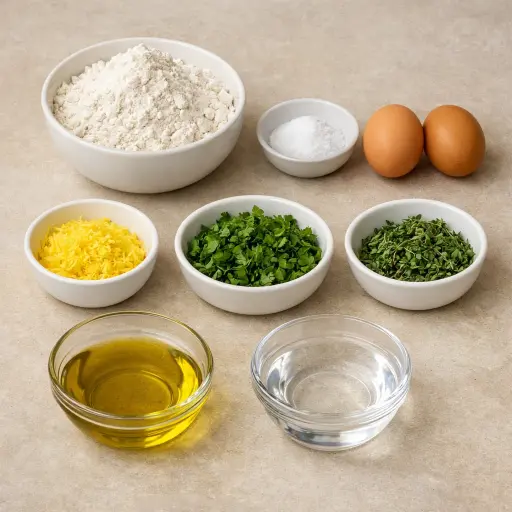
All-purpose flour is the backbone of our noodles, providing structure and chew. Salt enhances the natural flavors of the other ingredients. Eggs add richness and help bind the dough. Lemon zest gives a fragrant citrus note that brightens the noodles. Fresh parsley and thyme bring earthiness and depth. Olive oil adds a hint of fruitiness and helps keep the dough supple. Finally, a touch of water ensures the dough comes together smoothly.
Why This Herbed Lemon Egg Noodles Works
As the eggs, flour, and a little water come together, the dough starts out rough and stiff. With kneading, the flour soaks up the moisture and the gluten in the flour stretches and lines up. That’s why the dough slowly becomes smooth and elastic instead of crumbly. The olive oil coats some of the flour and keeps the dough from drying out, so the noodles stay tender instead of tough. While the dough rests, all that stretching settles down and the moisture spreads evenly, which makes the dough easier to roll thin without snapping back.
When the dough is rolled and cut, the noodles hold their shape because that gluten structure is now strong but flexible. In the boiling salted water, the outside of each noodle cooks fast and firms up, while the inside stays a little chewy. After just a few minutes, the noodles are set all the way through but not mushy. The lemon zest and herbs are mixed right into the dough, so as the noodles cook, that fresh taste is already inside every bite.
Herbed Lemon Egg Noodles Tips & Tricks
- If your dough feels too dry, add a few drops more water; too sticky, sprinkle a bit more flour.
- Don't skip the resting step; it significantly improves the dough's workability.
- Use a pasta machine for consistent thickness if you have one.
Mistakes To Avoid
Rolling the dough too thick means the noodles stay heavy and chewy instead of light. The outside softens in the water, but the center stays a bit tough and doughy, so the noodles feel dense in the mouth.
Adding too much water while mixing turns the dough sticky and hard to handle. Extra flour then gets worked in during kneading, which makes the noodles firm and a little rubbery once boiled.
Cutting the noodles very unevenly causes some pieces to cook much faster than others. Thin strips soften quickly and start to fall apart while the thicker ones are still a bit stiff in the center.
Skipping the resting time leaves the dough tight and springy. When it is rolled, it keeps shrinking back, so the noodles end up thicker than planned and cook up firmer and less tender.
Boiling the noodles for too long makes them swell and lose their shape. The herbs and lemon in the dough wash out into the water, and the noodles turn soft and slightly mushy instead of springy.
Equipment Used:
Ingredients
- 2 cups all-purpose flour
- 1/2 teaspoon salt
- 2 large eggs
- 1 teaspoon lemon zest
- 1 tablespoon chopped fresh parsley
- 1 tablespoon chopped fresh thyme
- 1 tablespoon olive oil
- 2 tablespoons water
Step-by-step Instructions
- 1. In a large bowl, mix the flour and salt.
- 2. Make a well in the center and add eggs, lemon zest, parsley, thyme, and olive oil.
- 3. Gradually mix the dough, adding water until it forms a smooth ball.
- 4. Knead the dough for about 10 minutes on a floured surface.
- 5. Wrap in plastic and let rest for 30 minutes.
- 6. Roll out the dough to desired thickness and cut into strips.
- 7. Boil in salted water for 3-4 minutes until al dente.
Trending Now

Oven-Baked Pork Chops
Enjoy a delightful dinner with these tender and juicy oven-baked pork chops, seaso...
View Recipe
Traditional Corn Casserole
A delightful corn casserole dish that embodies the comforting flavors of sweet cor...
View Recipe
Traditional Cucumber and Tomato Salad
A refreshing and simple salad combining crisp cucumbers and juicy tomatoes, season...
View Recipe
Savory Zucchini Bread
Savory Zucchini Bread is a delectable twist on traditional zucchini recipes, combi...
View RecipeFrequently Asked Questions
- Can I use dried herbs instead of fresh?
- Yes, but reduce the amount by half since dried herbs are more concentrated.
- Can these noodles be frozen?
- Yes, freeze them in a single layer and then transfer to a bag. Cook from frozen for best results.
- How long will the dough keep in the fridge?
- Wrapped well, it will keep for up to 2 days.
Serving Ideas for Herbed Lemon Egg Noodles
These noodles shine with a simple sauce like olive oil and garlic, or they can complement a hearty ragu. Try tossing them with sautéed vegetables and a sprinkle of Parmesan for a light, satisfying meal. They also pair wonderfully with grilled chicken or fish.
More Pasta Recipes
Spinach and Ricotta Stuffed Shells with Pesto Alfredo
Try this delicious twist on classic stuffed shells with a creamy pesto Alfredo sau...
View Recipe
Spinach and Ricotta White Lasagna
A unique twist on the classic lasagna, this white lasagna combines creamy ricotta,...
View Recipe
Lemon Herb Fettuccine Alfredo
Lemon Herb Fettuccine Alfredo is a refreshing twist on the classic dish, combining...
View Recipe
Truffle Mac and Cheese
Experience the ultimate comfort food with a gourmet twist in this Truffle Mac and ...
View Recipe