
Garlic Herb Crusted Rib Roast
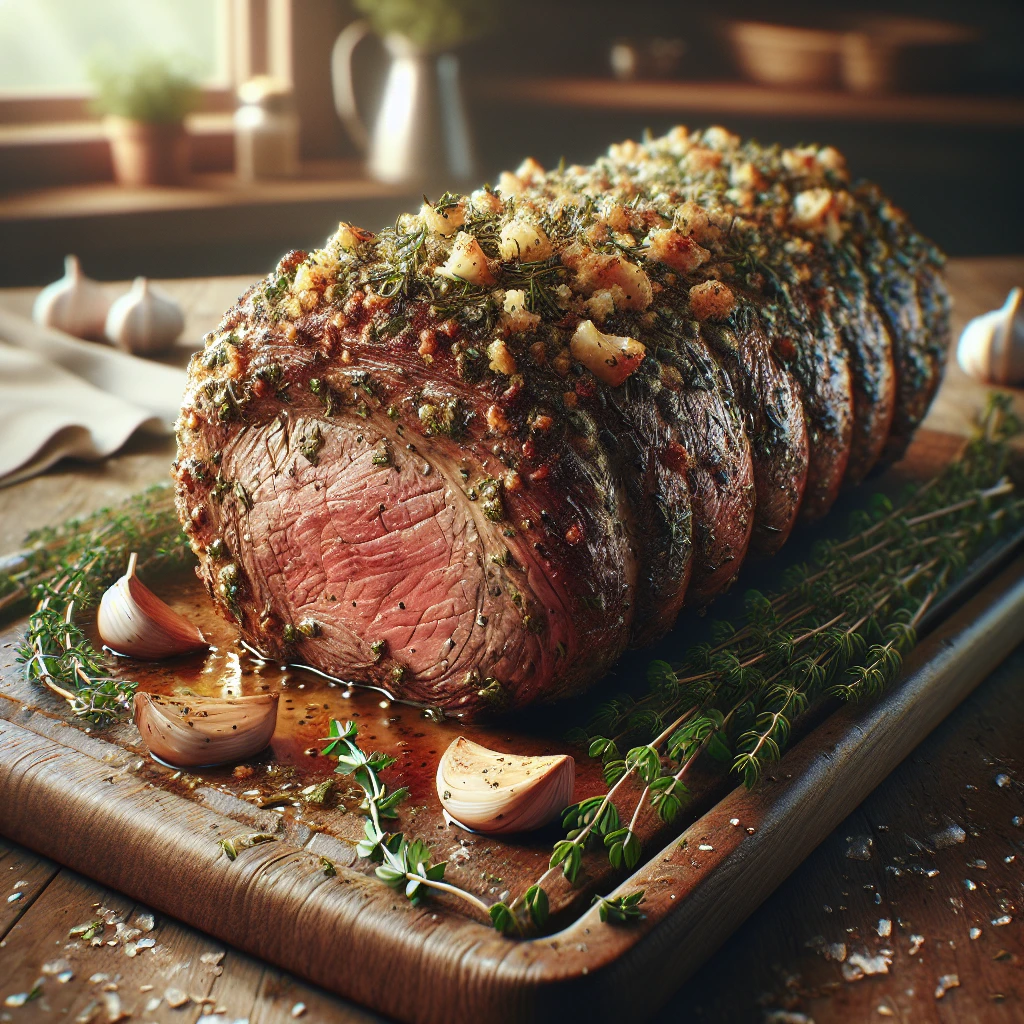
This Garlic Herb Crusted Rib Roast is the perfect centerpiece for a special dinner. The aromatic blend of garlic and fresh herbs infuses the meat with incredible flavor, making it a memorable dish that's surprisingly easy to prepare.
 Share
Share
This post may contain affiliate links. As an Amazon Associate, we earn from qualifying purchases.
Ingredients for Garlic Herb Crusted Rib Roast
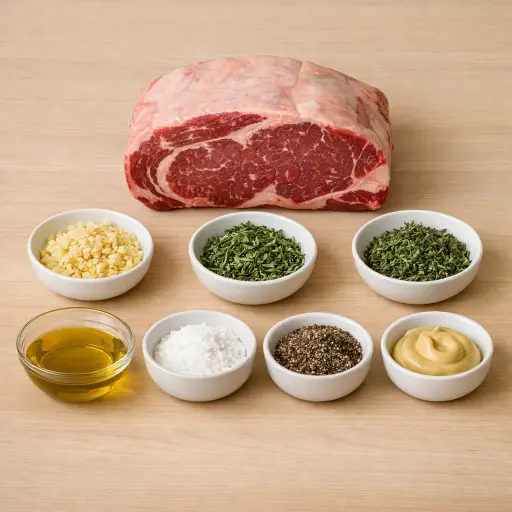
The star of the show is the prime rib roast, known for its rich marbling and tenderness. Garlic brings a robust, savory depth to the crust, while fresh rosemary and thyme add an earthy, aromatic quality. Olive oil helps bind the ingredients into a paste and keeps the roast moist. Kosher salt enhances the natural flavors, and black pepper adds a subtle heat. Finally, a touch of Dijon mustard introduces a slight tanginess that complements the herbs.
Why This Garlic Herb Crusted Rib Roast Works
In the hot oven, the outside of the rib roast browns fast. That first blast of 450°F heat tightens the surface and starts a crust. The garlic, herbs, mustard, salt, and pepper paste sticks to that outside and dries a bit, so it forms a firm, tasty shell instead of sliding off. As the fat cap sits on top, it slowly melts and runs over the meat, soaking into the crust and keeping the surface from drying out too much.
After the temperature drops, the roast cooks more slowly, so the heat can move toward the center without overcooking the edges. Inside, the fat softens and spreads, and the meat warms up gently. Juices move toward the middle while it cooks, then, during the rest at the end, those juices settle back through the roast instead of spilling out on the cutting board. That is why the slices stay pink, tender, and moist, with a crunchy, garlicky herb layer on the outside.
Garlic Herb Crusted Rib Roast Tips & Tricks
- Use a meat thermometer for accurate doneness — it takes the guesswork out of roasting.
- Let the roast sit at room temperature for about an hour before cooking to ensure even cooking.
- Resting the meat is non-negotiable; it makes a world of difference in juiciness.
Mistakes To Avoid
Letting the roast stay in the oven until it “looks done” instead of checking the internal temperature often leads to dry meat. The outside keeps cooking and tightening up while the center passes 130°F, so the rib roast loses its juicy, tender texture and slices turn out firm and a bit chalky instead of rosy and soft.
Starting with cold meat straight from the fridge can cause uneven cooking. The outer layers race ahead and hit a higher temperature while the middle lags behind, so by the time the center reaches medium-rare, the outside ring is overcooked and gray.
Skipping the initial high-heat blast at 450°F means the crust never really sets. The fat cap warms slowly instead of sizzling, so the outside stays pale and soft, and the herb paste can slide off instead of sticking in a crisp layer.
Carving right away instead of letting the roast rest makes a lot of the juices run out onto the cutting board. The slices end up less moist, and the meat can seem a bit tougher because the fibers haven’t had time to relax.
Equipment Used:
Ingredients
- 1 prime rib roast (about 5 pounds)
- 5 cloves garlic, minced
- 2 tbsp fresh rosemary, chopped
- 2 tbsp fresh thyme, chopped
- 2 tbsp olive oil
- 1 tbsp kosher salt
- 1 tbsp black pepper
- 1 tbsp Dijon mustard
Step-by-step Instructions
- 1. Preheat your oven to 450°F (232°C).
- 2. In a bowl, combine minced garlic, rosemary, thyme, olive oil, salt, pepper, and Dijon mustard to form a paste.
- 3. Rub the garlic herb paste evenly over the rib roast, ensuring all sides are well-coated.
- 4. Place the roast on a rack in a roasting pan, with the fat side up.
- 5. Roast in the oven for 20 minutes to sear the outside and create a crust.
- 6. Reduce the oven temperature to 325°F (163°C) and continue to roast for approximately 1.5 to 2 hours, or until the internal temperature reaches 130°F (54°C) for medium-rare.
- 7. Remove the roast from the oven and let it rest for 20 minutes before carving.
Trending Now
Old-Fashioned Bread Pudding
Discover the classic charm of Old-Fashioned Bread Pudding - a timeless dessert com...
View Recipe
Traditional Italian Bruschetta
Experience the authentic taste of Italian bruschetta, a perfect blend of fresh tom...
View Recipe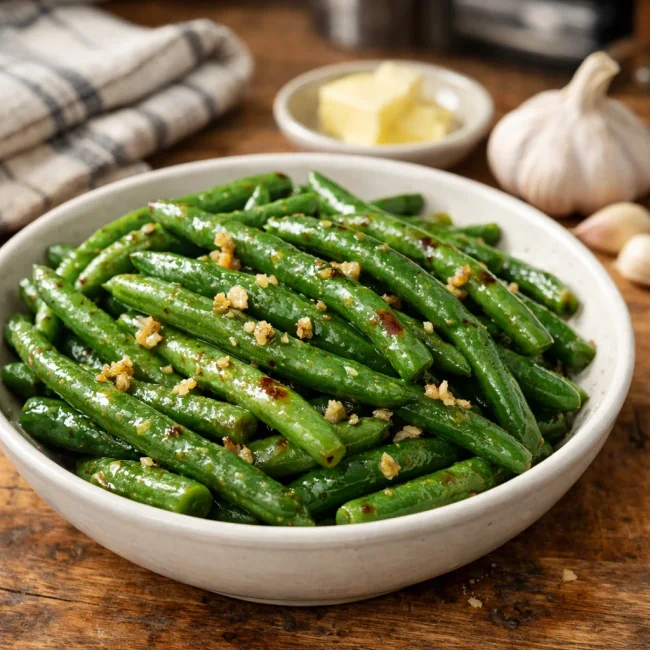
Classic Green Beans
Discover the timeless delight of Classic Green Beans, a simple yet flavorful side ...
View Recipe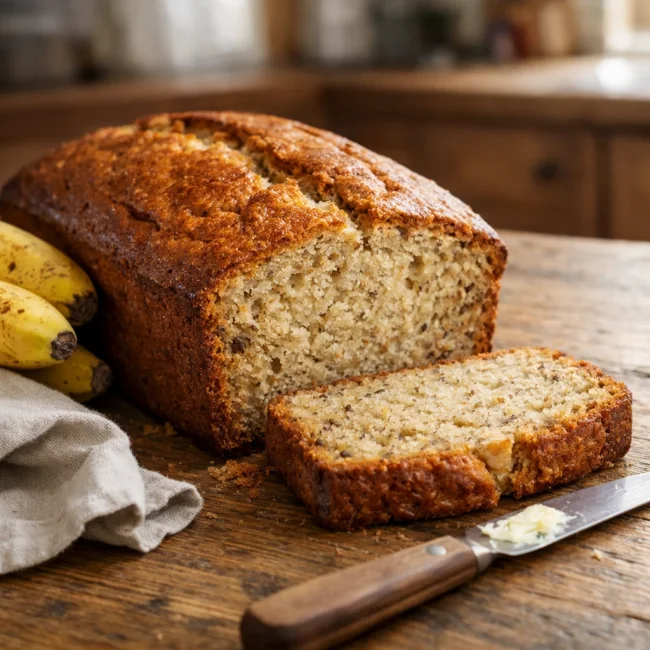
Classic Banana Bread
Classic Banana Bread is a timeless dessert beloved for its moist texture and sweet...
View RecipeFrequently Asked Questions
- Can I use dried herbs instead of fresh?
- Yes, but reduce the amount by about half since dried herbs are more concentrated in flavor.
- How can I tell if my roast is done without a thermometer?
- While a thermometer is recommended, you can also check by cutting into the meat — it should be warm and pink in the center for medium-rare.
Serving Ideas for Garlic Herb Crusted Rib Roast
This rib roast pairs beautifully with creamy mashed potatoes and roasted seasonal vegetables like carrots and Brussels sprouts. For a touch of freshness, consider serving with a simple arugula salad tossed in lemon vinaigrette. A full-bodied red wine, such as Cabernet Sauvignon, complements the rich flavors perfectly.
More Roasting Recipes
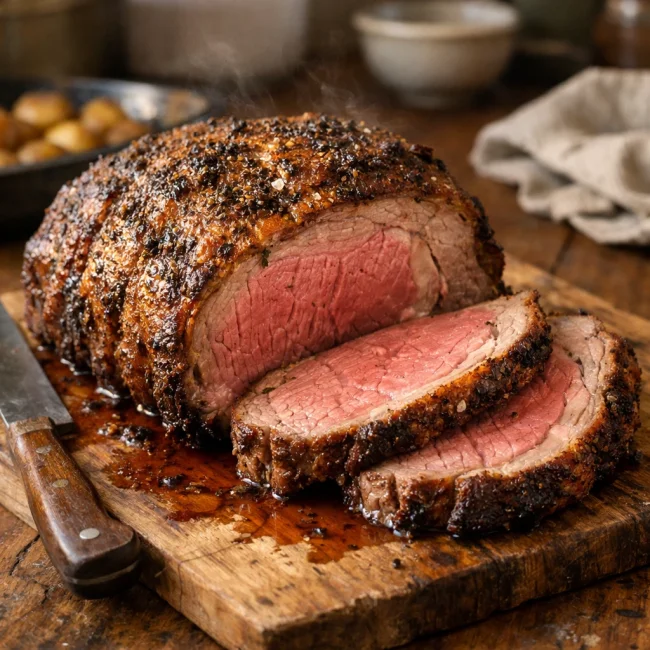
Classic Rib Eye Roast
A timeless rib eye roast recipe that delivers a succulent, flavorful dish perfect ...
View Recipe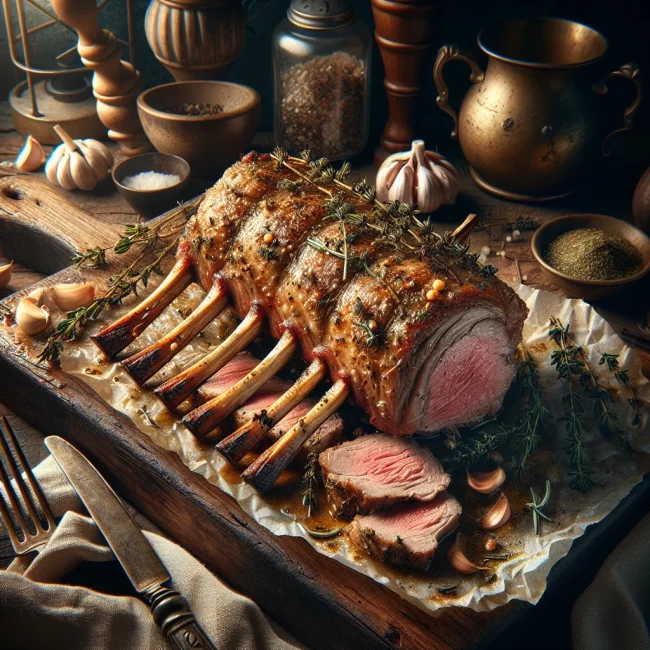
Traditional Roast Rack of Lamb
Savor the timeless delight of a perfectly roasted rack of lamb, infused with garli...
View Recipe
Traditional Oven Roast
A timeless oven roast recipe perfect for family gatherings, featuring tender beef,...
View Recipe
Traditional Chuck Roast
Discover the rich and hearty flavors of our Traditional Chuck Roast, perfect for a...
View Recipe