
Basque Burnt Cheesecake
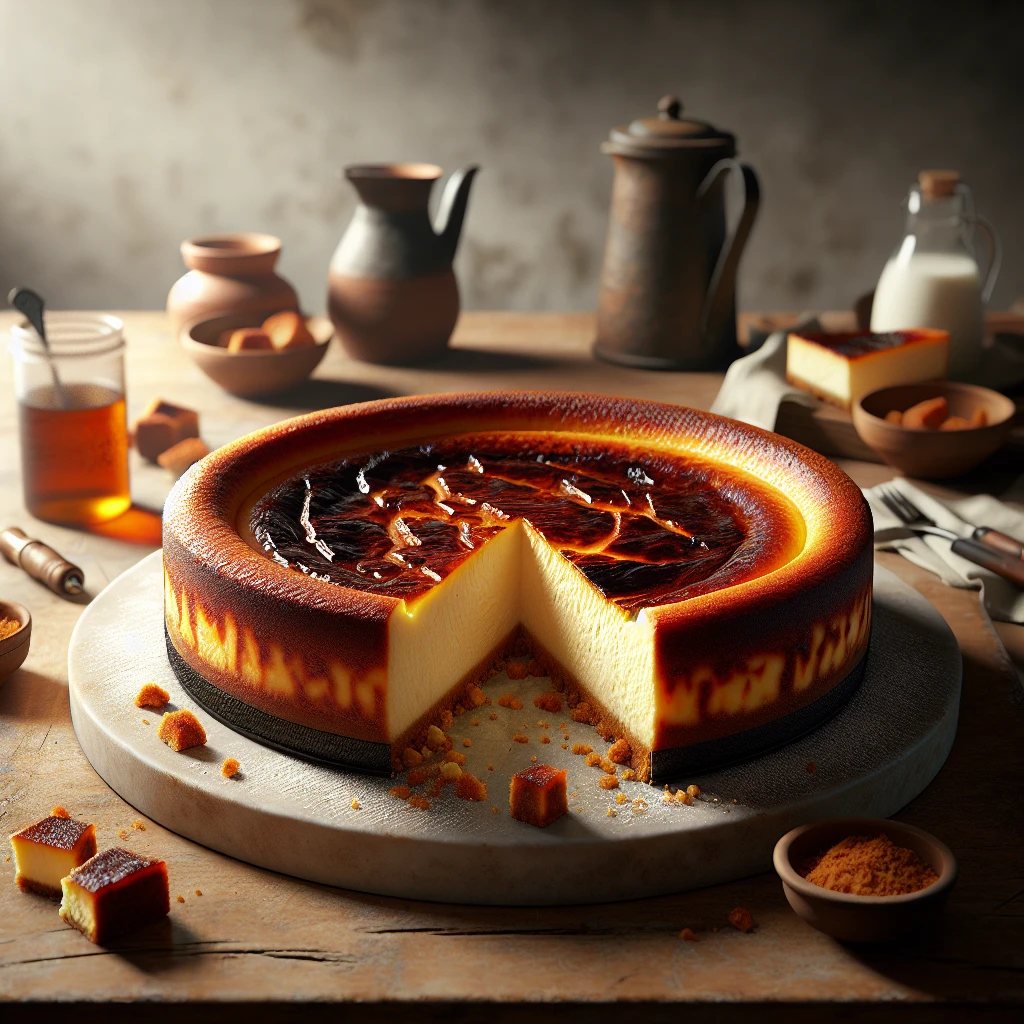
Basque Burnt Cheesecake is a dessert marvel that impresses with its rustic charm and deep caramelized top. Known for its creamy, custard-like center and striking appearance, this cheesecake is a must-try for cheesecake lovers looking for something unique and indulgent.
 Share
Share
This post may contain affiliate links. As an Amazon Associate, we earn from qualifying purchases.
Ingredients for Basque Burnt Cheesecake
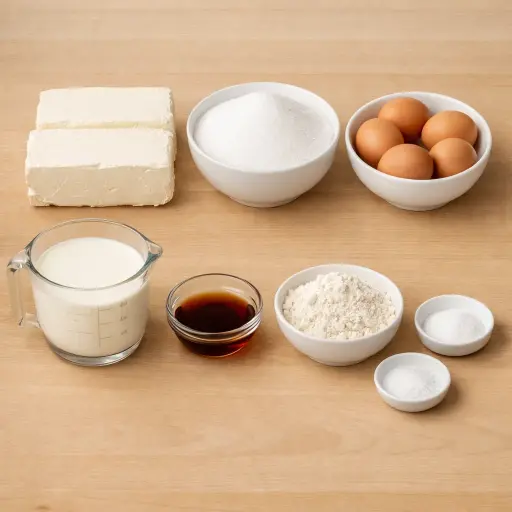
Cream cheese forms the base of the cheesecake, lending it a smooth, creamy texture. Be sure it's at room temperature to blend seamlessly. Granulated sugar sweetens the cheesecake, balancing the rich flavors. Eggs are crucial for structure and help achieve that soft, custard-like center. Heavy cream adds richness and a velvety texture. Vanilla extract provides a subtle depth of flavor that complements the cheese. All-purpose flour stabilizes the batter, helping it hold together without being dense. A pinch of salt enhances all the flavors, making them pop.
Why This Basque Burnt Cheesecake Works
In the oven, the very hot temperature shocks the batter. The outside cooks fast and the sugar on top browns deeply, so a dark “burnt” crust forms before the center has time to fully set. That crust holds everything in, so the inside can stay soft and creamy instead of drying out.
As the cheesecake bakes, the cream cheese, eggs, and a little flour slowly firm up together. Eggs start to set and give the cake structure, while the flour gently thickens the batter so it doesn’t collapse into a puddle. Heavy cream keeps the texture loose and silky, so even when it sets, the middle stays custardy.
By the time it is done, the edges are fully set and the center still has a jiggle. During cooling, that jiggly center finishes setting without more heat. The cheesecake tightens just enough to slice, but stays smooth and almost mousse-like under the darker, slightly bitter top.
Basque Burnt Cheesecake Tips & Tricks
- Room temperature ingredients blend more easily and result in a smoother batter.
- Don't worry about cracks; they're part of the cheesecake's rustic charm.
- Use an electric mixer for the best results, but avoid overmixing once the flour is added.
Mistakes To Avoid
Letting the cheesecake bake until the center is firm instead of slightly jiggly makes it dry and chalky once it cools. The high heat is meant to burn the top while the middle stays soft; baking until it “looks done” all the way through turns the inside dense instead of creamy.
Starting with cold cream cheese often leaves small lumps that never fully blend out. Those lumps stay in the batter and bake into little rubbery bits, so the texture ends up uneven instead of smooth.
Using a pan that is not fully lined with high parchment can cause the batter to leak or overflow. The sides then cook too hard against the metal, the edges can burn, and the classic tall, wrinkled sides of the cheesecake are lost.
Whisking the batter too aggressively after adding the cream and eggs beats in a lot of air. In the oven, that extra air makes the cheesecake puff up too much, then collapse as it cools, leaving a sunken center and a spongy texture.
Equipment Used:
10-inch springform pan, large mixing bowl, electric mixer, spatula, parchment paper
Ingredients
- 2 pounds cream cheese (room temperature)
- 1 1/2 cups granulated sugar
- 6 large eggs
- 2 cups heavy cream
- 1 teaspoon vanilla extract
- 1/4 cup all-purpose flour
- 1/4 teaspoon salt
Step-by-step Instructions
- 1. Preheat your oven to 450°F and line a 10-inch springform pan with parchment paper, ensuring it extends over the sides.
- 2. In a large bowl, beat cream cheese and sugar together until smooth and creamy.
- 3. Add eggs, one at a time, mixing well after each addition.
- 4. Pour in the heavy cream and vanilla extract, and continue mixing until the batter is smooth.
- 5. Sift in the flour and salt, gently folding them into the batter.
- 6. Pour the batter into the prepared pan and bake for 50-55 minutes, or until the top is deeply golden brown and the center is still slightly jiggly.
- 7. Remove from oven and let it cool at room temperature before releasing it from the springform pan.
Trending Now
Old-Fashioned Bread Pudding
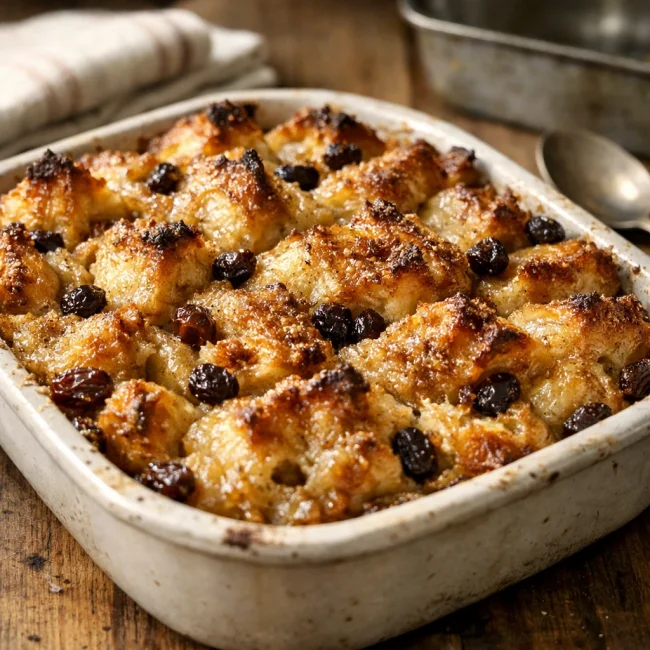
Discover the classic charm of Old-Fashioned Bread Pudding - a timeless dessert com...
View Recipe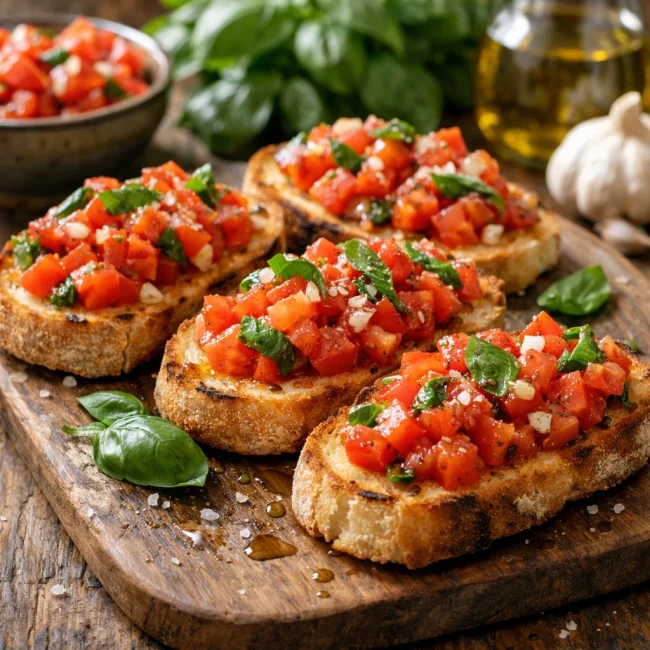
Traditional Italian Bruschetta
Experience the authentic taste of Italian bruschetta, a perfect blend of fresh tom...
View Recipe
Classic Green Beans
Discover the timeless delight of Classic Green Beans, a simple yet flavorful side ...
View Recipe
Classic Banana Bread
Classic Banana Bread is a timeless dessert beloved for its moist texture and sweet...
View RecipeFrequently Asked Questions
- Why does my cheesecake have cracks?
- Cracks are normal and part of the rustic appeal of a Basque Burnt Cheesecake. The high baking temperature is what creates the signature burnt top and can sometimes lead to cracks.
- Can I make this cheesecake ahead of time?
- Yes, it's even better the next day. Let it cool completely, then refrigerate. Bring to room temperature before serving for the best texture.
Serving Ideas for Basque Burnt Cheesecake
This cheesecake pairs beautifully with a drizzle of berry coulis for a fruity contrast. Alternatively, serve with a dollop of whipped cream and a sprinkle of sea salt to enhance the burnt flavors. It also stands alone wonderfully as a rich, after-dinner treat.
More Desserts Recipes
Rustic Vanilla Peach Cobbler
This rustic vanilla peach cobbler combines a rich, buttery crust with the sweet, v...
View Recipe
Traditional Lemon Curd
A classic, tangy lemon curd that is perfect for enhancing desserts, breakfast dish...
View Recipe
Traditional Cream Cheese Pie
A delightful and timeless dessert, Traditional Cream Cheese Pie offers a rich and ...
View Recipe
Timeless Cream Puff Delight
Indulge in a delectable Timeless Cream Puff Delight, a classic dessert featuring a...
View Recipe