
Almond-Crusted Salmon
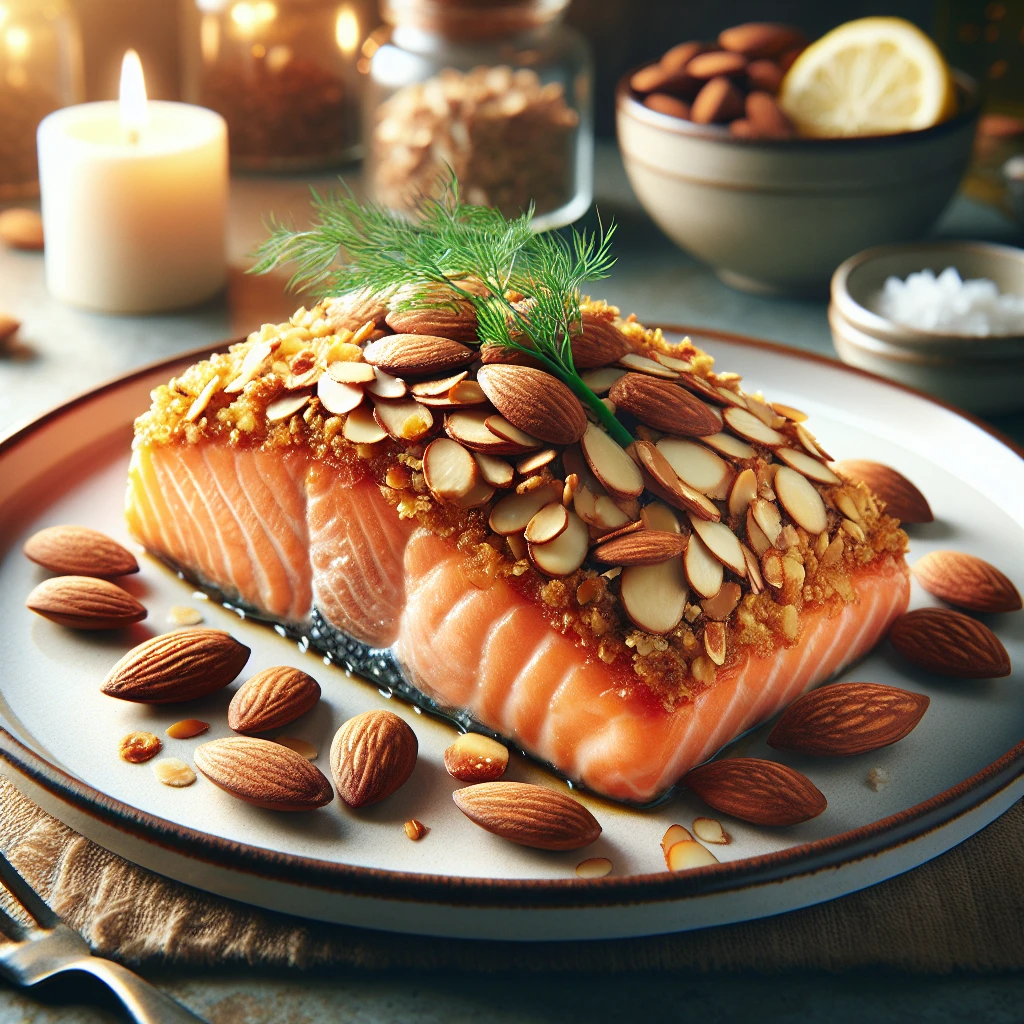
This Almond-Crusted Salmon is a game-changer for your dinner rotation. It's a delightful mix of nutty, zesty flavors with a crisp texture that's sure to impress. Perfect for a weeknight meal or a special occasion!
 Share
Share
This post may contain affiliate links. As an Amazon Associate, we earn from qualifying purchases.
Ingredients for Almond-Crusted Salmon
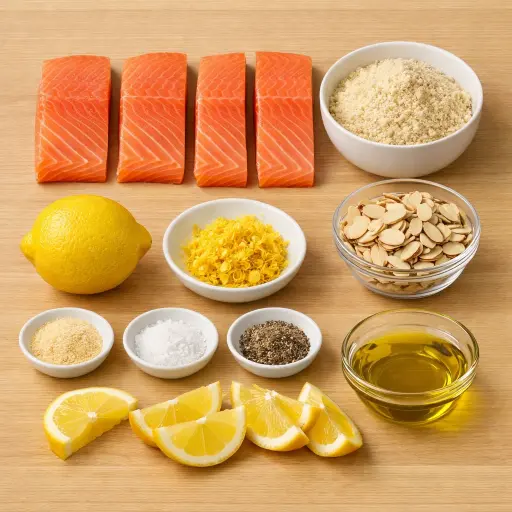
Salmon fillets are the star of the dish, providing a rich source of omega-3 fatty acids. Choose skinless fillets for easier crust application. Almond flour and sliced almonds add a nutty, crunchy texture, while lemon zest brings a refreshing citrusy note. Fresh parsley adds a touch of green and earthiness. The garlic powder gives a mild, savory depth, complemented by salt and black pepper for balance. Olive oil helps the crust adhere and adds a touch of richness. Finally, lemon wedges are served on the side for a fresh squeeze of flavor.
Why This Almond-Crusted Salmon Works
In the oven, the salmon and the almond topping change at different speeds, and that’s what makes this work. The salmon cooks from the bottom and sides, so the inside gently firms up and turns flaky. At the same time, the almond flour and sliced almonds on top dry out and toast. As they toast, the nuts become crisp and hold together in a thin crust instead of falling off in pieces.
During baking, the olive oil brushed on the fish soaks into the salmon a bit and also coats the almonds. That oil keeps the fish moist while it cooks and lets the nut topping brown instead of burning. The salt, garlic powder, lemon zest, and parsley are mixed right into the almond coating, so as the crust warms up, that seasoning is spread over the whole top of each fillet. By the time it comes out of the oven, the salmon stays juicy underneath, and the almond layer has set into a crunchy, golden shell.
Almond-Crusted Salmon Tips & Tricks
- If you like extra crunch, toast the sliced almonds slightly before mixing them with the almond flour.
- Make sure to use fresh lemon zest for the best flavor — it really makes a difference!
- If you have leftovers, they reheat well in the oven to maintain the crisp crust.
Mistakes To Avoid
Letting the salmon bake too long dries it out before the crust browns much more. The fish turns firm and chalky in the center, and the almond topping starts to taste bitter from staying in the hot oven too long.
Putting the salmon in the oven while it is still cold from the fridge often leads to uneven cooking. The outside cooks fast and the crust darkens, while the thickest part in the center stays a bit raw and glossy.
Skipping the olive oil on the fish leaves the almond mixture sitting loose on top. In the oven, the dry coating doesn’t grip the salmon, so it falls off in patches and bakes up dusty instead of forming a crisp layer.
Packing on a very thick layer of the almond mixture causes the top to brown before the heat reaches the fish. The crust can look done and even start to burn in spots, while the salmon underneath stays soft and undercooked.
Equipment Used:
Ingredients
- 4 salmon fillets (6 oz each)
- 1 cup almond flour
- 1/2 cup sliced almonds
- 1 lemon, zested
- 2 tbsp fresh parsley, chopped
- 1 tsp garlic powder
- 1/2 tsp salt
- 1/4 tsp black pepper
- 2 tbsp olive oil
- 1 lemon, cut into wedges
Step-by-step Instructions
- 1. Preheat your oven to 400°F (200°C) and line a baking sheet with parchment paper.
- 2. In a bowl, combine almond flour, sliced almonds, lemon zest, parsley, garlic powder, salt, and pepper.
- 3. Brush the salmon fillets with olive oil on all sides.
- 4. Press the almond mixture onto the top of each salmon fillet, ensuring an even layer.
- 5. Place the salmon fillets on the prepared baking sheet.
- 6. Bake in the preheated oven for 15-18 minutes until the salmon is cooked through and the almond crust is golden brown.
- 7. Serve with lemon wedges on the side.
Trending Now
Classic Cucumber Salad
A refreshing and light cucumber salad featuring crisp cucumbers and a tangy vinaig...
View Recipe
Classic Banana Bread
Classic Banana Bread is a timeless dessert beloved for its moist texture and sweet...
View Recipe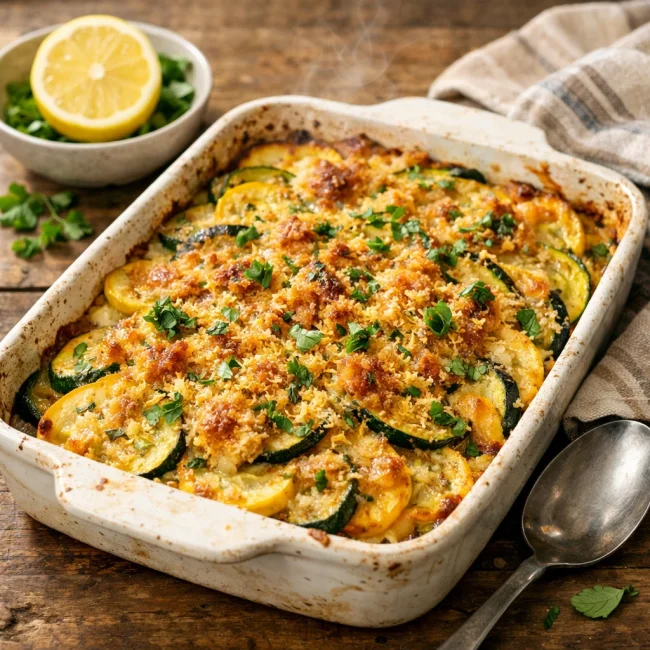
Zesty Summer Squash Casserole
This delightful summer squash casserole combines vibrant garden-fresh vegetables w...
View Recipe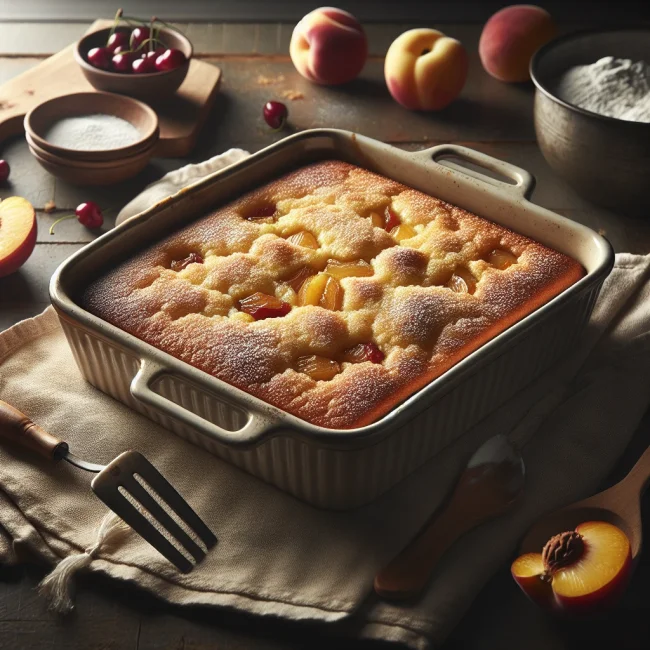
Traditional Dump Cake
Discover the timeless delight of the Traditional Dump Cake, a simple and scrumptio...
View RecipeFrequently Asked Questions
- Can I use frozen salmon?
- Yes, just be sure to thaw it completely and pat it dry before cooking.
- What if I don't have almond flour?
- You can substitute with finely ground almonds or even breadcrumbs for a different texture.
- How do I know when the salmon is cooked?
- The salmon should flake easily with a fork and have an internal temperature of 145°F (63°C).
Serving Ideas for Almond-Crusted Salmon
This dish pairs beautifully with a light arugula salad or roasted asparagus. For a heartier meal, consider serving it with quinoa or a wild rice blend. A crisp white wine, like a Sauvignon Blanc, complements the flavors perfectly.
More Main Dishes Recipes
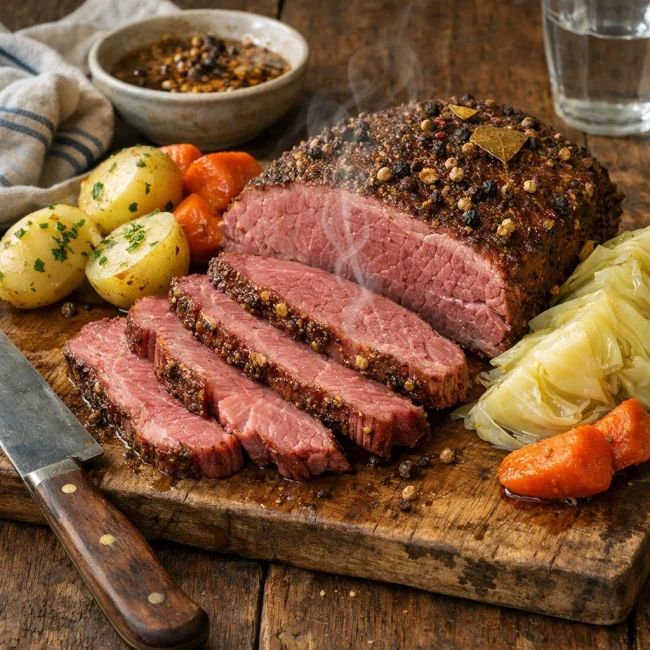
Unique Homemade Corned Beef
Discover the ultimate homemade corned beef recipe that balances rich flavors and t...
View Recipe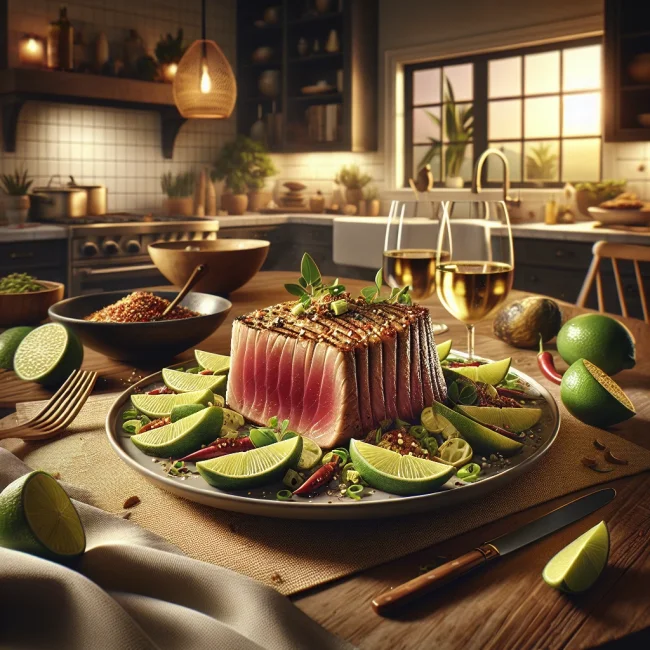
Spicy Lime Seared Ahi Tuna
Experience a burst of flavor with our Spicy Lime Seared Ahi Tuna, a perfect fusion...
View Recipe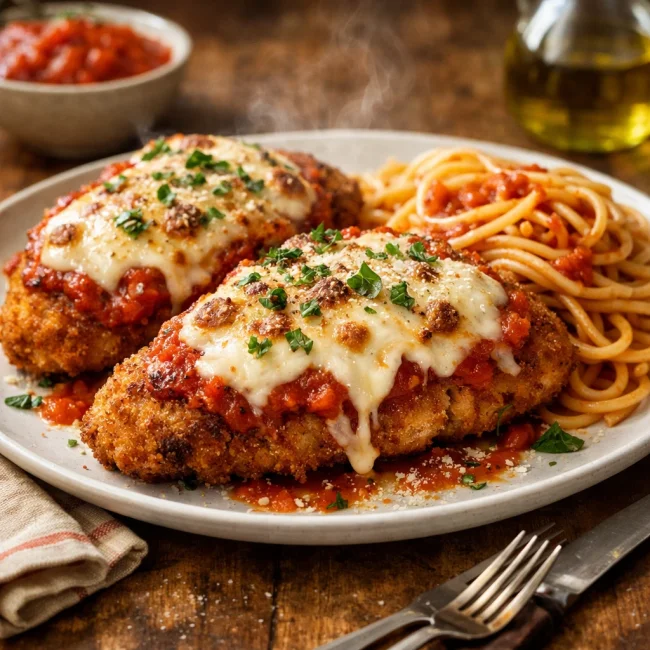
Traditional Chicken Parmesan
Savor the authentic taste of Italian cuisine with our Traditional Chicken Parmesan...
View Recipe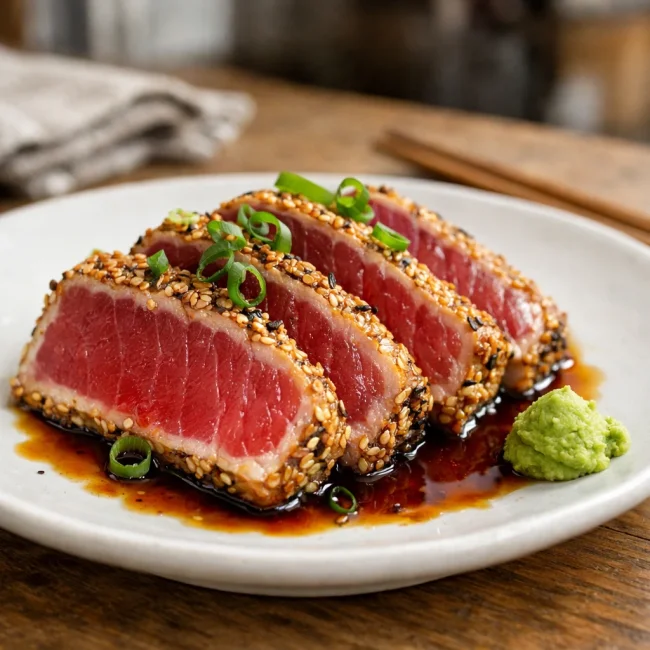
Seared Ahi Tuna
Experience the sublime taste of seared Ahi tuna, a Japanese-inspired dish that hig...
View Recipe